
Maya Levkovitz is a student at Harvard Law School.
In today’s News and Commentary, the Chicago Teachers’ Union agrees to a May Day compromise with the school district, New York’s building workers reach a tentative agreement to avoid a strike, and the MLB Players’ Association fires two more executives ahead of a probable lockout.
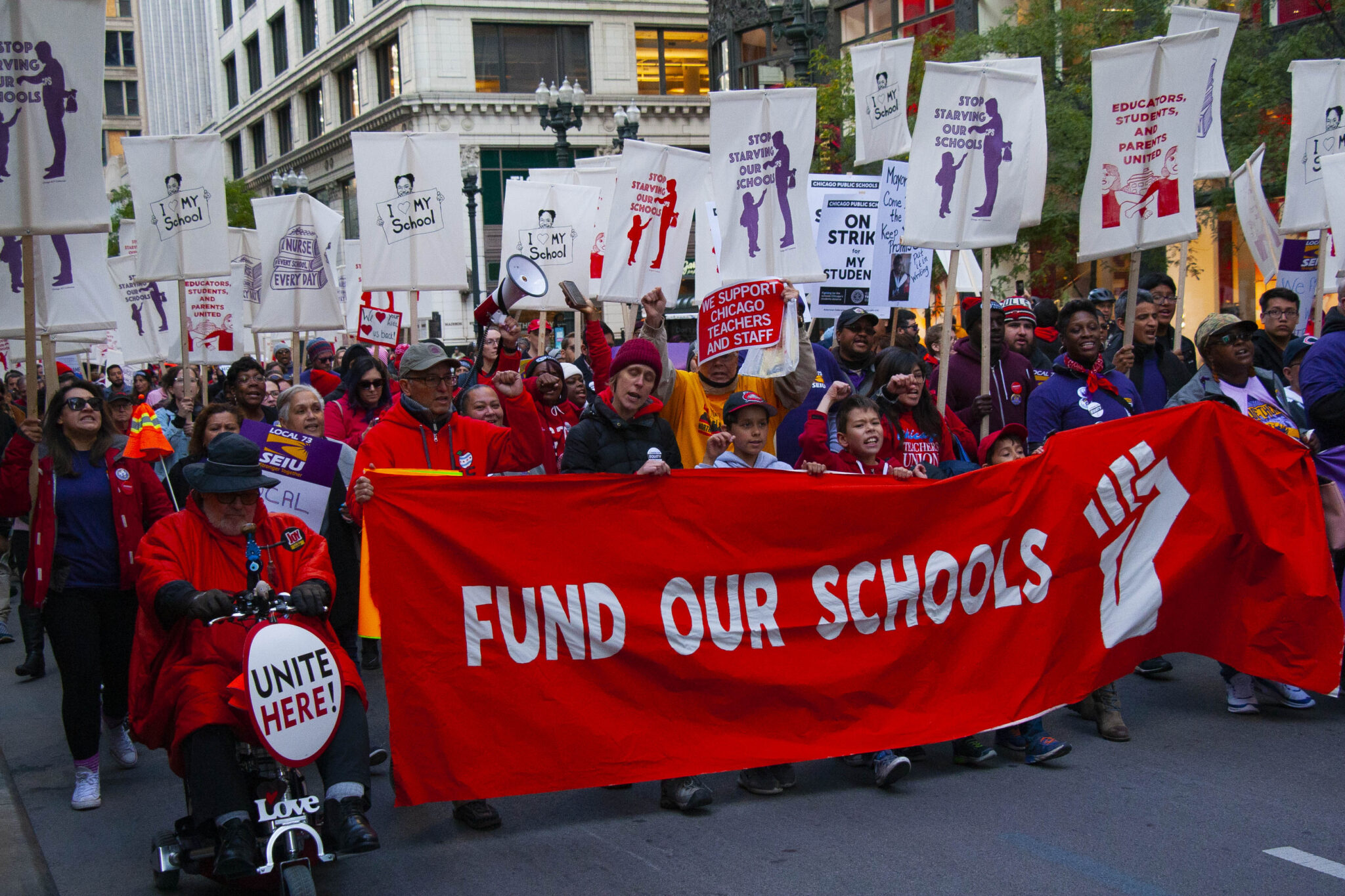
On Friday, the Chicago Teachers’ Union (CTU) and Chicago Public Schools (CPS) reached a compromise agreement to designate May 1 as a day of civic engagement. While classes will remain in session, the district has agreed not to retaliate against students and staff who participate in May Day action. Moreover, CPS will provide busses and bagged lunches for 100 schools to facilitate student participation in the May Day rally in Union Park. Over several weeks of negotiations, CTU had advocated for the school district to cancel classes on International Workers’ Day so that its members could participate in workers’ rights protests, but CPS continually opposed the move. Chicago Mayor Brandon Johnson, a former teacher and organizer for CTU, supported the union’s original May Day proposal, and was credited by the union with helping to develop the compromise plan.
Also on Friday, the residential building workers of New York reached a tentative agreement ahead of the April 21 expiration of their current contract. The agreement was reached just two days after the 34,000 doormen, porters, managers, and superintendents of buildings represented by 32BJ voted to authorize a strike. As Mila noted, over a thousand workers rallied on Wednesday “in support of higher wages and against increased health care costs.” Though the Realty Advisory Board representing building owners had pushed for workers to contribute to their healthcare premiums, under the agreement, owners will instead get one month of substantially reduced contributions to employees’ health plans. Mayor Mamdani supported the union’s efforts and spoke at Wednesday’s rally, where he said that “New York is, and will always be, a union town.”
The Major League Baseball Players’ Association fired COO Xavier James and head of human resources Michael O’Neill for cause as part of an internal probe triggered by a federal investigation into the union’s business interests. The same internal investigation had already revealed an inappropriate relationship between former MLBPA President Tony Clark and his sister-in-law, who also worked for the union, leading to Clark’s resignation. The Eastern District of New York began its investigation into the union’s involvement in a licensing company co-owned by several other sports unions last year. This shake-up in leadership comes amidst the union’s preparations for the current CBA’s December 1 expiration. As part of these preparations, the union has built a “war chest” of $415 million — more than two times what it had at this point in the 2021 round of bargaining. Once again, negotiations are all but certain to result in MLB owners locking out the players, as “the country’s strongest union” remains steadfast in opposing team owners’ plans to impose a salary cap.




Daily News & Commentary
Start your day with our roundup of the latest labor developments. See all
October 22
SCOTUS declines Wilcox appeal; Penn State research assistants win bargaining rights; SEIU sued over military leave firing.
October 21
DOL withdraws tipped-worker rule; Instacart settles hiring-bias claims; Phillips 66 locks out New Jersey refinery workers.
October 20
Korean unions oppose labor exemption bill; Portland city workers prepare for strike; UPenn grad student union looks to dismiss university filing
October 19
FDA reverses course on policy prohibiting off-duty union activity; FAA and NATCA reach deal to secure pay increase for air traffic controllers.
October 18
Federal judge again halts cancellation of the Bureau of Prisons’ CBA; tabletop gaming workers face roadblocks in union recognition.
October 16
Department of Labor reduces wage-and-hour enforcement at unionized workplaces; Fain's victory poses question of federal monitor's extension.