
Miriam Li is a student at Harvard Law School and a member of the Labor and Employment Lab.
In today’s news and commentary, the Department of Labor proposes to roll back minimum wage and overtime protections for home care workers, a federal judge dismissed a lawsuit by public defenders over a union’s Gaza statements, and Philadelphia’s largest municipal union is on strike for first time in nearly 40 years.
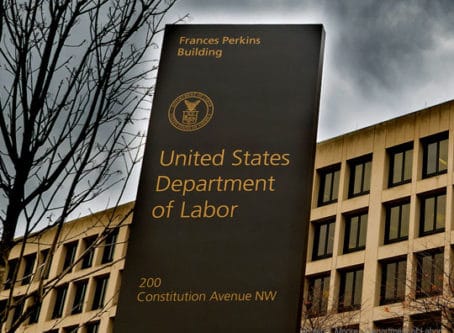
On Monday, the U.S. Department of Labor announced a proposal to rescind a 2013 rule that expanded minimum wage and overtime protections for many home care workers. The proposed rule, set for publication in the Federal Register on July 2, would reestablish broader exemptions from the Fair Labor Standards Act (FLSA) for workers providing “companionship services.” Under the Obama-era rule, home care workers employed by third-party agencies—rather than directly by households—became entitled to minimum wage and overtime pay. The 2013 rule also significantly narrowed the definition of exempt “companionship services.” In explaining its rollback, the Labor Department stated that the 2013 regulations “might not reflect the best interpretation of the FLSA and might discourage essential companionship services by making these services more expensive.” The Department said returning to the previous 1975 framework would “significantly reduce regulatory burden” for consumers and providers, potentially expanding access to home care as the population ages. When the 2013 changes were adopted, then-Labor Secretary Hilda Solis described them as necessary to ensure fair pay for an expanding workforce of professional caregivers. “These caregivers are dedicated professionals who provide critical in-home services to the elderly and persons with disabilities,” she stated at the time, emphasizing that many perform complex medical tasks and noting that nearly half of home health aides relied on public benefits. Solis clarified that the exemption originally established by Congress in 1974 “was meant to apply to casual work arrangements like babysitting,” not to full-time professional caregiving. The Department is accepting public comments on its new proposal and indicated it might revisit other provisions from the 2013 rule as well.
Also this week, a federal judge in Manhattan dismissed a lawsuit brought by two public defenders who argued that being required to financially support their union violated their First Amendment rights. Attorneys Arnold Levine and Allen Popper sued the Association of Legal Aid Attorneys (ALAA), their employer Legal Aid, and New York City after ALAA issued statements supporting Palestinians and calling for a ceasefire in Gaza. The plaintiffs alleged that the union’s advocacy was antisemitic, asserting that mandatory dues payments amounted to unconstitutional compelled speech. U.S. District Judge Kevin Castel rejected their claims, holding that neither the union nor Legal Aid qualified as a state actor—a necessary condition for First Amendment challenges. Although the city is a state actor, Castel found no evidence it was involved in the union’s statements or the underlying labor contract.
Finally, Philadelphia’s largest municipal union, AFSCME District Council 33, began a strike on Tuesday after contract negotiations with the city reached an impasse. The union, representing approximately 9,000 city workers—including sanitation employees, water department crews, police dispatchers, airport maintenance staff, and school crossing guards—is demanding improved pay and healthcare benefits. Negotiations stalled Monday after the union rejected the city’s wage proposal of a 7% increase over three years, far below the union’s request of nearly 20%. Union President Greg Boulware highlighted stark economic disparities during a City Hall rally, stating, “We’ve got people that repair the water mains and can’t afford their water bill. We’ve got people that repair the runways at the airport and can’t afford a plane ticket.” Mayor Cherelle Parker expressed willingness to resume discussions, emphasizing the city’s aim of achieving “a contract that honors our employees while safeguarding the city’s financial stability for all Philadelphians.” The strike—the first by District Council 33 since 1986—will disrupt critical city services, causing delayed trash collection, longer wait times for 911 calls and water department repairs, limited access to public pools and recreation programs, and reduced crossing guard services near schools operating summer programs.




Daily News & Commentary
Start your day with our roundup of the latest labor developments. See all
September 4
NLRB advice memo narrows political protest protections; NLRB asks federal appeals court for deference.
September 3
Seond Circuit rejects a NLRB standard for union insignia in employer dress codes; House Republicans ramp up labor union investigations.
September 2
Trump’s US Steel agreement impacts labor talks; Mamdani clashes with teachers’ union; Boeing plans to resume bargaining talks.
September 1
California legislature passes a bill banning AI workplace surveillance of workers' emotional states; Labor Department repeals decades-old farmworker protection rules; Sixth Circuit upholds a $1.4 million verdict for farmworkers.
August 31
Boston Symphony Orchestra musicians stave off first-ever strike; Cleveland Public Library workers ratify new contracts; New York State AFL-CIO makes endorsements
August 30
Seattle teachers vote to authorize a strike days before the school year begins; BNSF Railway’s AI dispatching system puts workers in danger; and a California court finds that the DOL’s pay cuts for non-citizen farmworkers are unlawful.