
Holden Hopkins is a student at Harvard Law School.
In today’s News & Commentary, concerns about AI-based discrimination in hiring, Boston hotel workers on strike, and more women of color are obtaining leadership roles in their unions.
The EEOC has raised concerns to federal lawmakers about the potential for AI to be used to facilitate discrimination in hiring job candidates according to reporting by Bloomberg Law. The agency cited a number of cases as emblematic of the problem, including companies which had used AI-hiring software to systematically exclude certain candidates on the basis of age, gender, and nationality.
The report raised concerns over the growing dependence on “AI to manage the workplace has the potential to outpace our nation’s capacity to ensure that they are deployed in a manner that comports with federal anti-discrimination laws.” In order to combat this trend, an accompanying letter from the agency’s head of legislative affairs stressed the need for “resources to keep pace with the use of these increasingly sophisticated tools and their potential impact on equal employment opportunity.”
Amid the ongoing strikes against Hilton that Esther reported on, two Boston area Hilton hotels are now the subject of open-ended strikes. On Friday, workers walked off the job at the Hilton Boston Logan and Boston Park Plaza hotels after the company failed to meet the union’s demands. UNITE HERE Local 26 represents the workers, who say they will not return to work until Hilton agrees to a new contract that includes higher pay and better working conditions.
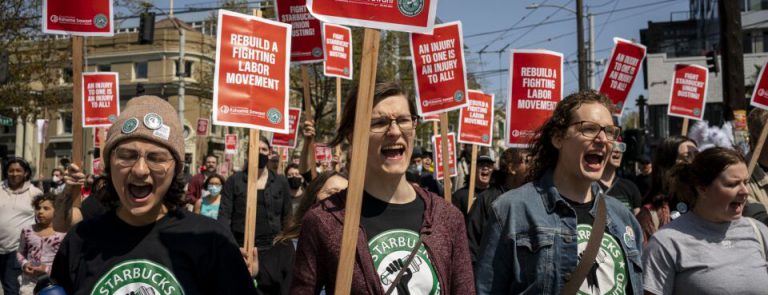
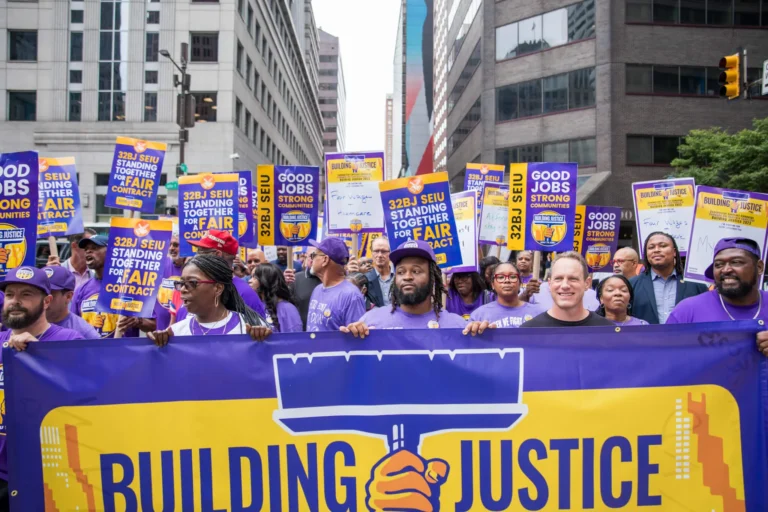
New reporting shows that Black and Latine women are increasingly obtaining leadership roles in their unions. While women make up about half of union membership, the rates of representation in leadership for women, and especially women of color, has lagged behind. But over the past five years, more and more top leadership positions have gone to women. Most notably, this has included the top leadership of some of the country’s largest unions, including SEIU, NEA, National Nurses United, and the AFL-CIO.
This increase in representation has also corresponded with unions focusing more attention on the race-gender pay-gap, parental leave, harassment policies, and other issues which may have been overlooked by previous generations of union leadership.

Daily News & Commentary
Start your day with our roundup of the latest labor developments. See all
September 16
Trump nominates Catherine Eschbach as EEOC general counsel; NLRB declines to resolve union work-assignment dispute; Allina Health physicians begin four-day strike.
September 15
Documents reveal the inner workings of Amazon's union avoidance program; Washington state public sector unions reach tentative deals amid a difficult bargaining cycle; hundreds of Nevada Culinary Union members protest their union's health care changes.
September 14
NCAA and Big Ten file motion to dismiss in former star player's NIL suit; Seventh Circuit rules against former postal worker in discrimination suit.
September 13
Documents released on the 25th anniversary of the 9/11 attacks show that city officials encouraged workers to return to Ground Zero despite knowing the risks of asbestos exposure, and new polls demonstrate continued widespread support for labor unions.
September 10
Amazon workers allege pregnancy discrimination; federal unions challenge USDA reorganization; NYC warns of silicosis risks.
September 9
Wynn Las Vegas employees allege anti-union retaliation; Amazon faces a class action over pregnancy accommodations; H-1B demand plunges following a six-figure visa fee.