
Everest Fang is a student at Harvard Law School.
In today’s news and commentary: Southern governors oppose UAW organizing in their states, Florida bans local heat protections for workers, and Google employees occupy company offices to protest contracts with the Israeli government.
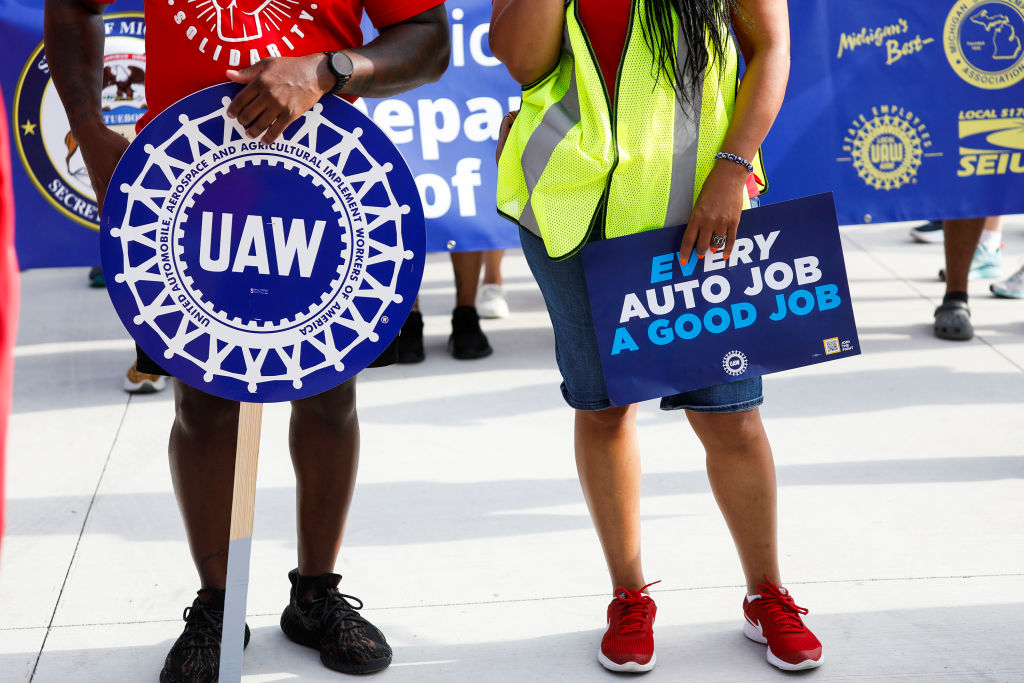
Yesterday, the governors of six Southern states warned their residents that joining the United Auto Workers (UAW) would threaten jobs and “the values we live by.” The joint statement from the Republican governors came just a day before 4,300 Volkswagen workers in Chattanooga, Tennessee are set to start voting on whether to join the union. As Sunah wrote yesterday, several conservative politicians in Tennessee have spoken against the union, urging Volkswagen workers to vote no. The governors’ announcement adds high-profile firepower to the union’s opposition. “The reality is companies have choices when it comes to where to invest and bring jobs and opportunity,” the governors of Tennessee, Alabama, Georgia, Mississippi, South Carolina and Texas wrote. “Unionization would certainly put our states’ jobs in jeopardy.” Democrats in Tennessee criticized the governors, and voiced support for the UAW. Workers at the Tennessee plant will cast ballots from Wednesday through Friday evening.
Last week, Florida Governor Ron DeSantis signed legislation barring local and municipal governments from requiring their own heat protections for workers. The law restricts local authorities from “[r]equiring an employer, including an employer contracting with the political subdivision, to meet or provide heat exposure requirements not otherwise required under state or federal law” or “[g]iving preference, or considering or seeking information, in a competitive solicitation to an employer based on the employer’s heat exposure requirements,” according to a summary released by the Legislature. The bill’s passage comes after the state’s most populous county, Miami-Dade, considered local heat protection rules that would have required employers to provide shade, water and 10-minute breaks to workers every two hours on days over a certain heat threshold. County commissioners rejected the proposal in November over concerns it would hamstring businesses. The new bill makes Florida the second state, after Texas, to ban local heat protections.
Yesterday, dozens of Google employees began occupying company offices in New York City and Sunnyvale, California in protest of the company’s $1.2 billion contract providing cloud computing services to the Israeli government. The sit-in, organized by the activist group No Tech for Apartheid, is happening at Google Cloud CEO Thomas Kurian’s office in Sunnyvale. The action marks an escalation in a series of recent protests organized by tech workers who oppose their employer’s relationship with the Israeli government. Nine employees were arrested yesterday, and the company announced they would be placed on administrative leave. Some workers have opposed the Google contract, known as Nimbus, since it was signed in 2021. But protests have ramped up over the past seven months as Israeli forces continue to bombard the Gaza Strip. Workers have circulated internal emails, protested outside company offices and staged a “die-in” outside one of Google’s buildings in San Francisco. Tech workers across the industry have staged similar protests as contracts with the Israeli government come under increasing scrutiny.





Daily News & Commentary
Start your day with our roundup of the latest labor developments. See all
October 12
Workers at the Obama Foundation begin organizing; MLB submits its latest collective bargaining agreement proposal; Brigham & Women's nurses postpone strike.
October 11
UAW President Shawn Fain succeeds in his reelection bid, and Spanish unions call for a general strike.
October 9
DHS proposes a $100k fee for the foreign grad employment program; Trump suspends tech company access to green card program; and private equity perpetuates poor working conditions for home care workers.
October 8
NLRB judge finds UPS unlawfully restricted union insignia; Harvard graduate workers authorize second strike; OSHA orders Union Pacific to pay $300,000 in damages in whistleblower case.
October 7
DOL scraps plan to remove decades-old wage-and-hour guidance from federal regulations; New York enacts personnel records access law; Starbucks loses bid to dismiss Workers United trademark suit.
October 6
Protect College Sports Act dampens athlete unionization outlook; Stanford RA union decides to withdraw petition