
Everest Fang is a student at Harvard Law School.
In today’s news and commentary: Google’s union announces unfair labor practice charge, NLRB shows growth in certified student bargaining units, and USW counts on clean energy projects for new membership.
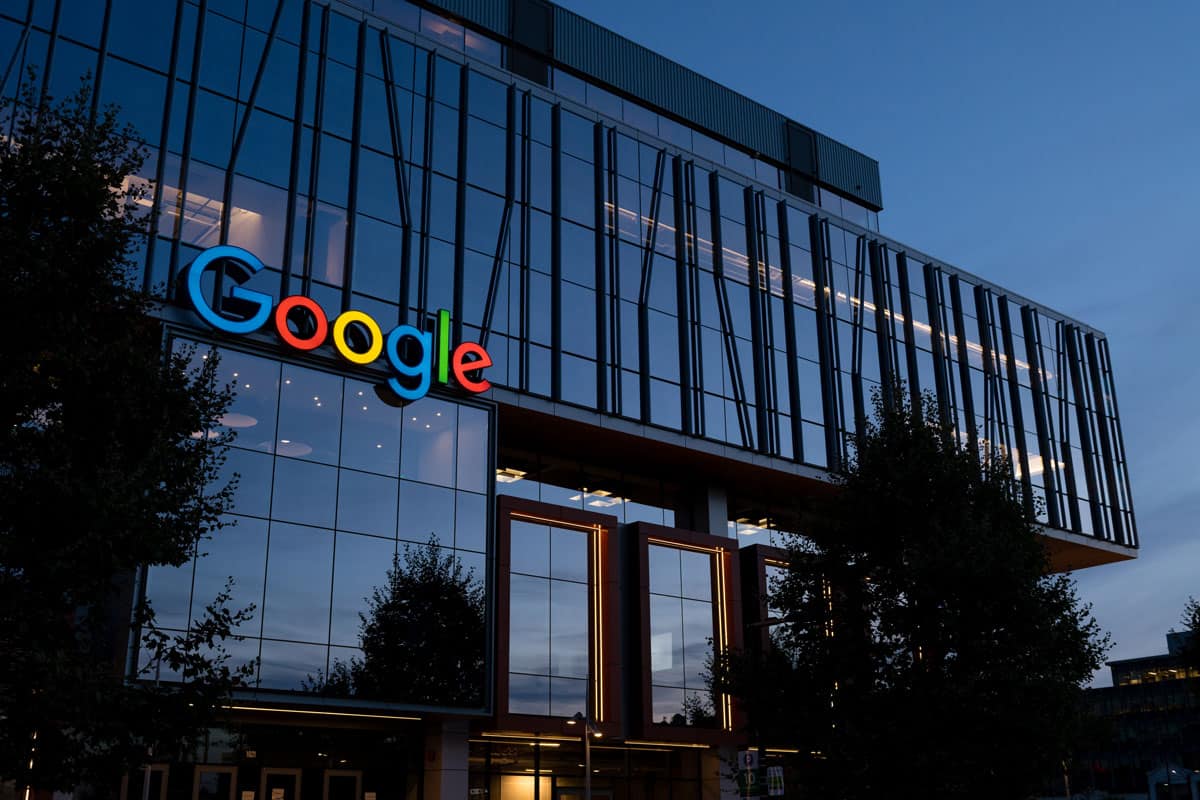
Yesterday, the Alphabet Workers Union announced that they have filed a charge with the NLRB over Google management’s request that workers “refrain” from talking about its ongoing antitrust case. The union charges that Google issued an “overly broad directive” on discussing the case to employees. On August 5th, immediately following Judge Amit Mehta’s ruling that “Google is a monopolist” in the online search marketplace, president of global affairs Kent Walker sent an email directing employees to “please refrain from commenting on this case, both internally and externally.” Walker sent a similar message at the start of the trial last fall. The union alleges that these gag orders violate their rights under Section 7 of the National Labor Relations Act.
On Monday, the NLRB released data showing that it has certified 54 bargaining units for more than 50,000 student employees since 2022. The data comes a year after the Biden administration’s 2021 withdrawal of a rule proposed by the Trump administration that would have made it much harder for graduate students on private college campuses to form unions. The Biden administration’s 2021 action fueled growing student interest in unionizing. Roughly half of the 54 unions certified since 2022 were for graduate teaching and research assistants, the students most likely to unionize historically. Since April 2023, however, the number of unions certified for undergraduate students who work in housing and dining facilities (16) has actually outnumbered the units approved for graduate teaching and research assistants (13). The NLRB also noted that elections are pending on petitions for unions at numerous campuses, including for 2,200 graduate student instructors at Vanderbilt University, for 1,300 undergraduate students at Berea College and for 57 student employee dining workers at Pomona College.
At a regional meeting last week, a United Steelworkers union (USW) official said that they are counting on clean energy projects to spur membership growth, offsetting losses at oil refining and petrochemical plants, even if Donald Trump wins the presidential election. USW, which represents about 30,000 crude oil refinery and petrochemical chemical plant workers in North America, said major growth may be coming as projects backed by the Inflation Reduction Act (IRA) are built and provisions supporting union-jobs deployed. Larry Burchfield, director of USW District 13, said there is a potential for 17,000 new union jobs through projects backed by the IRA. President Trump has vowed to gut the IRA if elected, but Burchfield said he is confident the law, which has the support of both Republicans and Democrats, will survive. He remained optimistic about membership even as 1,400 jobs have been lost to refineries closing. At least 300 more USW jobs are expected to be lost in early 2025 as Lyondell Basell Industries’ Houston refinery halts processing in early 2025. And refiner Phillips 66’s plan to shut its Los Angeles refinery complex in late 2025 will cost up to 900 total jobs, mostly USW members.



Daily News & Commentary
Start your day with our roundup of the latest labor developments. See all
October 4
Boston nurses announce open-ended strike; federal judge restores federal prison workers' union protections; St. Louis workers form the first movie theater union in Missouri.
October 2
Gov. Newsom signs bill regulating AI in workplace; federal judge blocks Trump's $100,000 H-1B visa fee.
October 1
Senate confirms Keith Sonderling as Labor Secretary; Amazon warehouse workers launch an unfair labor practice strike.
September 30
Harvard grad union wins in First Circuit; AI data trainers initiate misclassification suits; Trader Joe’s found liable under ERISA.
September 29
Unions, AI companies, and private equity firms form a new coalition to shape data center policies; unions express support for the Paramount-Warner Bros. merger.
September 28
The Protect College Sports Act nears passage in the Senate; San Francisco municipal workers agree to contract extensions.