
Maddie Chang is a student at Harvard Law School.
In today’s Tech@Work, home security apps popular in India are re-purposed for the surveillance and performance rating of domestic workers; and lawmakers in California grapple with the future of autonomous trucks.
As reported in Rest of World, two home security apps MyGate and NoBrokerHood, which operate in 40,000 residential complexes in India, have increased the surveillance of domestic workers. The apps alert homeowners when people enter and exit buildings, which originally served as a security feature. That function is now being used to monitor domestic workers, who, according to the article, have not been able to consent to their own surveillance. The phenomenon wherein a technology is used for one purpose but then is expanded to serve another is known as “function creep,” and is often a concern when surveillance technology is introduced in employment contexts.
One of the apps, MyGate, has also begun to offer a way for employers to rate the performance of domestic workers, similar to other gig platform’s star-rating systems. Unlike other platforms, however, MyGate does not allow workers to rate employers and also blocks workers from viewing their own ratings. As noted in the article, this creates an information asymmetry between employers and workers, who are not able to contest performance reviews that become the basis of their employability.
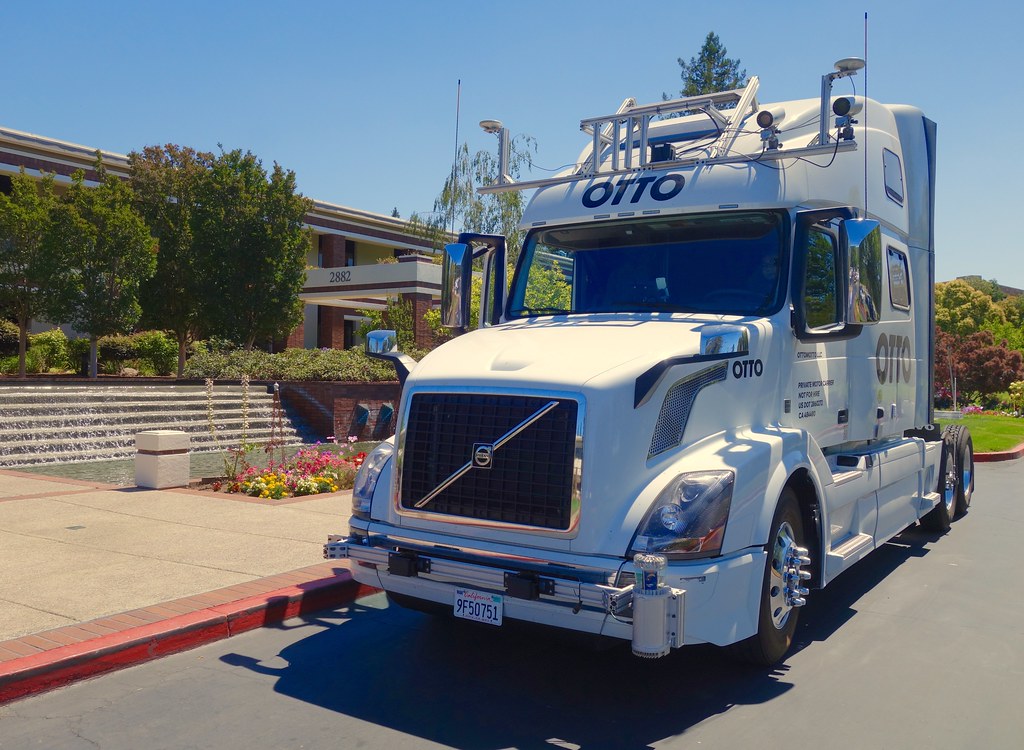
The Governor of California is voicing opposition to proposed union-backed legislation to limit the rollout of driverless trucks on California roads. As reported in Politico, Dee Dee Meyers, Director of the Governor’s Office of Business and Economic Development, wrote a letter last week to the state assemblymember proposing the legislation to assert the Governor’s position against the legislation, which in practice would ban autonomous big rigs in the state. Proponents of the bill, which is currently in the State Senate’s appropriation’s committee, include the Teamsters and three of CA’s Democratic House representatives. In addition to significant safety issues, proponents cite labor displacement as a key concern should autonomous trucks be allowed. Citing a UC Berkeley study, the Politico article reports that automation of the trucking industry could replace as many as 294,000 long-distance drivers. A parallel debate is playing out in San Francisco this week in the wake of regulators’ approval of a new fleet of robo-taxis. Regulators almost immediately had to cut the rollout in half after a driverless car crashed into a firetruck.





Daily News & Commentary
Start your day with our roundup of the latest labor developments. See all
October 15
New reporting examines the rollback of child labor protections; California tries to block a strike; NLRB charges Wisconsin mental health provider with firing workers during union drive.
October 14
Eleventh Circuit overturns ERISA exhaustion rule; DHS finalizes removal of automatic renewal for work permits; AFGE challenges SSA over flexible scheduling policy.
October 13
Chicago hotel workers remain on strike; a coalition of Democratic states sues the Labor Department over canceled unemployment insurance grants; the Federal Labor Relations Authority establishes a new mediation framework for federal worker disputes.
October 12
Workers at the Obama Foundation begin organizing; MLB submits its latest collective bargaining agreement proposal; Brigham & Women's nurses postpone strike.
October 11
UAW President Shawn Fain succeeds in his reelection bid, and Spanish unions call for a general strike.
October 9
DHS proposes a $100k fee for the foreign grad employment program; Trump suspends tech company access to green card program; and private equity perpetuates poor working conditions for home care workers.