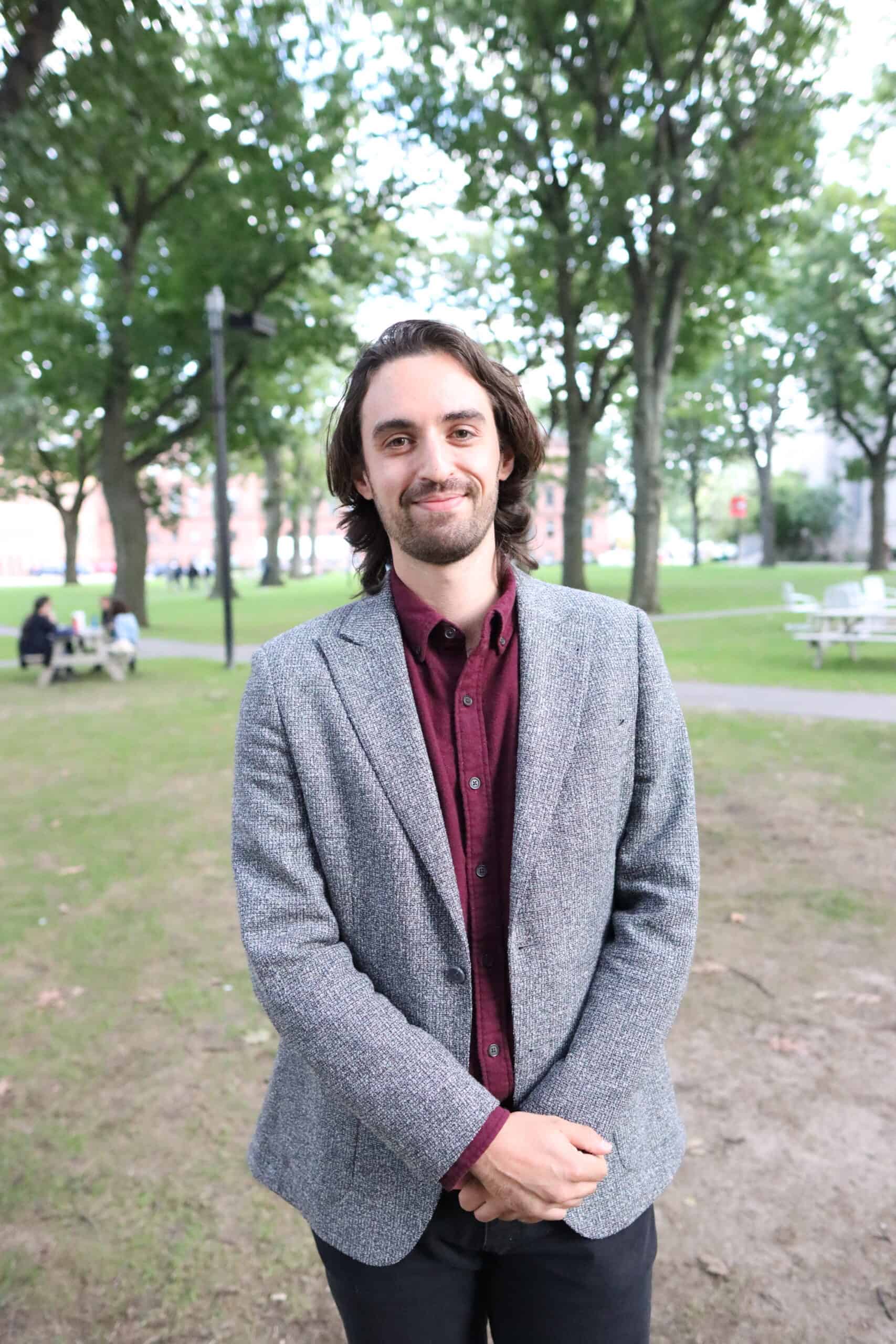
Jon Levitan is a student at Harvard Law School and a member of the Labor and Employment Lab.
The Gig Workers Collective is calling on customers to boycott the grocery delivery app Instacart amid what they say are all-time low levels of pay and working conditions after the installation of a new CEO—Fidji Simo—and ahead of Instacart’s anticipated Initial Public Offering (IPO). Instacart has been one of the big winners of the pandemic, and its working conditions have been in the spotlight since the very beginning of the covid-19, as Courtney and I wrote about in March 2020. The workers have asked customers to “delete the Instacart app immediately as a show of support for shoppers’ ongoing efforts to end Instacart’s long-standing practice of gig worker exploitation.” The workers have five core demands that they say must be met before they call off the boycott: (1) paying workers by orders, not by batches of at the same store; (2) reinstating the commission system that pays workers by the size of the order, rather than a flat $7 rate for all orders; (3) stopping the practice of punishing workers for factors outside their control, like customers fraudulently marking items as missing or damaged; (4) providing occupational death benefits; and (5) raising the default tip to 10% from 5%.
Amazon has installed AI-powered surveillance cameras in their delivery trucks that are apparently incapable of distinguishing between genuine mistakes by drivers and incidents that are completely out of their control. Worse, Amazon is penalizing workers for these incidents outside the drivers’ control, and making it impossible for the workers to appeal. Amazon promised that the cameras—made by a tech startup called Netradyne—would be an “innovation” that would “keep drivers safe.” But the cameras have seemingly been utilized to indiscriminately punish drivers, depriving them of bonuses, higher pay, and weekly ‘prizes’ like rain jackets. For one worker, who declined to give his name to Vice because he feared retribution from Jeff Bezos’s tech behemoth, said that the camera would penalize him every time another driver on California’s famously congested roads cut him off. “Every time I need to make a right hand turn, it inevitably happens. A car cuts me off to move into my lane, and the camera, in this really dystopian dark, robotic voice, shouts at me,” the worker said. The drivers and even their direct employers (Amazon contracts with a network of delivery subcontractors) have tried to contest the unfairly-assessed penalties, but Amazon instead trusts Netradyne’s AI and typically does not respond to the protests.
The cameras were not the only Amazon surveillance practice to make the news yesterday. A federal district court judge ruled that Amazon would have to face a class action lawsuit for allegedly illegally monitoring its drivers’ Facebook discussions about workplace conditions and unionization efforts. Amazon moved to compel arbitration based on a forced arbitration agreement it requires drivers to sign as a condition of employment, but the arbitration agreement only covers claims related to the drivers employment with Amazon (officially, since Amazon doesn’t directly employ the drivers, the phrasing is that the arbitration provision covers any claim “arising out of or relating in any way to this agreement, to your participation in the in the [delivery contracting] program, or to your performance of services.”). The Judge, William Hayes of the Southern District of California, ruled that the arbitration agreement did not cover these claims, since Amazon’s alleged surveillance of private, off-work communications isn’t related to the drivers’ performance or participation in the program.
Finally, in local news, workers at the Cambridge-based cafe chain Darwin’s announced an organizing drive last week. Organizing committee members said they were inspired by organizing drives in the industry like the successful one at Pavement in Boston earlier this year and the nascent Starbucks campaign in Buffalo. The Darwin’s workers, who are organizing with UNITE HERE’s New England Joint Board, requested that their employer voluntarily recognize them via card check. Yesterday Darwin’s management informed the organizing committee that it did intend to enter into a voluntary recognition agreement, and will recognize and bargain with the union when the union shows that it has signed cards from a majority of the bargaining unit.

Daily News & Commentary
Start your day with our roundup of the latest labor developments. See all
September 29
Unions, AI companies, and private equity firms form a new coalition to shape data center policies; unions express support for the Paramount-Warner Bros. merger.
September 28
The Protect College Sports Act nears passage in the Senate; San Francisco municipal workers agree to contract extensions.
September 27
The Trump Administration reaches a settlement with federal unions on reduction in force actions; the United Auto Workers file an en banc petition seeking review of a Second Circuit decision regarding labor arbitrations.
September 25
Healthcare workers rally to restore legal status for TPS holders; nurses at a Maine hospital overwhelmingly vote to form their union despite alleged aggressive union busting tactics.
September 24
NLRB abandons rule for offensive conduct during protected activity; New York home care workers seek a union election; maritime deck officers endure long fight for first contracts.
September 23
DoorDash settles delivery-worker pay claims; Philadelphia school workers win new contract; stock gains spur retirements.