
Ethan Story is a student at Harvard Law School.
In today’s news and commentary, New York City weighs banning horsedrawn carriages despite union opposition, public defender services go or consider going on strike, and cinema workers in Seattle walkout ahead of Christopher Nolan’s The Odyssey.
On Wednesday, the New York City Council held a hearing on a bill that would ban horsedrawn carriages in the city within two years, a measure opposed by Transport Workers Union Local 100, the union that represents carriage drivers and owners. The bill, called Romanch’s Law, was introduced following the death of 18-year-old tourist Romanch Mahajan, who died after falling from a carriage in Central Park. The Central Park Conservancy, Council Speaker Julie Menin, Mayor Zohran Mamdani, and a majority of New York’s 51 Councilmembers support the bill—though Mayor Mamdani wants to ensure the bill, which includes funds to create a workforce development program for the carriage drivers, adequately supports transitioning workers before signing it. However, Local 100 argues that specifics on the workforce development program are sparse, risking leaving longtime drivers in the cold. Instead, the union is backing a different bill that would keep the carriages in place but instead alter their operating hours and install hitching posts throughout Central Park.
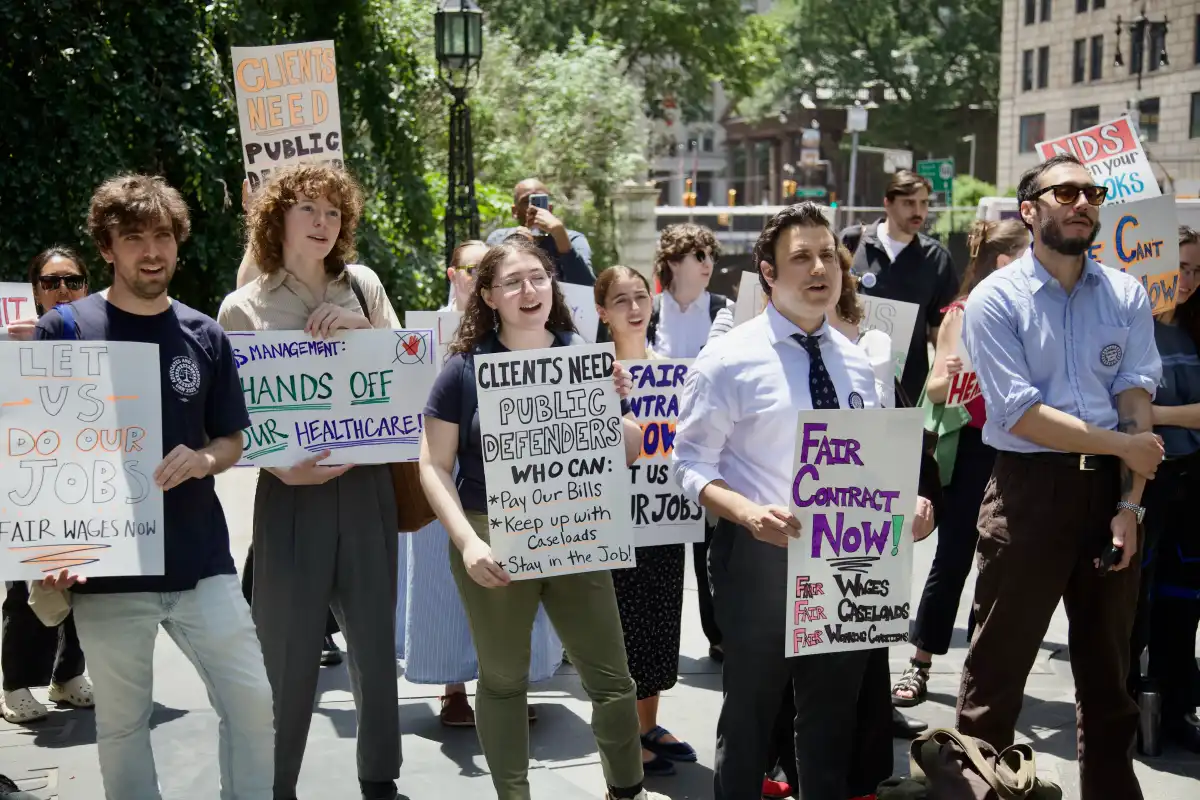
On Thursday, hundreds of Brooklyn and Queens public defenders and support staff at the Brooklyn Defender Services (BDS) went on strike. Union leaders are pushing for increased sick time, the elimination of a tracking app requiring employees to clock in and out, and the shortening of a probationary period where management can fire or discipline new employees for any reason, while management says agreement has been reached “on all aspects of the contract except whether certain employees can work from home.” No future bargaining sessions have been scheduled. Other public defender services could soon join the BDS strike, with the Neighborhood Defender Services of Harlem and the Bronx Defenders also passing strike authorization votes last week.
On Friday, members of the SIFF Cinema Workers Union in Seattle walked off the job ahead of screenings of Christopher Nolan’s newest epic, The Odyssey. The walkout, which included at least 13 employees and was scheduled to continue over the weekend, followed a vote on Thursday evening to authorize collective action due to bad-faith bargaining on the part of management, including inadequate proposals on wages, health benefits, and staffing. Unionized SIFF employees have been working without a contract since April, and the union has filed an unfair labor practice charge with the NLRB. In response to the walkout, management utilized non-union staff to cover union employees’ shifts, though several screenings of other movies were cancelled to keep up with The Odyssey’s demand.




Daily News & Commentary
Start your day with our roundup of the latest labor developments. See all
October 14
Eleventh Circuit overturns ERISA exhaustion rule; DHS finalizes removal of automatic renewal for work permits; AFGE challenges SSA over flexible scheduling policy.
October 13
Chicago hotel workers remain on strike; a coalition of Democratic states sues the Labor Department over canceled unemployment insurance grants; the Federal Labor Relations Authority establishes a new mediation framework for federal worker disputes.
October 12
Workers at the Obama Foundation begin organizing; MLB submits its latest collective bargaining agreement proposal; Brigham & Women's nurses postpone strike.
October 11
UAW President Shawn Fain succeeds in his reelection bid, and Spanish unions call for a general strike.
October 9
DHS proposes a $100k fee for the foreign grad employment program; Trump suspends tech company access to green card program; and private equity perpetuates poor working conditions for home care workers.
October 8
NLRB judge finds UPS unlawfully restricted union insignia; Harvard graduate workers authorize second strike; OSHA orders Union Pacific to pay $300,000 in damages in whistleblower case.