Jon Levitan is a student at Harvard Law School and a member of the Labor and Employment Lab.
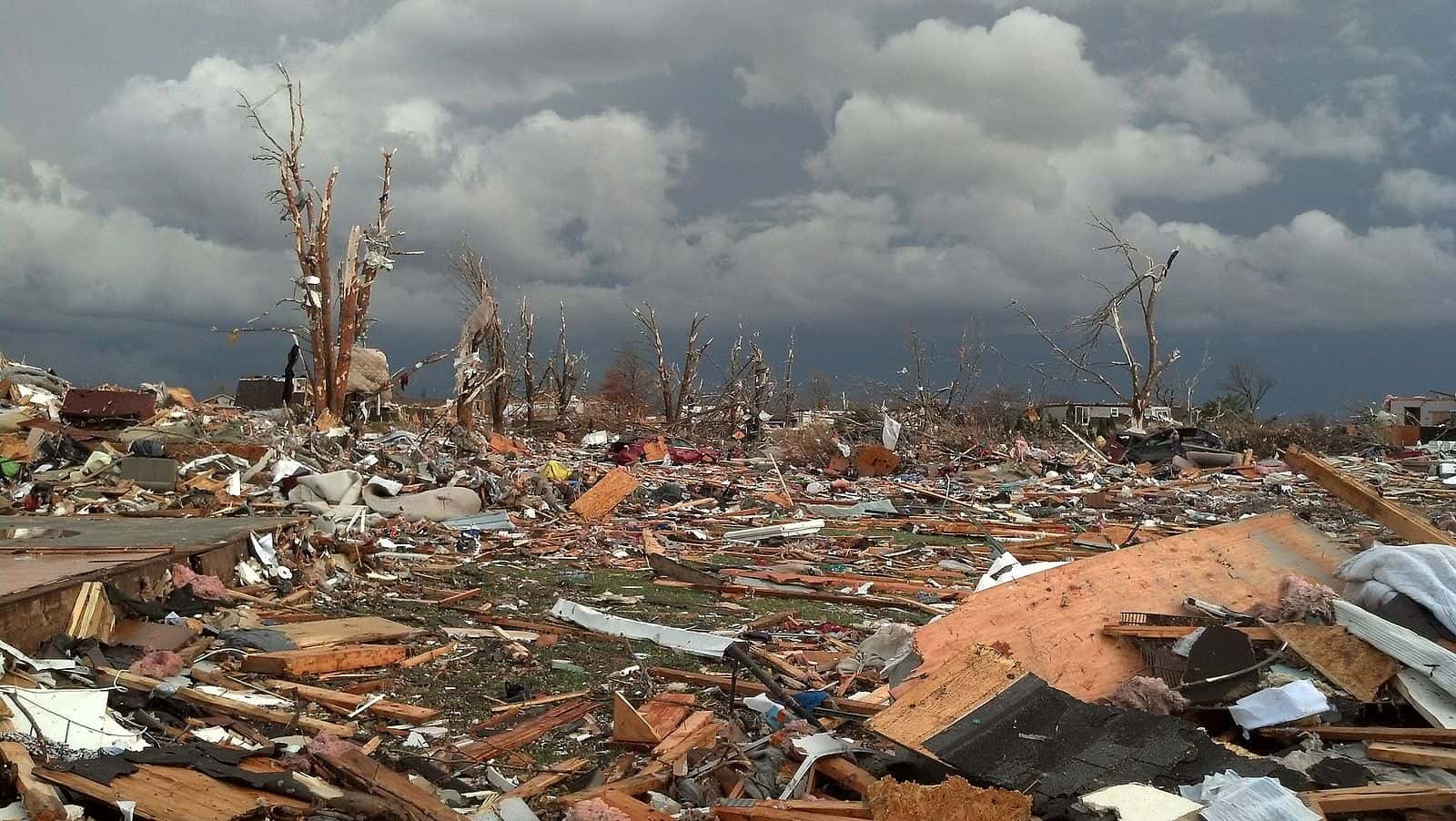
More news has continued to come out about the collapse of the Amazon warehouse in Edwardsville, Illinois, which killed six workers and injured another. Fred wrote yesterday how Amazon’s labor practices have come increasingly under fire after the collapse and workers’ deaths. Today, More Perfect Union released a screenshot of text messages between Larry Virden—who was killed during his shift when the warehouse collapsed—and his girlfriend. In the texts, Virden writes that he “will be home after the storm.” His girlfriend asks why, and Virden writes that “Amazon won’t let us leave.”
The collapse of the warehouse has already drawn comparisons to the Triangle Shirtwaist Factory fire, which killed over 146 garment workers in 1911. Those comparisons are almost certain to grow more resonant after the revelation that, like the owners of Triangle over 100 years ago, who barricaded the exit doors to prevent unauthorized breaks, Amazon forced its workers to remain in the plant where they would die. Another employer in the region forced its workers to stay at work during the tornado. Workers at the Mayfield Consumer Products factory in Mayfield, Kentucky—which makes scented candles—asked to leave after tornado sirens went off around 5:30pm on Friday. In response, workers report that a supervisor said “if you leave, you’re more than likely to be fired.” At least eight workers were killed, and many more injured, after a tornado later tore through the candle factory.
In the days that followed the collapse of the Amazon warehouse, workers took to Amazon’s internal employee message board, called the “Voice of Associates,” to express concern over their safety at work for the tech behemoth. “Many workers…said they had never had a tornado or even a fire drill over the course of their careers at Amazon, dating back up to six years.” One worker, 48 year-old LeeAnn Webster of Kent, Washington, served on a safety committee at the Amazon warehouse for four years and “brought up safety concerns with management but…was often rebuffed.” She was particularly concerned about the lack of drills, which were not practiced at her facility for several years. Even at warehouses where drills did take place, workers say they were haphazard and rushed; “I’ve had better drills in public school,” one worker said.
Meanwhile, the Occupational Safety and Health Administration (OSHA) is investigating Amazon over the collapse of the warehouse. According to OSHA, the agency has had compliance officers on site since Saturday, one day after the warehouse collapsed. OSHA can take up to six months to complete its investigation, after which it can issue citations and propose monetary penalties if it finds safety and health violations.
Finally, a former National Labor Relations Board (NLRB) field examiner was criminally charged last week with taking bribes from a union-busting consulting group and sending them pictures of unfair labor practice (ULP) charge sheets. The complaint alleges that Anett Rodrigues, a 53 year-old former NLRB examiner, was paid to text the ULP charge sheets to an unnamed labor relations consulting company. Law360 identified the consultant as Labor Relations Partners, which advertises itself as “the fastest way to obtain NLRB information.” Labor Relations Partners apparently caters to a number of major law firms, who represent employers in labor disputes.





Daily News & Commentary
Start your day with our roundup of the latest labor developments. See all
October 14
Eleventh Circuit overturns ERISA exhaustion rule; DHS finalizes removal of automatic renewal for work permits; AFGE challenges SSA over flexible scheduling policy.
October 13
Chicago hotel workers remain on strike; a coalition of Democratic states sues the Labor Department over canceled unemployment insurance grants; the Federal Labor Relations Authority establishes a new mediation framework for federal worker disputes.
October 12
Workers at the Obama Foundation begin organizing; MLB submits its latest collective bargaining agreement proposal; Brigham & Women's nurses postpone strike.
October 11
UAW President Shawn Fain succeeds in his reelection bid, and Spanish unions call for a general strike.
October 9
DHS proposes a $100k fee for the foreign grad employment program; Trump suspends tech company access to green card program; and private equity perpetuates poor working conditions for home care workers.
October 8
NLRB judge finds UPS unlawfully restricted union insignia; Harvard graduate workers authorize second strike; OSHA orders Union Pacific to pay $300,000 in damages in whistleblower case.