

Fred Wang is a student at Harvard Law School.
This week, Fran and Zachary have covered ongoing union organizing efforts at three Starbucks stores in the Buffalo area. Yesterday, the union petitioned the National Labor Relations Board (NLRB) to hold votes at three additional locations, in its historic push to unionize the first Starbucks store in the United States. The filing comes on the heels of Starbucks’s request that the NLRB delay the mailing of union ballots—as well as union accusations that Starbucks unlawfully threatened, intimidated, and surveilled employees during the union election campaign.
Yesterday, employees at the political journalism company Politico secured voluntary recognition of their union by management—a little over a week after the employees’ unionization campaign went public in late October. Voluntary recognition refers to an employer’s formal acknowledgement of a labor organization as the bargaining representative of their employees. As Josh Eidelson of Bloomberg writes, the agreement represents just the latest labor victory in a “wave of successful organizing efforts in the media industry.”
Last week, the Biden administration officially published its emergency “shot or test” regulation, which requires that large employers either implement a mandatory vaccination policy or impose regular COVID-19 testing. As Nikita covered, a day later, the Fifth Circuit unilaterally suspended the rule’s enforcement nationwide, amidst a spate of lawsuits challenging the regulation’s legality. On Monday, the Biden administration submitted a brief urging the Fifth Circuit to lift its temporary order.
The brief consisted of three core arguments. First, the administration argued that no “emergency” warranted such a stay. Second, the administration claimed that the challenge to the regulation was unlikely to succeed on the merits. Here, the administration justified its authority as a constitutional delegation of legislative power. It also defended the reasonableness of its conclusion that the COVID-19 virus still posed a “grave danger” to employees. Third and finally, the administration urged that staying the regulation would endanger the lives of thousands of people—and that such costs outweighed whatever compliance burdens challengers would have to bear.
By contrast, challengers to the law have filed briefs supporting an immediate permanent injunction. They argue, in part, that the rule exceeds statutory authority and that only definitive injunctive relief can rescue employers from the “irreparable harm” of lost business opportunities and compliance costs. As the regulation continues to face legal challenge across multiple federal circuits and amidst the uncertainty that such litigation has generated for employers and workers alike, legal experts expect the Supreme Court to ultimately wade into and have the final say on the matter.
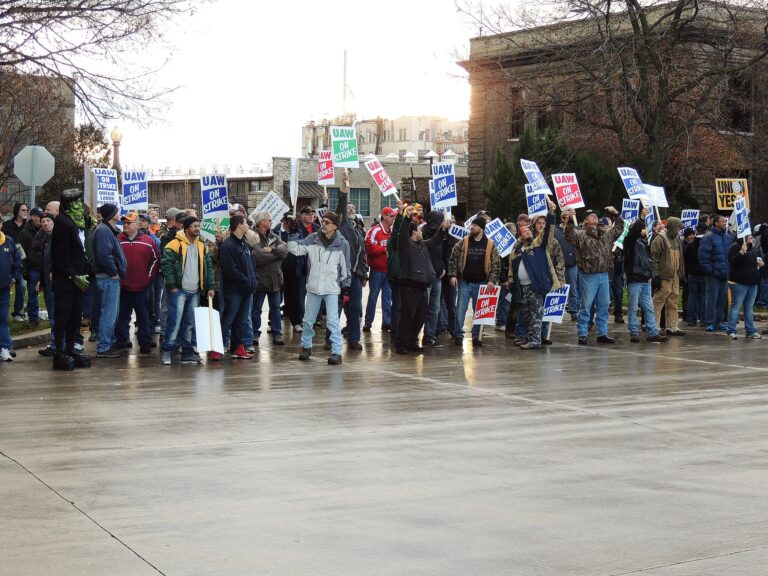
And at Harvard, the graduate student union announced a new strike deadline of November 16—just weeks after the union’s three-day strike in October. Per the union’s announcement, unless the University agrees to the union’s demands for increased compensation, additional procedural protections in discrimination and harassment cases, and an agency shop, student workers will begin striking on November 16 for an undetermined length. The union also alleges that University staff and faculty intimidated, surveilled, and threatened strikers during the union’s picketing effort last month. Moreover, the union claims that the administration has threatened to deduct pay for striking workers without clearly defining what constitutes withheld work.



Daily News & Commentary
Start your day with our roundup of the latest labor developments. See all
March 6
The Harvard Graduate Students Union announces a strike authorization vote.
March 5
Colorado judge grants AFSCME’s motion to intervene to defend Colorado’s county employee collective bargaining law; Arizona proposes constitutional amendment to ban teachers unions’ use public resources; NLRB unlikely to use rulemaking to overturn precedent.
March 4
The NLRB and Ex-Cell-O; top aides to Labor Secretary resign; attacks on the Federal Mediation and Conciliation Service
March 3
Texas dismantles contracting program for minorities; NextEra settles ERISA lawsuit; Chipotle beats an age discrimination suit.
March 2
Block lays off over 4,000 workers; H-1B fee data is revealed.
March 1
The NLRB officially rescinds the Biden-era standard for determining joint-employer status; the DOL proposes a rule that would rescind the Biden-era standard for determining independent contractor status; and Walmart pays $100 million for deceiving delivery drivers regarding wages and tips.