Jon Levitan is a student at Harvard Law School and a member of the Labor and Employment Lab.
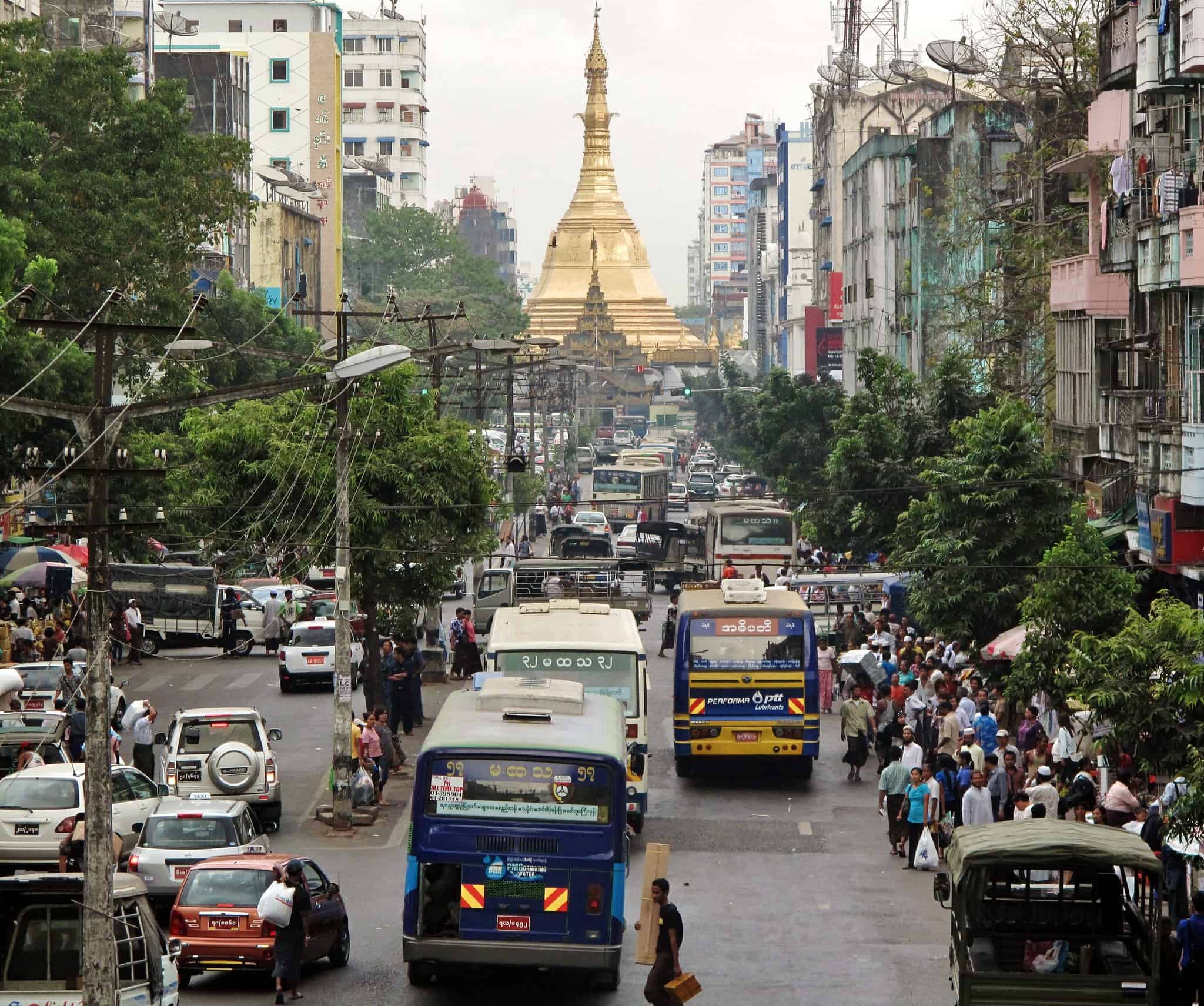
Unions in Myanmar have called a general strike after last month’s military coup overthrew the country’s civilian leadership. Since the February 1st coup which overthrew Myanmar’s first democratically elected government in decades, the ruling junta has engaged in a brutal crackdown of dissent, with at least 50 protestors killed and 1,800 injured in only a little more than a month. In spite of this violence a coalition of Myanmar’s unions announced their second general strike on Sunday and the call apparently generated an outpouring of support on Monday. The coalition of unions wrote in a letter announcing the call for a general strike that continuing “economic and business activities as usual…will only benefit the military as they repress” the protests. A parallel strike among Myanmar’s civil servants, which is targeted at grinding the machinery of the state to a halt until democracy is restored, has reportedly been very effective, with the junta pledging to fire civil servants who continue withholding their labor. It’s not the first mass labor uprising to hit the region recently, as Indian farmers went on an enormous strike last year to protest privatization.
Fred wrote last month that the NLRB had ruled that adjunct faculty at Elon University were “employees,” not managers, under the NLRA and thus eligible to form a union. Today, Elon finally agreed to drop all legal challenges and bargain with the Elon Faculty Union, which is affiliated with the SEIU. It’s been nearly two years since adjunct faculty – 31% percent of Elon’s teaching staff – had voted to unionize. Despite the delay, the union celebrated Elon’s capitulation. “Our union is excited about the outcome and we look forward to finally having a concrete way to voice the concerns of the adjunct faculty,” said Jim Roberts, adjunct professor of music and a leader on the Elon Faculty Union Organizing Committee.
An intriguing decision out of the Seventh Circuit suggests that, in the wake of Janus v. AFSCME, unions may have a case that they should not be obligated to represent employees who do not pay dues or agency fees, as employees are no longer obligated to do post-Janus. In other words, if the union were successful, there would be no duty of fair representation in the public sector, and unions could decline to decline to represent nonmembers in grievance proceedings. The court did not reach the merits in this case, finding that the union, the International Union of Operating Engineers Local 150, did not yet have standing to sue because it had not shown that it had been concretely injured by the Illinois state law that requires it to represent all bargaining unit employees. In order to bring suit, the union must “identify a nonmember who has demanded representation in a grievance proceeding.” But Judge Michael Y. Scudder, a Trump appointee writing for the court, said the suit raised “an important question” about the implications of Janus and rejected any suggestion that the union had “advanced a losing position.”
The Biden administration released a statement explaining why the President “strongly supports” passage of the PRO Act, which would be by far the most pro-labor legislation passed since the NLRA and is set for a vote in the House soon. Biden attributes the decline of the labor movement to “anti-union efforts by many employers for decades, lax enforcement of existing labor laws, and the failure to restore and strengthen labor laws.” Biden also alluded to the role unions play in reducing political inequality, not just economic inequality, saying passage of the PRO Act would “strengthen our democracy.” Also yesterday, AFL-CIO President Richard Trumka heaped praise on Biden. Trumka said that unlike past-presidents who required a basic explainer on collective bargaining and its importance, Biden simply “got it.”




Daily News & Commentary
Start your day with our roundup of the latest labor developments. See all
October 14
Eleventh Circuit overturns ERISA exhaustion rule; DHS finalizes removal of automatic renewal for work permits; AFGE challenges SSA over flexible scheduling policy.
October 13
Chicago hotel workers remain on strike; a coalition of Democratic states sues the Labor Department over canceled unemployment insurance grants; the Federal Labor Relations Authority establishes a new mediation framework for federal worker disputes.
October 12
Workers at the Obama Foundation begin organizing; MLB submits its latest collective bargaining agreement proposal; Brigham & Women's nurses postpone strike.
October 11
UAW President Shawn Fain succeeds in his reelection bid, and Spanish unions call for a general strike.
October 9
DHS proposes a $100k fee for the foreign grad employment program; Trump suspends tech company access to green card program; and private equity perpetuates poor working conditions for home care workers.
October 8
NLRB judge finds UPS unlawfully restricted union insignia; Harvard graduate workers authorize second strike; OSHA orders Union Pacific to pay $300,000 in damages in whistleblower case.