
Anita Alem is a student at Harvard Law School.
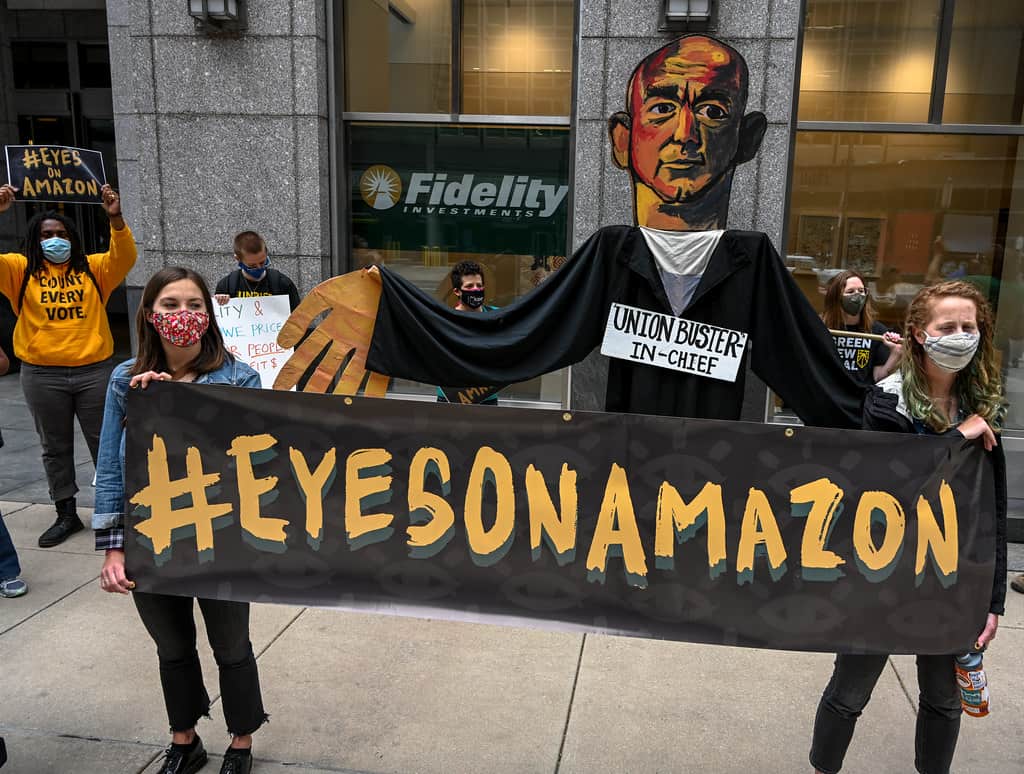
On Wednesday, the NLRB issued a complaint alleging that Amazon engaged in illegal conduct as part of its attempts to discourage unionization at the JFK8 facility, which nonetheless successfully voted to unionize, as Kevin reported on in April. The complaint stated Amazon unlawfully forced employees to sit through captive audience meetings, promised employees benefits if they did not vote in favor of the union, and threatened employees with loss of benefits if they voted in favor of the union. The complaint also alleged that Amazon discouraged workers from advocating for Juneteenth to be declared a holiday. An Amazon spokesperson told Vice that the NLRB complaint is without merit. Amazon Labor Union lawyer Seth Goldstein stated the complaint was “historic”: “I think it’s going to reverse decades’ worth of anti-union decisions.”
Bloomberg reported that the EEOC has declared its remote mediation program, launched in 2020 as a result of the COVID-19 pandemic, an “overwhelming success” after studies showed that 90% of participants were satisfied with their experience. However, the EEOC is itself facing unfair labor practice charges as a result of allegedly forcing unionized employees to return to the office without appropriately negotiating with the union. Rachel Shonfield, president of the American Federation of Government Employees Council 216, recommended the EEOC take the success of this program as a sign that remote work should be embraced, including for its own workers.
In other labor news, the Vox Media Union tweeted that 95% of its members have signed a strike pledge in the event the parties do not reach an agreement before their contract expires on June 13. The New York Times reported that the union is seeking wage increases, including cost of living raises, and affordable benefits, in the face of rapid inflation of consumer goods.
Following their initial success in California with Proposition 22, Uber, Lyft, and other gig economy platforms are continuing to push a ballot measure in Massachusetts to ensure its workers are barred from legal protections available to employees rather than independent contractors. While these efforts have been ongoing, on Wednesday, five U.S. Senators and three House Representatives, including Senator Elizabeth Warren and Representative Ayanna Pressley of Massachusetts, as well as Senator Bernie Sanders, sent letters to gig companies questioning whether they are taking adequate steps to keep drivers safe.
Finally, the Washington Post reported that the labor market may finally be “cooling” as companies seem to be entering a period of either relative stability or layoffs following a long period of significant hiring activity over the course of 2021 and early 2022. The “right-sizing” of the labor market may signal a coming stabilization in inflation rates.





Daily News & Commentary
Start your day with our roundup of the latest labor developments. See all
October 19
FDA reverses course on policy prohibiting off-duty union activity; FAA and NATCA reach deal to secure pay increase for air traffic controllers.
October 18
Federal judge again halts cancellation of the Bureau of Prisons’ CBA; tabletop gaming workers face roadblocks in union recognition.
October 16
Department of Labor reduces wage-and-hour enforcement at unionized workplaces; Fain's victory poses question of federal monitor's extension.
October 15
New reporting examines the rollback of child labor protections; California tries to block a strike; NLRB charges Wisconsin mental health provider with firing workers during union drive.
October 14
Eleventh Circuit overturns ERISA exhaustion rule; DHS finalizes removal of automatic renewal for work permits; AFGE challenges SSA over flexible scheduling policy.
October 13
Chicago hotel workers remain on strike; a coalition of Democratic states sues the Labor Department over canceled unemployment insurance grants; the Federal Labor Relations Authority establishes a new mediation framework for federal worker disputes.