

In December, we reported that the New York City Taxi and Limousine Commission established a pay formula for drivers of transportation network companies like Uber, Lyft, and Juno. The formula would set a minimum pay standard of $17.22 an hour after expenses. But just days before the standard is set to go into effect on February 1, Lyft and Juno are suing to stop it, claiming that the rule puts them at a competitive disadvantage against market dominant Uber. Under the Commission’s standard, “[t]he companies with lower utilization rates would be required to pay higher driver compensation per trip to offset the time their drivers are waiting for a dispatch.” Lyft and Juno think this would benefit Uber at their expense since Uber “can offer drivers more rides, and so less waiting time.”
Yesterday the Eleventh Circuit voted to grant rehearing en banc in Lewis v. Governor of Alabama. In 2015, the City Council of Birmingham, Alabama passed an ordinance to raise the City’s minimum wage to $10.10 by 2017. The day after the ordinance was signed into law, Alabama’s Governor approved the Uniform Minimum Wage and Right-to-Work Act, a bill preempting local workplace regulations. Birmingham residents making less than $10.10 challenged the Act in part on equal protection grounds, claiming that the majority-white state legislature intentionally discriminated against Birmingham’s majority-black population by passing the bill in a vote split along racial lines. The district court dismissed the complaint. But in July, an Eleventh Circuit panel allowed the residents’ intentional discrimination claim to move forward when it held that the plaintiffs pled sufficient facts to state a plausible claim of racial discrimination under the Fourteenth Amendment’s Equal Protection Clause. That panel’s opinion has now been vacated, and the full Eleventh Circuit will rehear the case.
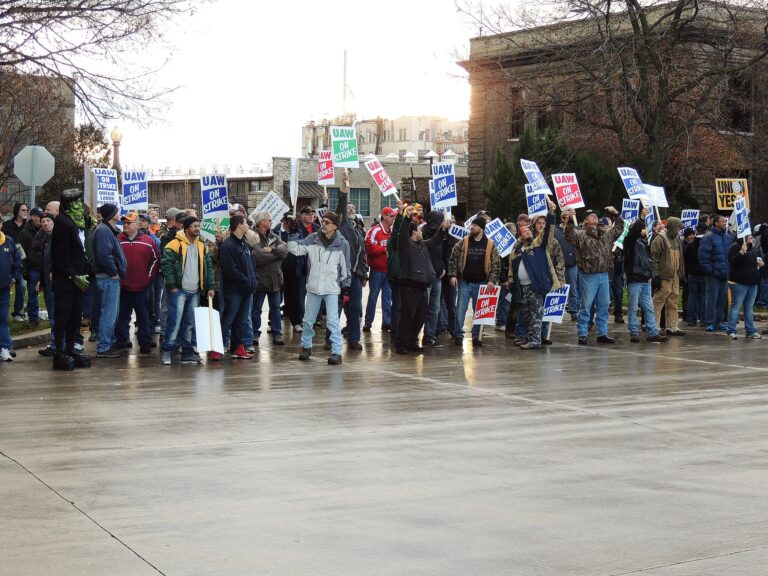
The topic of unionization dominated Amazon’s appearance before the New York City Council yesterday for a hearing about the company’s planned headquarters in Queens. As Bloomberg reported in December, workers at Amazon’s Staten Island fulfillment center recently went public with a campaign to unionize with the Retail, Wholesale and Department Store Union (RWDSU). Yesterday Council Speaker Corey Johnson asked Amazon’s representative if the company would agree to neutrality, to which the representative said no. The company has pledged to use union labor for the construction of the Queens site. Outside the hearing yesterday, RWDSU and the Teamsters protested against Amazon’s arrival in the city, while 32BJ SEIU and the Building and Construction Trade Council rallied in favor of it.
The New York Magazine Union announced that employer New York Media voluntarily recognized the union after several weeks of negotiations over bargaining unit composition and a card check conducted by the American Arbitration Association. The bargaining unit contains 180 editorial staff, including the print and web staff of the magazine and its verticals. The staff will be represented by the NewsGuild of New York, an affiliate of the Communications Workers of America.


Daily News & Commentary
Start your day with our roundup of the latest labor developments. See all
March 15
A U.S. District Court issues a preliminary injunction against the Department of Veterans Affairs for terminating its collective bargaining agreement, and SEIU files a lawsuit against DHS for effectively terminating immigrant workers at Boston Logan International Airport.
March 13
Republican Senators urge changes on OSHA heat standard; OpenAI and building trades announce partnership on data center construction; forced labor investigations could lead to new tariffs
March 12
EPA terminates contract with second-largest union; Florida advances bill restricting public sector unions; Trump administration seeks Supreme Court assistance in TPS termination.
March 11
The partial government shutdown results in TSA agents losing their first full paycheck; the Fifth Circuit upholds the certification of a class of former United Airline workers who were placed on unpaid leave for declining to receive the COVID-19 vaccine for religious reasons during the pandemic; and an academic group files a lawsuit against the State Department over a policy that revokes and denies visas to noncitizens for their work in fact-checking and content moderation.
March 10
Court rules Kari Lake unlawfully led USAGM, voiding mass layoffs; Florida Senate passes bill tightening union recertification rules; Fifth Circuit revives whistleblower suit against Lockheed Martin.
March 9
6th Circuit rejects Cemex, Board may overrule precedents with two members.