
Finlay Adamson is a student at Harvard Law School.
In today’s news and commentary, a U.S. District Court issues a preliminary injunction against the Department of Veterans Affairs for terminating its collective bargaining agreement, and SEIU files a lawsuit against DHS for effectively terminating immigrant workers at Boston Logan International Airport.
On Friday, the U.S. District Court for the District of Rhode Island issued a preliminary injunction against the Department of Veterans Affairs (VA) for terminating its collective bargaining agreement covering over 300,000 government workers. In the opinion, Judge Melissa DuBose found that the American Federation of Government Employees (AFGE) is likely to succeed on the merits of the claim that the CBA termination violates the union’s First Amendment rights and is “arbitrary and capricious” under the Administrative Procedure Act (APA). Judge DuBose also rejected the VA’s argument that AFGE’s claim should be adjudicated within ongoing litigation challenging EO 14251 in the Ninth Circuit. While the VA’s CBA termination took place pursuant to that Executive Order, the termination could not be part of the Ninth Circuit case because litigation against the EO was already “adjudicated by the district court and appealed to the Ninth Circuit before the VA terminated the Master CBA.” As Sophia covered, the Ninth Circuit recently vacated a preliminary injunction against the enforcement of EO 14251 against six unions and roughly 800,000 federal workers. President of AFGE’s National Veterans Affairs Council MJ Burke stated that “We are grateful for today’s court decision, but there is still work to do. The Union will not be deterred. Our members will continue carrying out the VA’s mission every day in service to those who served.”
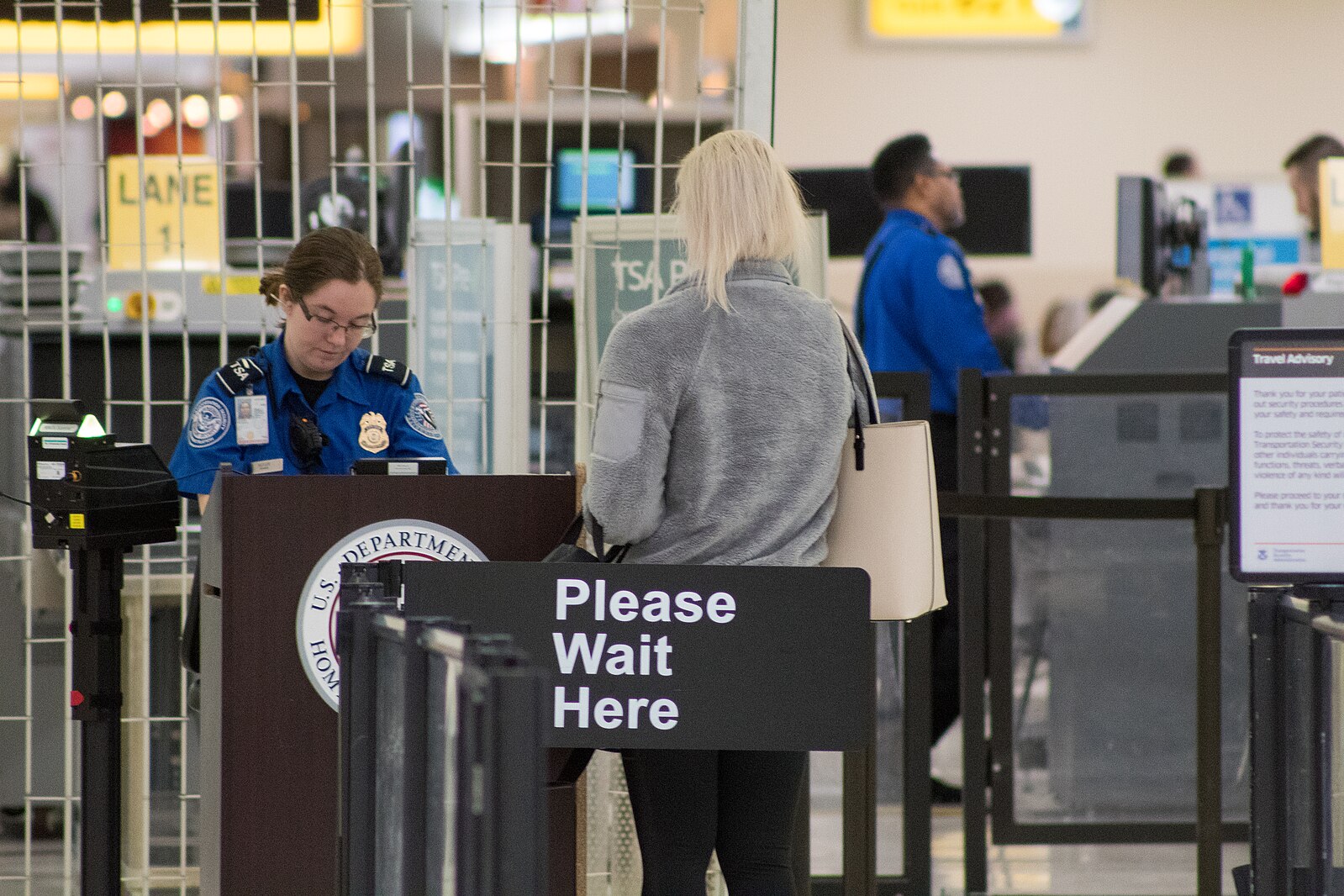
Also on Friday, Service Employees International Union (SEIU) filed a lawsuit against the Department of Homeland Security (DHS) and U.S. Customs and Border Protection (CBP) for effectively terminating at least 80 immigrant workers at Boston Logan International Airport. The suit alleges that in 2025 the Trump Administration began revoking the “Customs seals” of lawful immigrant airport workers, leaving those workers without the security clearance necessary to work at the airport. SEIU argues that the Administration’s actions were “arbitrary and capricious” under the APA and violated the Fifth Amendment’s Due Process Clause. Immigrant workers at airports in New York, San Francisco, Houston, and Orlando also report CBP revoking their Customs seals. These effective terminations are especially notable given that the DHS and Transportation Security Administration are on partial shutdown as lawmakers fail to reach a deal on funding the Department. As Gurtaran covered, TSA agents missed their first full paycheck last week. Travelers report TSA delays as long as five hours at major American airports.



Daily News & Commentary
Start your day with our roundup of the latest labor developments. See all
October 13
Chicago hotel workers remain on strike; a coalition of Democratic states sues the Labor Department over canceled unemployment insurance grants; the Federal Labor Relations Authority establishes a new mediation framework for federal worker disputes.
October 12
Workers at the Obama Foundation begin organizing; MLB submits its latest collective bargaining agreement proposal; Brigham & Women's nurses postpone strike.
October 11
UAW President Shawn Fain succeeds in his reelection bid, and Spanish unions call for a general strike.
October 9
DHS proposes a $100k fee for the foreign grad employment program; Trump suspends tech company access to green card program; and private equity perpetuates poor working conditions for home care workers.
October 8
NLRB judge finds UPS unlawfully restricted union insignia; Harvard graduate workers authorize second strike; OSHA orders Union Pacific to pay $300,000 in damages in whistleblower case.
October 7
DOL scraps plan to remove decades-old wage-and-hour guidance from federal regulations; New York enacts personnel records access law; Starbucks loses bid to dismiss Workers United trademark suit.