
Sophia is a student at Harvard Law School and a member of the Labor and Employment Lab.
In today’s news and commentary, the Ninth Circuit allows Trump to dismantle certain government unions based on national security concerns; and the DOL set to focus enforcement on firms with “outsized market power.”
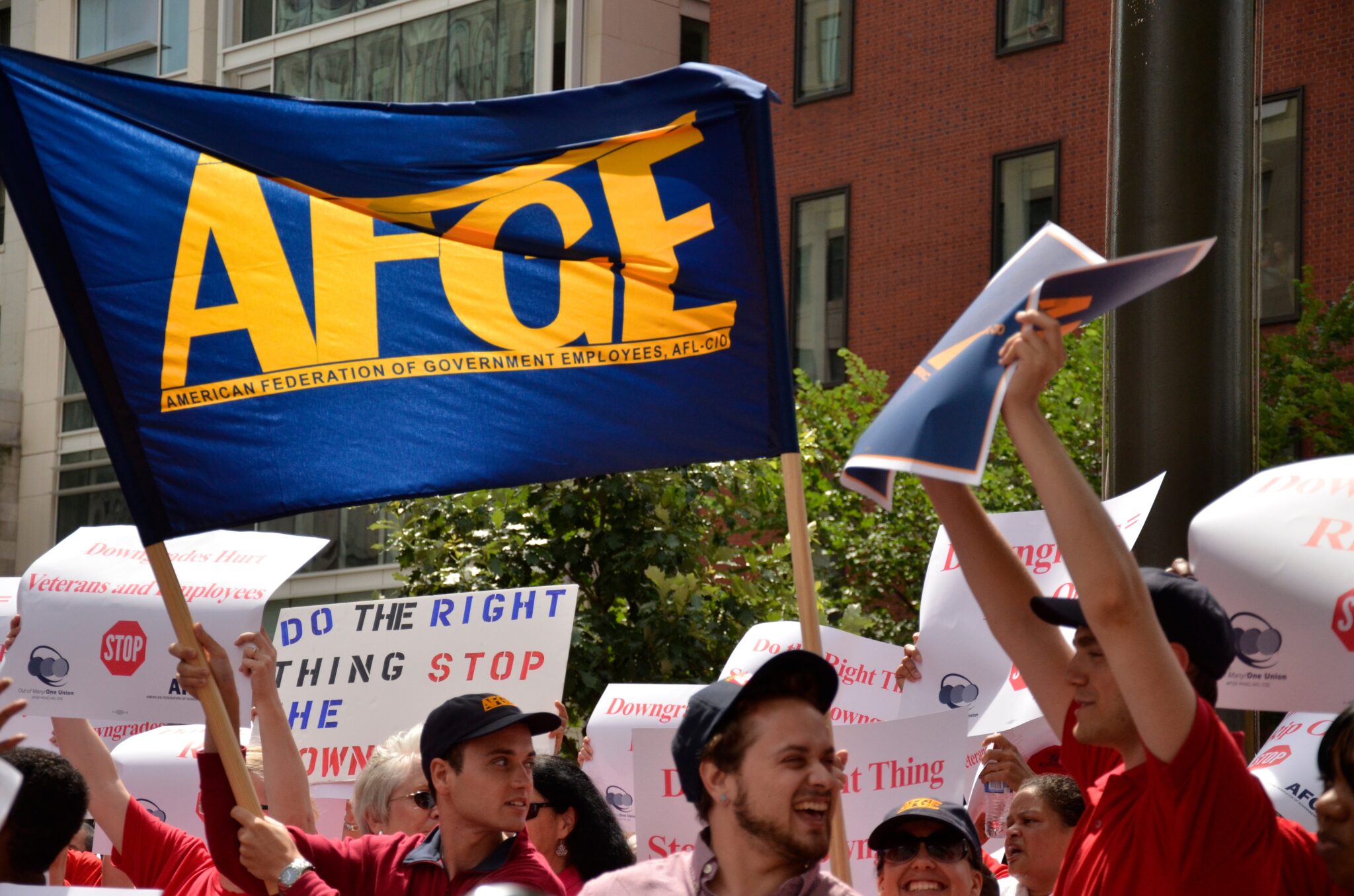
Yesterday, in AFGE v. Trump (9th Cir. 2026) the Ninth Circuit vacated a lower court order that enjoined President Trump’s Executive Order 14251, which excluded certain federal agencies from collective bargaining requirements under the Federal Service Labor-Management Relations Statute (FSLMRS). The FSLMRS protects the rights of federal employees to unionize, but exempts certain agencies from coverage and authorizes the President to exclude other agencies from coverage based on “national security concerns.” The agencies excluded under EO 14251 include: the Departments of State, Justice, and Veterans Affairs, the EPA, and most of the Departments of Energy, Defense, and Treasury, and some subdivisions of the Departments of Agriculture, Homeland Security, and Health and Human Services.
The plaintiffs-appellees were six unions representing ~800,000 federal civilian employees who sued the President, alleging that EO 14251 constituted First Amendment retaliation, among other claims. Regarding the merits of the case, a panel of three Ninth Circuit judges concluded that the plaintiffs “had not demonstrated a likelihood of success or serious questions on the merits of plaintiffs’ retaliation claim” because the President’s EO “discloses no retaliatory animus on its face and instead expresses that the President’s primary concern with union activity was its interference with national security.” As such, the Ninth Circuit upheld the EO on the grounds that the President “would have taken the same actions in the absence of the asserted retaliatory intent.”
In a memo sent to Department of Labor regional attorneys, Solicitor of Labor Jonathan Berry wrote that the Office of the Solicitor “will give greater scrutiny to employers whose market power permits them to dominate their respective labor markets in ways that can facilitate employment-law violations.” According to Josh Eidelson of Bloomberg News who viewed the memo, Berry also noted that enforcing laws against companies with “outsized market power… helps the American worker the most” and that companies where a union was already present to enforce workers’ rights would be less likely to receive agency scrutiny. The memo highlights a growing interest in the connection between antitrust and labor issues. However, questions of how the memo will actually be enforced remain given that 17.3% of the DOL’s workforce left as part of the Trump administration’s deferred resignation program in early 2025.




Daily News & Commentary
Start your day with our roundup of the latest labor developments. See all
October 23
Employers increasingly shift health care costs onto workers and NYC proposes placing restrictions on fully automated customer service.
October 22
SCOTUS declines Wilcox appeal; Penn State research assistants win bargaining rights; SEIU sued over military leave firing.
October 21
DOL withdraws tipped-worker rule; Instacart settles hiring-bias claims; Phillips 66 locks out New Jersey refinery workers.
October 20
Korean unions oppose labor exemption bill; Portland city workers prepare for strike; UPenn grad student union looks to dismiss university filing
October 19
FDA reverses course on policy prohibiting off-duty union activity; FAA and NATCA reach deal to secure pay increase for air traffic controllers.
October 18
Federal judge again halts cancellation of the Bureau of Prisons’ CBA; tabletop gaming workers face roadblocks in union recognition.