
Lolita De Palma is a student at Harvard Law School.
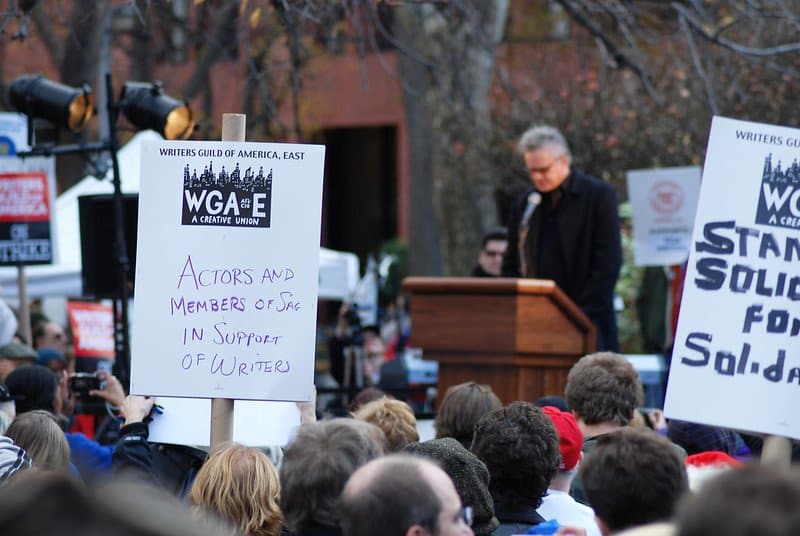
On Thursday, the Writers Guild of America (East) filed an unfair labor practice charge against Hearst Magazines. In a November meeting, Hearst invited every employee it deemed to be a supervisor and told them that they could not legally sign a union card. Hearst followed up by creating a website designed to discourage its employees from unionizing. A Hearst employee was also told by management “that if I didn’t trust them, I didn’t have to work there.”
Starting Thursday, more than 500 food service workers in Honolulu’s Daniel K. Inouye International Airport have gone on strike to call for better pay and benefits. The workers, represented by UNITE HERE Local 5, began picketing at 3 a.m on Thursday and will likely continue through Saturday. The strike affects 25 concession stands, restaurants, bars, and other establishments at the airport.
On Wednesday, 15,000 nurses participated in strikes across Northern Ireland for higher wages and better staffing. Northern Ireland nurses earn almost $5,000 less a year than nurses in the rest of the United Kingdom. Nurses are also considering leaving the profession because of the pressures caused by staffing shortages. Patt Cullen, director of the Royal College of Nursing, said, “With around 2,800 nursing posts in the Health Service Care, record levels of money being spent on agency staff to plug gaps and nurses’ pay sliding further and further behind the rest of the U.K., our members have had enough.”
A new survey shows that half of American workers did not receive a pay raise this year. 49% of employees received some form of salary increase, which is an increase of 11% from last year. Higher-paid workers were more likely to have received a raise than lower-paid ones. Almost two-thirds of workers making less than $30,000 a year reported no salary increases this year.
NPR’s Planet Money have put together a short video on the 1981 air traffic controllers strike.



Daily News & Commentary
Start your day with our roundup of the latest labor developments. See all
October 9
DHS proposes a $100k fee for the foreign grad employment program; Trump suspends tech company access to green card program; and private equity perpetuates poor working conditions for home care workers.
October 8
NLRB judge finds UPS unlawfully restricted union insignia; Harvard graduate workers authorize second strike; OSHA orders Union Pacific to pay $300,000 in damages in whistleblower case.
October 7
DOL scraps plan to remove decades-old wage-and-hour guidance from federal regulations; New York enacts personnel records access law; Starbucks loses bid to dismiss Workers United trademark suit.
October 6
Protect College Sports Act dampens athlete unionization outlook; Stanford RA union decides to withdraw petition
October 5
Delaware bans captive audience meetings; EEOC settles remote work national origin discrimination claim; First Circuit stays enforcement order in VA's dispute with AFGE.
October 4
Boston nurses announce open-ended strike; federal judge restores federal prison workers' union protections; St. Louis workers form the first movie theater union in Missouri.