
Lolita De Palma is a student at Harvard Law School.
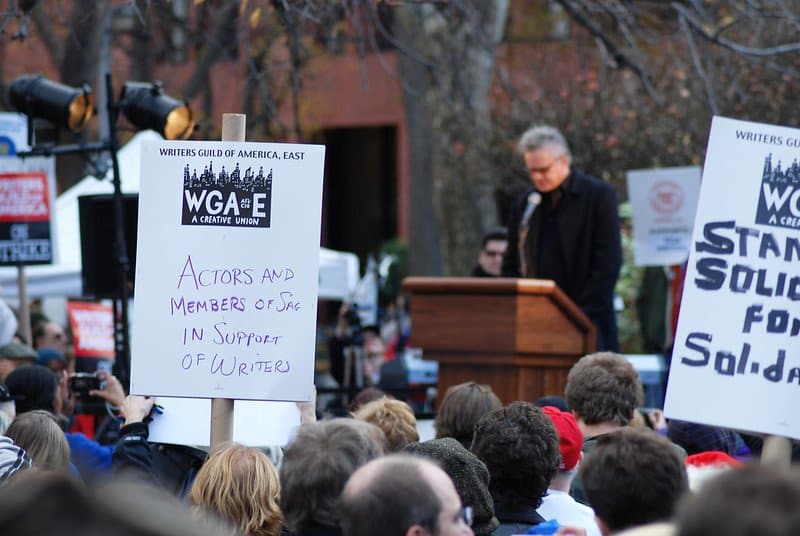
On Thursday, the Writers Guild of America (East) filed an unfair labor practice charge against Hearst Magazines. In a November meeting, Hearst invited every employee it deemed to be a supervisor and told them that they could not legally sign a union card. Hearst followed up by creating a website designed to discourage its employees from unionizing. A Hearst employee was also told by management “that if I didn’t trust them, I didn’t have to work there.”
Starting Thursday, more than 500 food service workers in Honolulu’s Daniel K. Inouye International Airport have gone on strike to call for better pay and benefits. The workers, represented by UNITE HERE Local 5, began picketing at 3 a.m on Thursday and will likely continue through Saturday. The strike affects 25 concession stands, restaurants, bars, and other establishments at the airport.
On Wednesday, 15,000 nurses participated in strikes across Northern Ireland for higher wages and better staffing. Northern Ireland nurses earn almost $5,000 less a year than nurses in the rest of the United Kingdom. Nurses are also considering leaving the profession because of the pressures caused by staffing shortages. Patt Cullen, director of the Royal College of Nursing, said, “With around 2,800 nursing posts in the Health Service Care, record levels of money being spent on agency staff to plug gaps and nurses’ pay sliding further and further behind the rest of the U.K., our members have had enough.”
A new survey shows that half of American workers did not receive a pay raise this year. 49% of employees received some form of salary increase, which is an increase of 11% from last year. Higher-paid workers were more likely to have received a raise than lower-paid ones. Almost two-thirds of workers making less than $30,000 a year reported no salary increases this year.
NPR’s Planet Money have put together a short video on the 1981 air traffic controllers strike.


Daily News & Commentary
Start your day with our roundup of the latest labor developments. See all
September 16
Trump nominates Catherine Eschbach as EEOC general counsel; NLRB declines to resolve union work-assignment dispute; Allina Health physicians begin four-day strike.
September 15
Documents reveal the inner workings of Amazon's union avoidance program; Washington state public sector unions reach tentative deals amid a difficult bargaining cycle; hundreds of Nevada Culinary Union members protest their union's health care changes.
September 14
NCAA and Big Ten file motion to dismiss in former star player's NIL suit; Seventh Circuit rules against former postal worker in discrimination suit.
September 13
Documents released on the 25th anniversary of the 9/11 attacks show that city officials encouraged workers to return to Ground Zero despite knowing the risks of asbestos exposure, and new polls demonstrate continued widespread support for labor unions.
September 10
Amazon workers allege pregnancy discrimination; federal unions challenge USDA reorganization; NYC warns of silicosis risks.
September 9
Wynn Las Vegas employees allege anti-union retaliation; Amazon faces a class action over pregnancy accommodations; H-1B demand plunges following a six-figure visa fee.