

Hannah Finnie is a writer in Washington, D.C. interested in the intersections of work and culture. She is a graduate of Harvard Law School.
Lina Khan, chair of the Federal Trade Commission (FTC), responded to a letter by members of Congress urging the FTC (and the DOJ) to implement certain changes in order to protect workers organizing from antitrust enforcement. As Nikita explained in a previous post, although the two acts at issue here – the Clayton Act and the Norris-LaGuardia Act – were meant to protect workers against employers using antitrust tools against them, they have still been wielded against workers trying to organize. In particular, they’ve been used to prevent workers classified as independent contractors from organizing.
Khan’s response overviewed a number of actions the FTC has already taken to address unfair competition as it relates to workers, but also indicated that the FTC would likely heed some of the advice in the representatives’ letter. Namely, Khan wrote that the FTC should be “judicious in its use of scarce resources, focusing its antitrust enforcement on tackling monopolization or mergers involving dominant firms” – which is likely a response to the representatives’ request for the FTC to not prosecute workers organizing under its antitrust enforcement tools. She also said she would consider working with DOJ and other agencies to provide guidance to courts, which have used antitrust legislation to rule against workers trying to organize, to explain how the Clayton Act is designed to “exempt worker organizing activities from antitrust.”
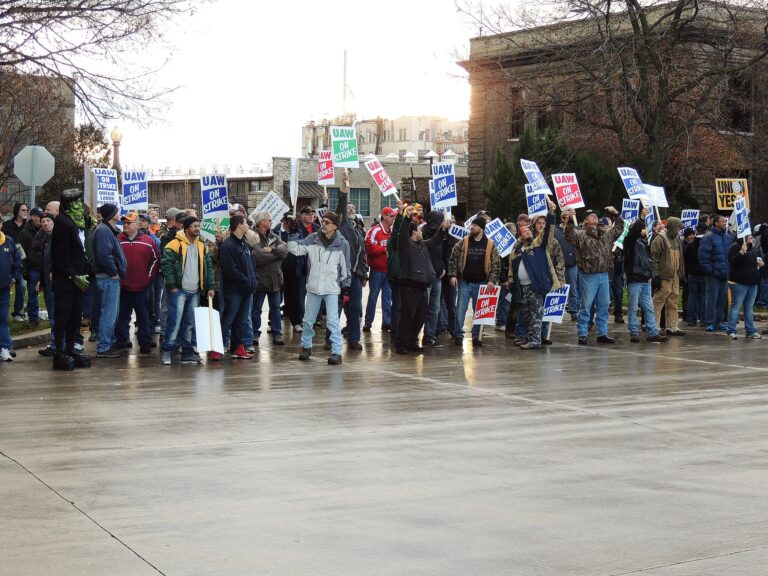
Here at Harvard, the Harvard Graduate Students Union-UAW Local 5118 strike authorization vote ended last night at 6:30 p.m. eastern with student workers voting overwhelmingly to authorize the strike. The final tally was 91.7% in favor of authorization. This vote enables the union to go on strike anytime between October 1, 2021 and December 31, 2021.
As mentioned in an earlier post, the strike authorization vote is the result of stalled negotiations between the union and the school culminating in the current contract expiring over the summer. HGSU-UAW says that it and Harvard are still far away on a number of important issues, from raises (Harvard’s proposed 2.5% to the union’s proposal of 4%) to health care costs to having better reporting and non-discrimination procedures for student workers. The union represents 5,000 workers.
Speaking of the UAW, a union that traditionally represents auto workers but includes other workers too, members (including current members and retired members) are about to vote on a referendum that could upend UAW’s leadership structure. Up until now, UAW’s leaders have been selected by delegates at its convention. This referendum would switch the process to a direct vote, meaning UAW’s members would instead vote directly for its leadership. This referendum, which will begin October 19 and end November 29, comes after years of fraud within the UAW and frustration from rank and file members who believe that union leadership has too frequently conceded items at the bargaining table it shouldn’t have.
Finally, the IATSE (the International Alliance of Theatrical Stage Employees) is set to begin its own strike authorization vote today. The union represents 60,000 workers in entertainment, and if a strike authorization vote passes the union’s president could call a strike at any moment, bringing much of the entertainment industry to a halt. The union has never gone on strike in its history (and authorizing a strike does not necessarily mean a strike itself is likely), but workers say that working conditions needs to change. The union wants a 10-hour minimum turnaround, which is the amount of time in between production days. Currently, some turnarounds are eight or nine hours, which could mean just six hours at home in between workdays after accounting for one-hour commutes both ways. Next, the union is also seeking to end something called “Fraturdays,” which is when workers work a late Friday night shift that ends Saturday morning, meaning workers don’t get a real weekend.



Daily News & Commentary
Start your day with our roundup of the latest labor developments. See all
March 20
Appeal to 9th Cir. over law allowing suit for impersonating union reps; Mass. judge denies motion to arbitrate drivers' claims; furloughed workers return to factory building MBTA trains.
March 19
WNBA and WNBPA reach verbal tentative agreement, United Teachers Los Angeles announce April 14 strike date, and the California Gig Workers Union file complaint against Waymo.
March 18
Meatpacking workers go on strike; SCOTUS grants cert on TPS cases; updates on litigation over DOL in-house agency adjudication
March 17
West Virginia passes a bill for gig drivers, the Tenth Circuit rejects an engineer's claims of race and age bias, and a discussion on the spread of judicial curtailment of NLRB authority.
March 16
Starbucks' union negotiations are resurrected; jobs data is released.
March 15
A U.S. District Court issues a preliminary injunction against the Department of Veterans Affairs for terminating its collective bargaining agreement, and SEIU files a lawsuit against DHS for effectively terminating immigrant workers at Boston Logan International Airport.