
Ted Parker is a student at Harvard Law School and a member of the Labor and Employment Lab.
In today’s news and commentary, newly proposed budgets for the Department of Labor and the National Labor Relations Board show staff cuts on the horizon, and an Oregon state law mandating labor peace agreements in cannabis dispensaries is permanently enjoined.
Proposed budgets for the Department of Labor (DOL) and the National Labor Relations Board released (NLRB) released on Friday point to drastic cuts in staff for both agencies. In yesterday’s news and commentary, Liana reported that a preliminary injunction currently prevents Trump from ordering mass firings of federal workers. But even if that injunction becomes permanent, Trump can still shed federal workers with Congressional cooperation. Bloomberg reports that the Department of Labor’s FY 2026 budget in brief requests funding for only 10,879 employees, down from the 14,855 it has now. That would amount to a 25% cut to DOL staff (already low due to more than 2,700 buyouts in recent months). The NLRB is in a similar position. Its budget justification proposes a 4.7% spending decrease, which would be achieved through staff attrition (buyouts and voluntary early retirement). Bloomberg reports that this is an effort to “avoid[] mass layoffs” while still “align[ing]” with the administration’s downsizing goals, making this a “qualified win” for the agency (if Congress approves). Needless to say, any reduction in the workforce of the NLRB will only make it more difficult for the agency to carry out its functions and add to already long backlogs.
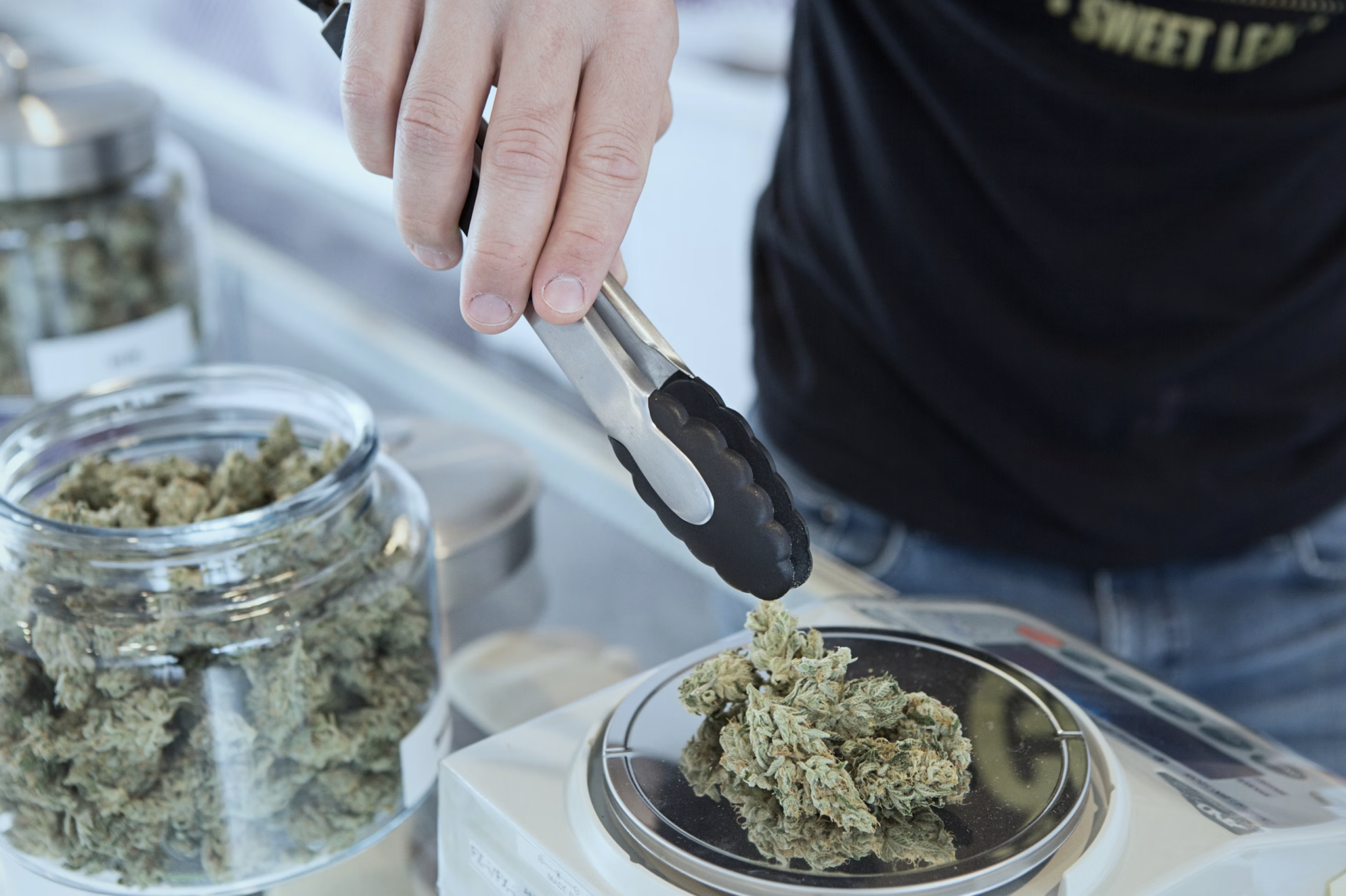
Meanwhile, a federal district court in Oregon permanently enjoined a state law requiring businesses that sell cannabis to sign labor peace agreements (LPAs). In several states, a new dispensary must enter into an LPA with a union in order to receive a license to sell cannabis. John recently covered one dispensary’s challenge to California’s version of this law in Ctrl Alt Destroy, Inc. v. Elliot. That challenge was dismissed on a “unclean hands” theory (“Because it is a business which exists solely for the purpose of making money through . . . violations of federal law, Plaintiff comes before the Court seeking equitable relief with unclean hands.”). Now, a court in Oregon has come out the other way in Casala, LLC v. Kotek, which judged the state law both Garmon– and Machinists-preempted. As John pointed out, Ctrl Alt Destroy’s unclean hands theory arguably makes the preemption question irrelevant. However, Casala does not explicitly address this theory. Instead, it makes the orthogonal point that even though the cannabis industry is illegal under federal law, the NLRA still applies because “[t]he NLRA does not limit its jurisdiction to ‘lawful commerce’ or ‘legal substance,’” leaving a true confrontation between these positions to another day.




Daily News & Commentary
Start your day with our roundup of the latest labor developments. See all
October 22
SCOTUS declines Wilcox appeal; Penn State research assistants win bargaining rights; SEIU sued over military leave firing.
October 21
DOL withdraws tipped-worker rule; Instacart settles hiring-bias claims; Phillips 66 locks out New Jersey refinery workers.
October 20
Korean unions oppose labor exemption bill; Portland city workers prepare for strike; UPenn grad student union looks to dismiss university filing
October 19
FDA reverses course on policy prohibiting off-duty union activity; FAA and NATCA reach deal to secure pay increase for air traffic controllers.
October 18
Federal judge again halts cancellation of the Bureau of Prisons’ CBA; tabletop gaming workers face roadblocks in union recognition.
October 16
Department of Labor reduces wage-and-hour enforcement at unionized workplaces; Fain's victory poses question of federal monitor's extension.