

Sharon Block is a Professor of Practice and the Executive Director of the Center for Labor and a Just Economy at Harvard Law School.
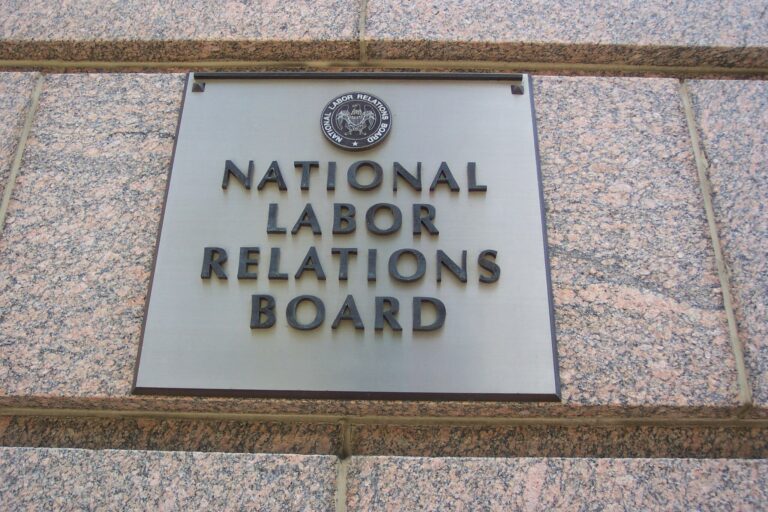
In addition to many POTUS tweets, the controversy over NFL players’ national anthem protest has also generated a number of interesting labor law questions, about which Ben has written. A new issue arose, however, in a curious exchange in the Bloomberg Daily Labor Report (subscription only) on Thursday about the charge filed with the National Labor Relations Board by United Labor Unions Local 100 against the Dallas Cowboys. The charge alleges that Cowboys owner Jerry Jones violated the National Labor Relations Act by threatening to bench any players who failed to stand during the national anthem.
You don’t have to be much a football fan to notice that the United Labor Unions Local 100, a small union known for representing service workers in the South, is unlikely to be the certified collective bargaining representative of the Dallas Cowboys players. In fact, all NFL players are represented by the National Football League Players Association. Noting that the NFLPA seems to have nothing to do with the charge and that the United Labor Unions Local 100 has nothing to do with the NFLPA, both a management lawyer, Tom Gies of Crowell & Moring, and a labor law professor, Paul Secunda, questioned the standing of United Labor Unions Local 100 to file the charge.
The exchange is interesting because, unlike most other judicial or administrative proceedings, the National Labor Relations Act does not include a standing requirement. The Board’s regulations simply state that “any person may file a charge alleging that any person has engaged in . . . an unfair labor practice.” (emphasis added.) While it may seem strange that a stranger to a dispute has a right to initiate Board proceedings – it certainly struck Gies and Secunda as strange – it makes sense if you think about the bigger picture of how the Board operates.
To a large extent, the charge filing process is simply a means of giving the NLRB General Counsel notice that a violation of rights may have occurred and should be investigated. Such notice is important because the General Counsel is precluded from going out and looking for violations on his or her own initiative. In the Obama Administration, we took great pride in adopting “strategic enforcement” initiatives across the Department of Labor’s enforcement agencies, like the Wage and Hour Division and the Occupational Safety and Health Administration, pursuant to which we used vast amounts of data and community contacts to anticipate where violations might be, looking especially in industries and workplaces where vulnerable workers might be hesitant to come forward themselves to file charges. We called these cases “directed investigations” and they were as successful in uncovering violations as cases initiated on the basis of employee complaints.
There is nothing strategic about how the NLRB General Counsel is allowed to initiate investigations. In fact, even if the General Counsel witnesses a flagrant violation of the Act, absent a pending charge, the General Counsel is unable to do anything. In light of the constraints on getting cases into the NLRA’s process, it makes sense to have a broad definition of who may be the General Counsel’s eyes and ears in pointing out where problems under the Act may exist. Unions traditionally have played the role of strategically directing the Board’s attention to potential violations. In this era of declining union density, however, it may be important for other organizations to think about how they can play a strategic agenda setting role on behalf of workers who don’t have a union, but whose right to engage in concerted activity under the Act may be being violated. Clearly, the Dallas Cowboys are not unrepresented workers hiding in the shadows but the curious circumstance of a stranger coming to their rescue has raised another interesting issue in the on-going NFL anthem protests.






Daily News & Commentary
Start your day with our roundup of the latest labor developments. See all
October 20
Korean unions oppose labor exemption bill; Portland city workers prepare for strike; UPenn grad student union looks to dismiss university filing
October 19
FDA reverses course on policy prohibiting off-duty union activity; FAA and NATCA reach deal to secure pay increase for air traffic controllers.
October 18
Federal judge again halts cancellation of the Bureau of Prisons’ CBA; tabletop gaming workers face roadblocks in union recognition.
October 16
Department of Labor reduces wage-and-hour enforcement at unionized workplaces; Fain's victory poses question of federal monitor's extension.
October 15
New reporting examines the rollback of child labor protections; California tries to block a strike; NLRB charges Wisconsin mental health provider with firing workers during union drive.
October 14
Eleventh Circuit overturns ERISA exhaustion rule; DHS finalizes removal of automatic renewal for work permits; AFGE challenges SSA over flexible scheduling policy.