
Elias Decker is a student at Harvard Law School.
In today’s news and commentary, NLRB advice memo narrows political protest protections and NLRB asks federal appeals court for deference.
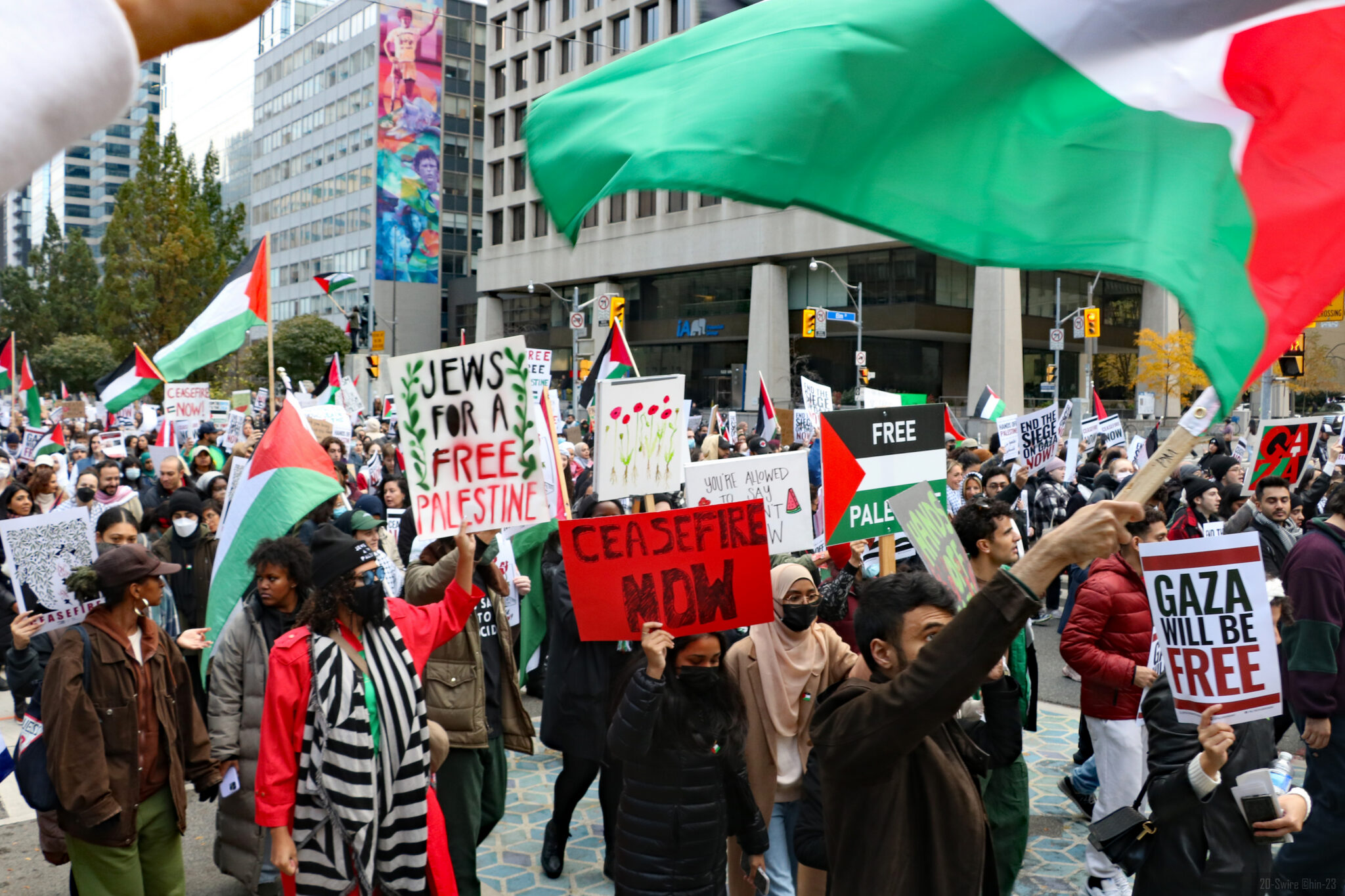
In an advice memorandum issued on August 30, 2026, the NLRB’s Advice Division strictly interpreted protections for workers engaging in political protest, requiring a close relationship between a protest’s goals and workers’ “mutual aid and protection.” In 2023, workers associated with No Azure for Apartheid and No Tech for Apartheid began sharing posts and links about the war in Gaza through company emails and on company chat groups or chat boards. In 2024, at least one worker invited co-workers to a protest on Microsoft’s campus, drawing “a large crowd.” Microsoft fired the workers following this incident. The memo advises that the protest’s goals — cutting Microsoft’s ties with the Israeli government, raising awareness of the conditions in Gaza, and raising humanitarian funds — where too attenuated from “mutual aid and protection” to be protected by the NLRA. While such a memo, coming out of the General Counsel’s office, is not binding, it indicates how the General Counsel is likely to approach an issue. In fact, this advice memo indicates a departure from the Biden’ NLRB’s 2024 decision in Home Depot that protected a worker’s BLM display.
On Tuesday, September 1, the NRLB asked the entirety of the D.C. Circuit federal court of appeals to review the decision of a three-judge panel that struck down the NLRB’s doctrine prohibiting successor companies from not recognizing an existing union. This case continues the fall-out from the Supreme Court’s 2024 decision in Loper Bright that ended courts’ default deference to administrative agencies on a variety of questions. The three-judge panel decided that they do not need to defer to the NLRB’s rule that prohibits a successor company, i.e., where a second company purchases a workplace from the original company, from withdrawing recognition from the already-existing union at that workplace. The judges rooted their decision in the new authority granted to them by Loper Bright, saying that the successor bar is such an “important policy choice” that the agency determination deserves no deference. The panel’s decision was written by two Trump-appointed judges, with a dissent authored by a George H.W. Bush appointee. The entire D.C. Circuit is a majority Democratic appointees.





Daily News & Commentary
Start your day with our roundup of the latest labor developments. See all
October 16
Department of Labor reduces wage-and-hour enforcement at unionized workplaces; Fain's victory poses question of federal monitor's extension.
October 15
New reporting examines the rollback of child labor protections; California tries to block a strike; NLRB charges Wisconsin mental health provider with firing workers during union drive.
October 14
Eleventh Circuit overturns ERISA exhaustion rule; DHS finalizes removal of automatic renewal for work permits; AFGE challenges SSA over flexible scheduling policy.
October 13
Chicago hotel workers remain on strike; a coalition of Democratic states sues the Labor Department over canceled unemployment insurance grants; the Federal Labor Relations Authority establishes a new mediation framework for federal worker disputes.
October 12
Workers at the Obama Foundation begin organizing; MLB submits its latest collective bargaining agreement proposal; Brigham & Women's nurses postpone strike.
October 11
UAW President Shawn Fain succeeds in his reelection bid, and Spanish unions call for a general strike.