
Ted Parker is a student at Harvard Law School and a member of the Labor and Employment Lab.
In today’s news and commentary, the Equal Employment Opportunity Commission (EEOC) regains a quorum and the Second Circuit issues an opinion endorsing the legal theory that implicit bias trainings could, in certain circumstances, foster a hostile work environment.
The EEOC regained its quorum on Friday after a Senate vote confirmed nominee Brittany Panuccio as commissioner. The commission, which is ordinarily composed of five members, was only one member short when Trump took office last January. But on the day of his inauguration, Trump fired two Democratic commissioners (Charlotte A. Burrows and Jocelyn Samuels), leaving only two commissioners left (Republican Andrea R. Lucas and Democratic Kalpana Kotagal). As a result, the EEOC has lacked several important powers during Trump’s second term and has been unable to fully implement the ideological program of Acting Chair Lucas. With the addition of Panuccio, the commission now has a bare quorum and can once again vote on “big-ticket items” like new regulations and envelope-pushing litigation. For now, though, the EEOC is closed for the duration of the government shutdown. [Correction: It was misreported in Law360 that Panuccio was confirmed on Friday. In fact, the vote on Friday advanced Panuccio’s nomination. She was confirmed the following Tuesday.]
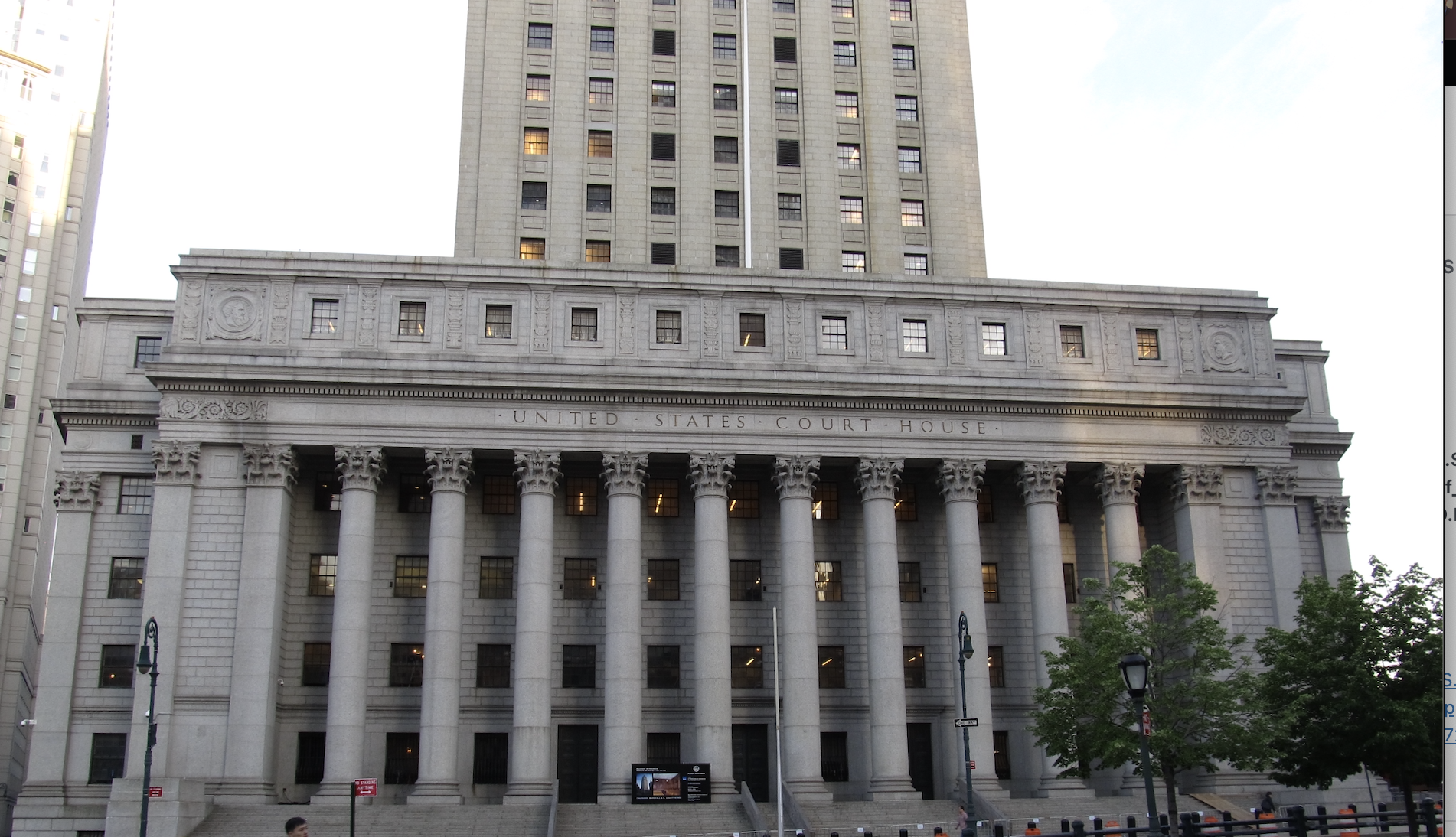
Nevertheless, as Bloomberg reports, even before gaining a quorum, the signals that Acting Chair Lucas has put out with respect to DEI may already be having an effect on the law. Last March, Lucas issued a document entitled “What You Should Know about DEI-Related Discrimination at Work,” advancing legal theories according to which DEI programs might be found discriminatory. Six former commissioners, two former general counsels, and other former officials joined an open letter rebutting the document’s assertions and pointing out that it was not official guidance voted on by a quorum but simply “the Acting Chair’s document.” Nevertheless, a Second Circuit panel (composed of two Trump appointees and one Clinton appointee) seemed to agree with the theory put forth in that document in a decision last month. In Chislett v. New York City Department of Education, the panel unanimously held that it is theoretically possible to “suffer[] a hostile work environment fostered by mandatory implicit bias trainings.” The panel did not rule that this actually occurred in this case, only that the plaintiff, an executive director of an Advanced Placement program for students in “underserved communities,” had raised genuine disputes of material facts sufficient to survive summary judgment on remand. The panel was careful “not [to] suggest that the conduct of implicit bias trainings is per se racist,” merely asserting that “a constant drumbeat of essentialist, deterministic, and negative language [about a particular race]” could be. Crucially, in the facts of the case, the trainings (perhaps themselves atypical) were followed on by a long series of interpersonal conflicts between employees, carried out in explicitly racial terms. Overall, it’s unclear to what extent the law is actually shifting in this area. The Tenth Circuit heard a case last year that came out the other way. Similar cases are now pending in the Third and Ninth Circuits.




Daily News & Commentary
Start your day with our roundup of the latest labor developments. See all
October 22
SCOTUS declines Wilcox appeal; Penn State research assistants win bargaining rights; SEIU sued over military leave firing.
October 21
DOL withdraws tipped-worker rule; Instacart settles hiring-bias claims; Phillips 66 locks out New Jersey refinery workers.
October 20
Korean unions oppose labor exemption bill; Portland city workers prepare for strike; UPenn grad student union looks to dismiss university filing
October 19
FDA reverses course on policy prohibiting off-duty union activity; FAA and NATCA reach deal to secure pay increase for air traffic controllers.
October 18
Federal judge again halts cancellation of the Bureau of Prisons’ CBA; tabletop gaming workers face roadblocks in union recognition.
October 16
Department of Labor reduces wage-and-hour enforcement at unionized workplaces; Fain's victory poses question of federal monitor's extension.