
Gurtaran Johal is a student at Harvard Law School.
In today’s news and commentary, Denver Labor helps workers recover over $2.3 million in unpaid wages; the Eighth Circuit denies a request for an en ban hearing on Minnesota’s ban on captive audience meetings; and many top labor unions break from AFGE’s support for a Republican-backed government funding bill.
Denver Labor, a division of the Auditor’s Office in the City of Denver that promotes lawful employment and wage compliance, recovered over $2.3 million in unpaid wages for workers. In Denver, wage theft is a significant issue, and Denver Labor helped over 7,200 workers recover money owed for unpaid wages. The recovery included reclaiming over $23,000 for 21 workers at a barbershop who had their tip credit illegally claimed; over $16,000 for 66 workers at a yoga studio who suffered sick leave pay violations; and over $70,000 for 44 workers at a steakhouse restaurant who were paid below minimum wage. Denver Labor’s investigations were vital towards cementing recovery and supporting the workforce. Workplace Justice Lab at Rutgers University also conducted a research study where they found that in Denver, tens of thousands of workers in the metropolitan area are paid below minimum wage each year. Denver Labor is continuing to work with the city to ensure that its community members receive the pay that they deserve.
Meanwhile, the U.S. Court of Appeals for the Eighth Circuit denied a request for an en banc hearing on Minnesota’s ban on captive audience meetings by challengers, led by the Minnesota Chapter of Associated Builders and Contractors. Minnesota’s ban on captive audience meetings prevents employers from retaliating against workers who choose not to attend meetings hosted by employers with anti-union speech and sentiments. In September 2025, the Minnesota Attorney General’s Office won the dismissal of the lawsuit. The Eighth Circuit held that no enforcement actions were taken by state officials, which meant that the court was being asked to decide a hypothetical case. This case is only one among many pending against other states’ captive audience laws, such as Illinois and California. These laws have largely been passed in Democratic-majority state legislatures and urged by unions to protect the employee’s ability to exercise his labor rights.
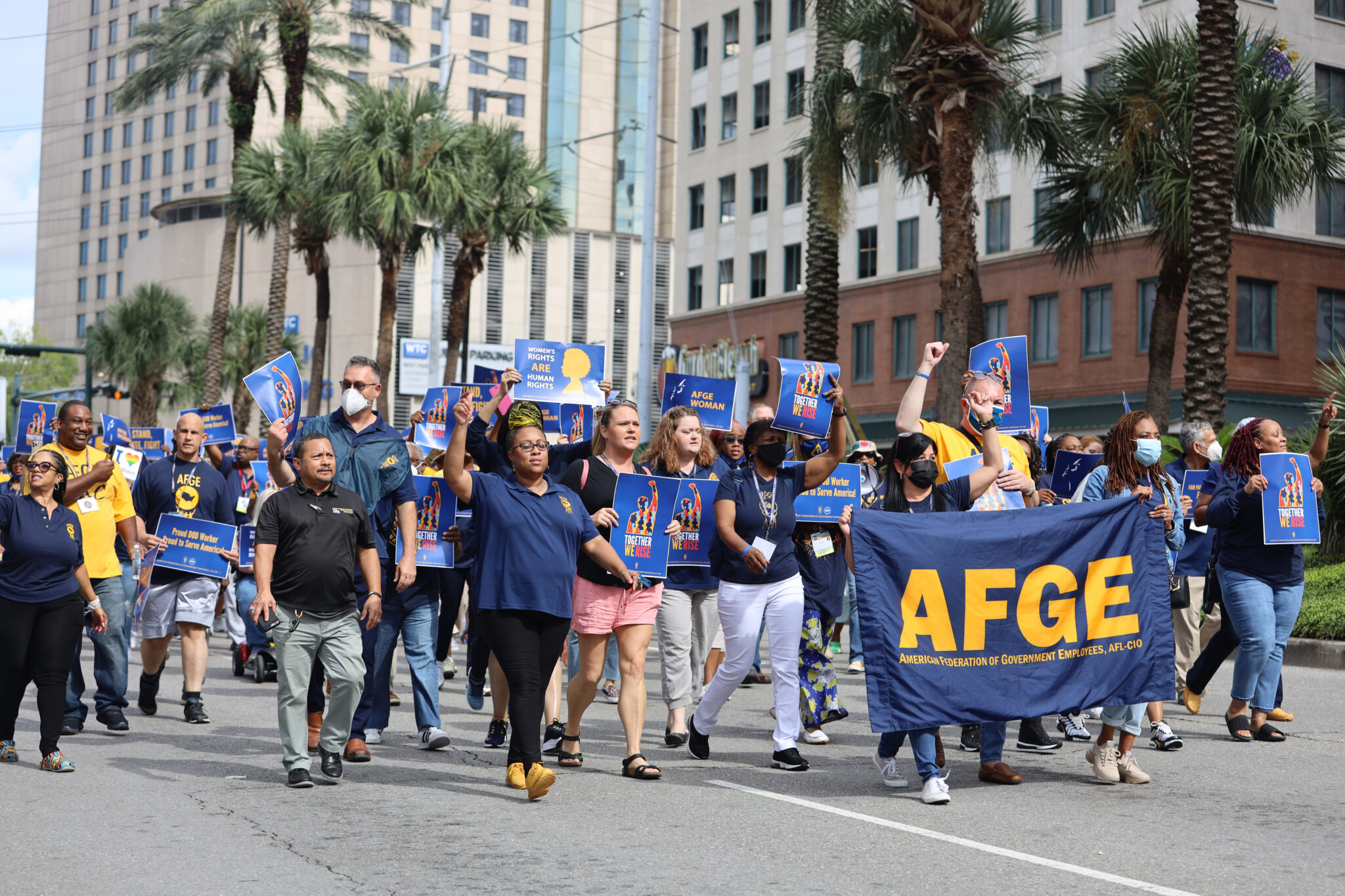
Lastly, the American Federation of Government Employees (AFGE) expressed its support for a Republican-backed government funding bill. AFGE’s president, Everett Kelley, met with Democratic leadership to garner enough votes to end the government shutdown. By contrast, many top labor unions broke with AFGE and continue to support Democrat-backed strategies. These labor unions want to protect healthcare access and fund the government’s essential services. For example, Jaime Contreras, an executive vice president for Service Employees International Union Local 32BJ, states that it is a false choice to argue that workers must give up affordable healthcare in order for them to return to work. Rather, the government should focus on prioritizing both issues, and the labor movement should stand firm and united in its stance.




Daily News & Commentary
Start your day with our roundup of the latest labor developments. See all
October 22
SCOTUS declines Wilcox appeal; Penn State research assistants win bargaining rights; SEIU sued over military leave firing.
October 21
DOL withdraws tipped-worker rule; Instacart settles hiring-bias claims; Phillips 66 locks out New Jersey refinery workers.
October 20
Korean unions oppose labor exemption bill; Portland city workers prepare for strike; UPenn grad student union looks to dismiss university filing
October 19
FDA reverses course on policy prohibiting off-duty union activity; FAA and NATCA reach deal to secure pay increase for air traffic controllers.
October 18
Federal judge again halts cancellation of the Bureau of Prisons’ CBA; tabletop gaming workers face roadblocks in union recognition.
October 16
Department of Labor reduces wage-and-hour enforcement at unionized workplaces; Fain's victory poses question of federal monitor's extension.