
Ted Parker is a student at Harvard Law School and a member of the Labor and Employment Lab.
In today’s news and commentary, the Fifth Circuit rejects Thryv remedies, the Third Circuit flirts with extending the holding of Ames to New Jersey’s employment discrimination statute, and two other circuits relax their application of the McDonnell Douglas framework.
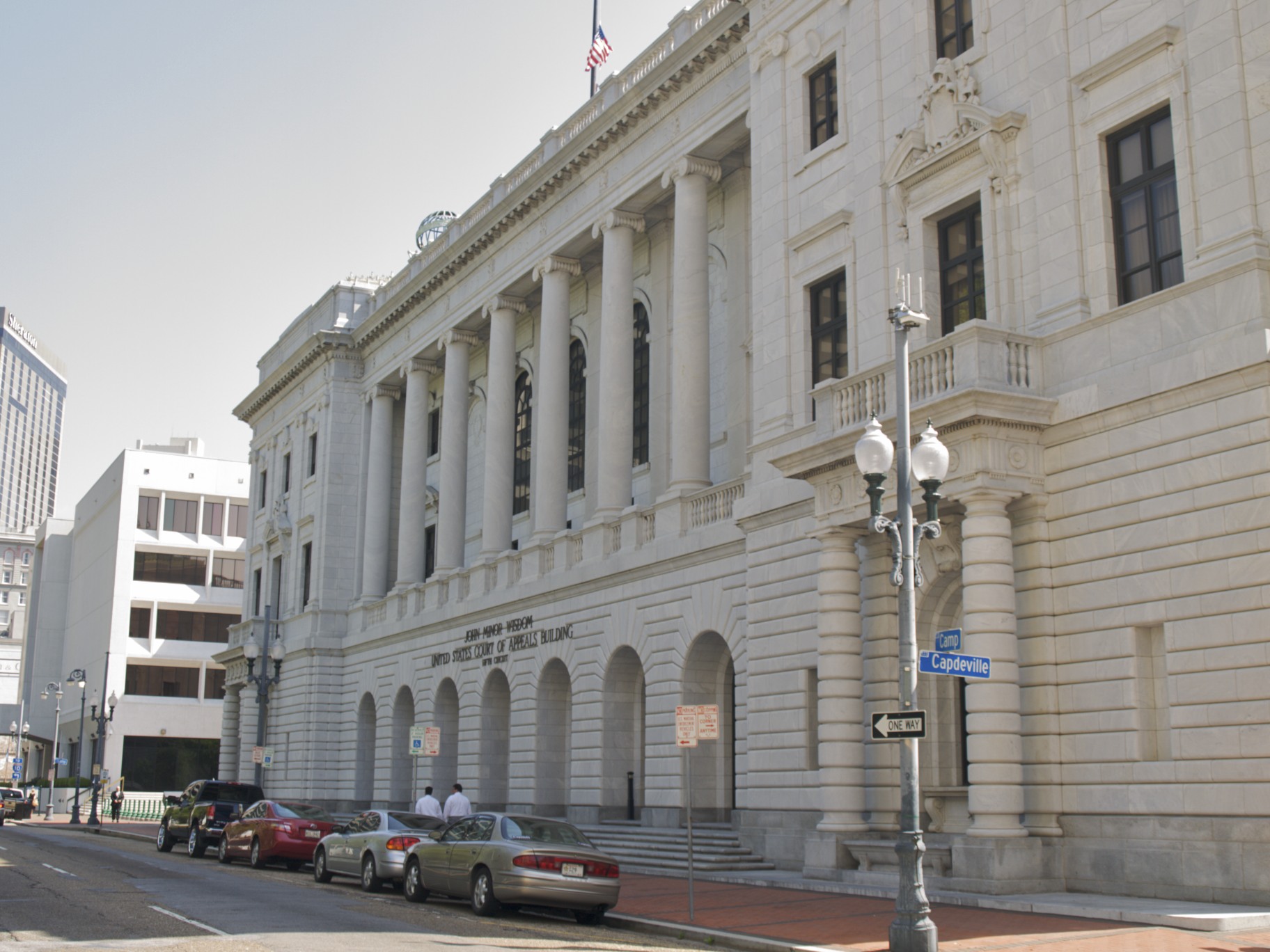
On Friday, the Fifth Circuit ruled that Thryv remedies exceed the Board’s statutory authority, joining the Third Circuit’s lead. Both circuits declined to reach the constitutional argument that Thryv remedies violate the Seventh Amendment right to a jury trial. As Ajayan and Henry recently noted, the Ninth Circuit has come out on the other side, affirming the validity of Thryv remedies. The Fifth Circuit’s ruling thus adds to a deepening circuit split. However, the practical effect of taking Thryv remedies off the table in the Fifth Circuit may be nil, because in the Fifth Circuit unfair labor charges are already effectively blocked under the SpaceX decision.
In employment law news, a Third Circuit panel (which included Judge Bove, Trump’s controversial new appointee) showed interest last week in striking down the “background circumstances” test as applied to New Jersey’s employment discrimination statute. As Sophia reported back in June, the Supreme Court in Ames v. Department of Youth Services struck down the background circumstances test in the context of Title VII as incompatible with the text of Title VII and the Court’s Title VII precedents. Last week, the Third Circuit panel flirted with extending Ames from the federal statute to the state one. However, federal courts applying state law are supposed to follow the lead of the state’s highest court. Defendants in the case thus urged the panel to certify the question to the Supreme Court of New Jersey, which has taken a “historically liberal approach to employment law.” In theory, nothing in Ames compels the New Jersey court to abandon the background circumstances test. For this reason, Judge Bove suggested novel ways of interpreting the background circumstances test as unconstitutional (which was not the holding of Ames) in order to bind the state.
Finally, Bloomberg reports that two federal circuits have recently relaxed their application of the McDonnell Douglas framework, citing the concurrence of Justice Thomas (joined by Justice Gorsuch) in Ames. As I wrote back in June, this concurrence was welcomed by some antidiscrimination scholars, who argue the McDonnell Douglas framework has become a tool of employers to kick out workers’ discrimination suits at the summary judgment phase. This concurrence sent a signal to lower courts that they could be more critical of McDonnell Douglas. So far, two circuit courts (as well as some district courts) have taken up the invitation. In particular, the Fourth and Tenth Circuits have relaxed the third step of the test, where the plaintiff must show that their employer’s offered reason for the adverse employment action is a pretext, at the summary judgment stage. The effect of these rulings is to make it easier for employees to get a jury to hear their case.




Daily News & Commentary
Start your day with our roundup of the latest labor developments. See all
February 24
In today’s news and commentary, the NLRB uses the Obama-era Browning-Ferris standard, a fired National Park ranger sues the Department of Interior and the National Park Service, the NLRB closes out Amazon’s labor dispute on Staten Island, and OIRA signals changes to the Biden-era independent contractor rule. The NLRB ruled that Browning-Ferris Industries jointly employed […]
February 23
In today’s news and commentary, the Trump administration proposes a rule limiting employment authorization for asylum seekers and Matt Bruenig introduces a new LLM tool analyzing employer rules under Stericycle. Law360 reports that the Trump administration proposed a rule on Friday that would change the employment authorization process for asylum seekers. Under the proposed rule, […]
February 22
A petition for certiorari in Bivens v. Zep, New York nurses end their historic six-week-strike, and Professor Block argues for just cause protections in New York City.
February 20
An analysis of the Board's decisions since regaining a quorum; 5th Circuit dissent criticizes Wright Line, Thryv.
February 19
Union membership increases slightly; Washington farmworker bill fails to make it out of committee; and unions in Argentina are on strike protesting President Milei’s labor reform bill.
February 18
A ruling against forced labor in CO prisons; business coalition lacks standing to challenge captive audience ban; labor unions to participate in rent strike in MN