
Ted Parker is a student at Harvard Law School and a member of the Labor and Employment Lab.
In today’s news and commentary, the Trump administration proposes a rule limiting employment authorization for asylum seekers and Matt Bruenig introduces a new LLM tool analyzing employer rules under Stericycle.
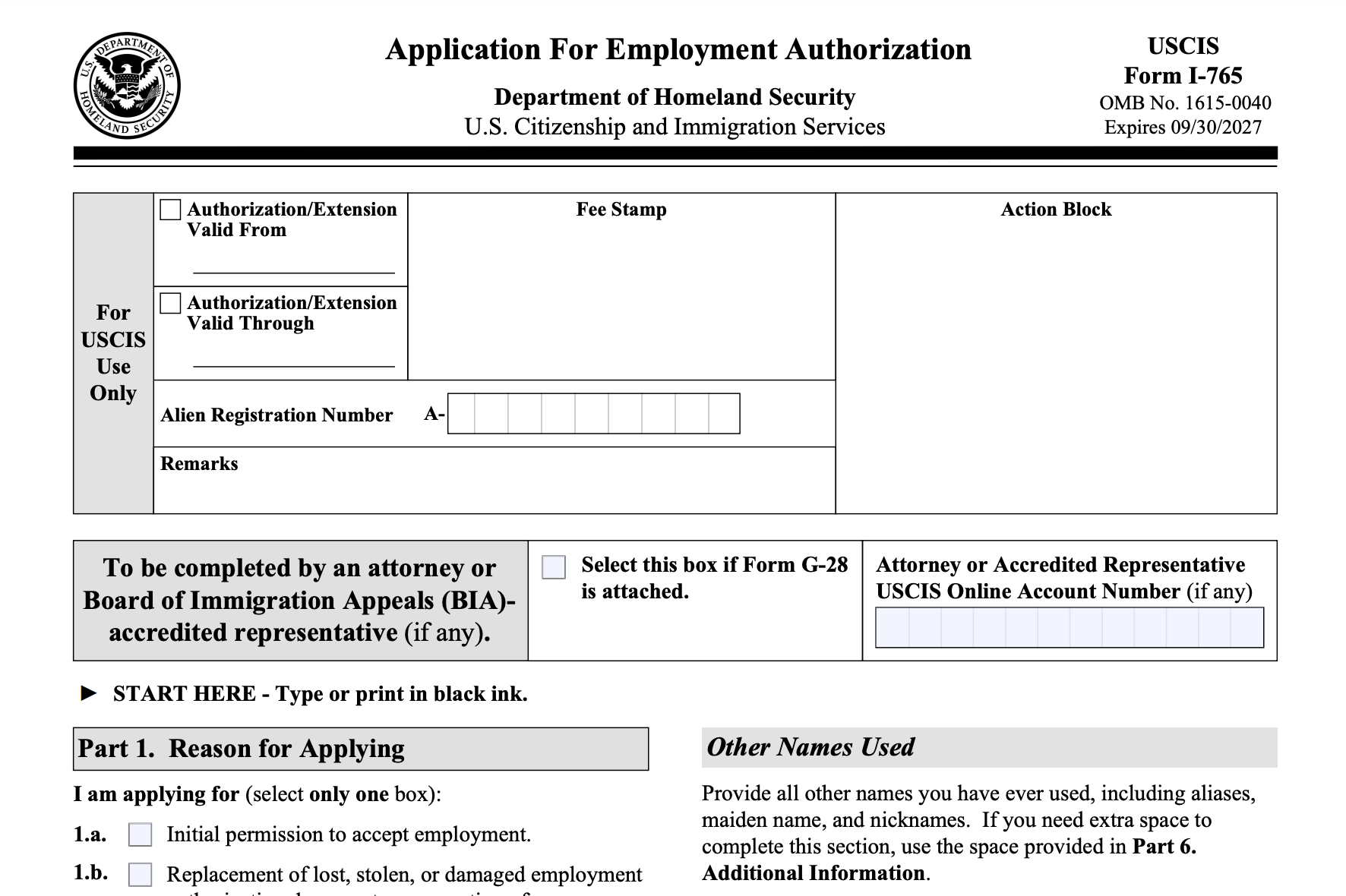
Law360 reports that the Trump administration proposed a rule on Friday that would change the employment authorization process for asylum seekers. Under the proposed rule, USCIS would only accept new employment authorization applications for asylum seekers if the average processing time for existing applications does not exceed 180 days over a 90-day period. 180 days (about 6 months) is radically less than the backlog has been in recent years. In 2024, it was 23 months, nearly 4 times the new limit. The previous two years, it was even higher: 25 months and 35.5 months, respectively. The proposed rule also makes applicants wait longer before they can apply (from 180 days to 365 days), gives USCIS longer to process the applications (from 30 days to 180 days), and requires all applicants (including renewals) to provide biometric information. DHS argues that the proposed rule is justified by the existence of meritless asylum applications, but the new rule would equally punish meritorious applications because its threshold mechanism does not distinguish between the two. If it becomes final, the rule would drastically limit new employment authorizations for asylum seekers.
In other news, Matt Bruenig has introduced an LLM tool analyzing employer rules under Stericycle, which provides the test for determining whether employer rules violate the NLRA by chilling an employee’s exercise of their Section 7 rights. Earlier this month, Bruenig contributed an OnLabor post explaining his efforts to make labor law more accessible through LLMs. His latest product is a 154-page PDF that collects, organizes, and synthesizes all extant applications of Stericycle to employer rules. Stericycle was decided two and a half years ago. In that time, 59 ALJ decisions have applied its test to 204 employer rules (no Board decisions have applied the test). Bruenig’s analysis sorts these 204 rules into 16 categories (such as “Civility,” “Dress Code,” and “No-Recording”), distinguishing within each category between violating and non-violating rules. After the text of each rule follows a one-sentence explanation of why the ALJ found it lawful or unlawful. Practitioners could use this tool to quickly determine if any employer rules in their cases might present a Stericycle issue based on existing case law.




Daily News & Commentary
Start your day with our roundup of the latest labor developments. See all
October 27
Some California union locals defy their statewide leadership to back the state’s billionaire tax proposal; a Brown University technology center releases a map of the hidden global workforce behind AI; the National Women's Soccer League and its players union settle six grievances.
October 26
Harvard dining workers authorize strike; New York City bans horse carriages; Brooklyn nurses rally in support of colleague.
October 25
Dallas Cowboys Cheerleaders unionize; Bureau of Prisons again pushes for union contract cancellation; CSU faculty votes on strike authorization.
October 23
Employers increasingly shift health care costs onto workers and NYC proposes placing restrictions on fully automated customer service.
October 22
SCOTUS declines Wilcox appeal; Penn State research assistants win bargaining rights; SEIU sued over military leave firing.
October 21
DOL withdraws tipped-worker rule; Instacart settles hiring-bias claims; Phillips 66 locks out New Jersey refinery workers.