
Mila Rostain is a student at Harvard Law School and the Digital Director of OnLabor.
In today’s News and Commentary, AFGE argues at a hearing that the TSA’s termination of the collective bargaining agreement covering TSA employees violates the union’s First Amendment rights, agricultural workers supported by the National Right to Work Legal Defense Foundation challenge card check laws in New York and California, and a California Court of Appeal reaffirms San Francisco city workers’ right to strike.
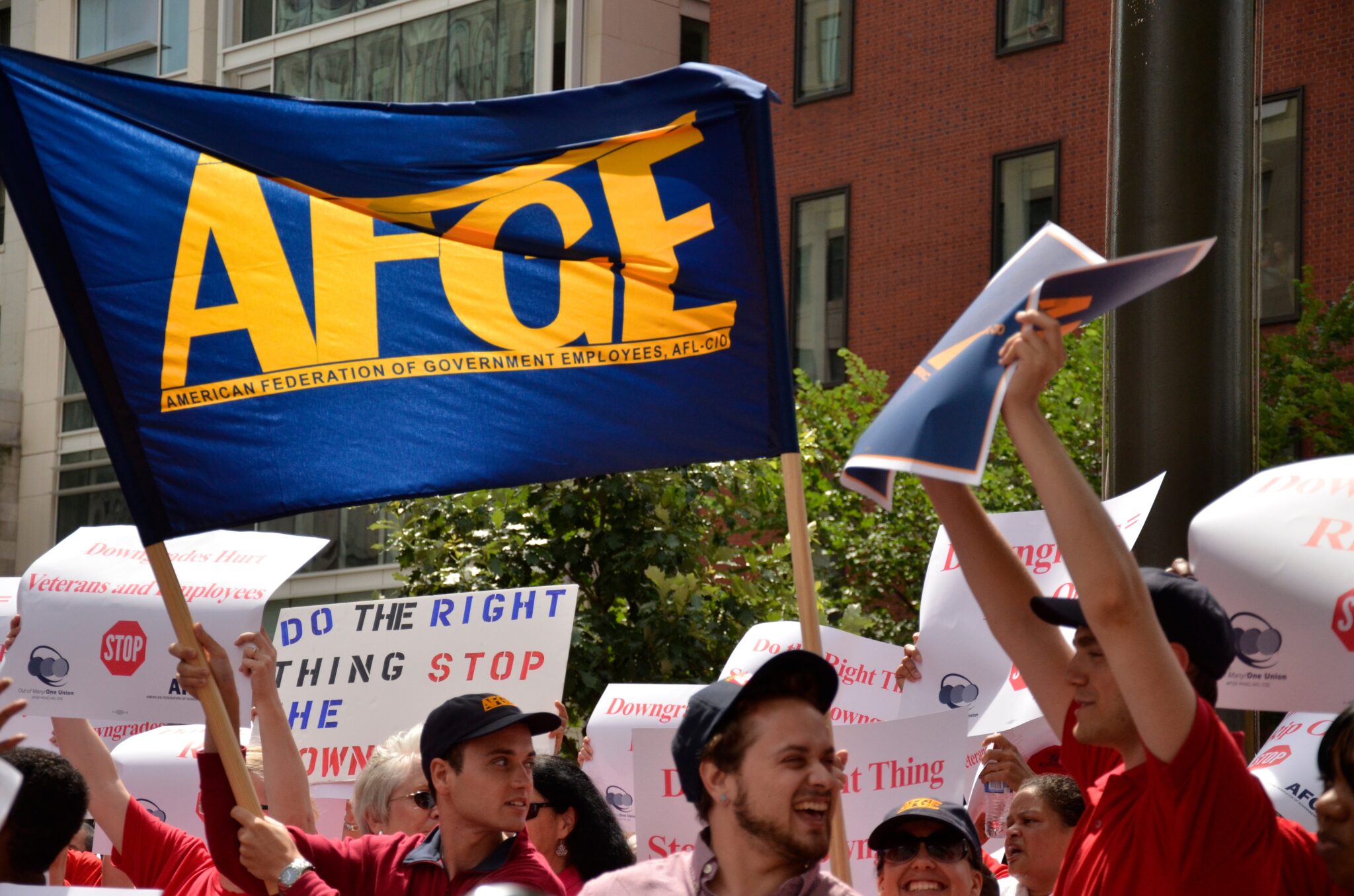
On Tuesday, at a hearing weighing the American Federation of Government Employee’s (AFGE) request for a preliminary injunction against the TSA’s termination of the collective bargaining agreement covering TSA employees, AFGE lawyer Abigail Carter argued that “the pattern of antagonism against AFGE for its First Amendment activities demonstrates retaliatory intent, and evidence of such a pattern supports causation.” According to AFGE, the Trump administration’s reasons for eliminating TSA workers’ collective bargaining rights are pretext for retaliation against unions that have challenged the administration and amount to a violation of the union’s First Amendment rights. While TSA is exempted from Title 5 of the US Code, lawyers for the government argued that Judge Marsha Pechman of the District Court for the Western District of Washington lacked jurisdiction because the union had not first challenged the agency action under the Federal Labor Relations Authority, which governs federal agencies covered by Title 5.
Agricultural workers assisted by the National Right to Work Legal Defense Foundation are joining challenges against New York’s Farm Laborers Fair Labor Practices Act and California’s Agricultural Labor Relations Act. In California, workers at Wonderful Nurseries are claiming that the Agricultural Labor Relations Board’s process for arbitrating bargaining impasses violates workers’ due process rights. Californian employers have also challenged the Act’s card check process with both the Agricultural Labor Relations Board and in state court. In New York, two farmworkers filed a motion to intervene in a suit challenging the card check process. Their complaint also alleges that the FLFLPA’s inclusion of workers with H2-A visas is field preempted. The challenges come as workers at a New York farm seeking to unionize lost the first secret-ballot election under the FLFLPA. The workers had previously won union recognition through card check, but PERB overturned that certification after finding that an Administrative Law Judge had improperly limited the pool of eligible employees.
Last week, a California Court of Appeal reaffirmed San Francisco city workers’ right to strike. In 2023, the International Federation of Professional & Technical Engineers, Local 21 and SEIU Local 1021 challenged two provisions in San Francisco’s Charter that prohibited city workers from striking and mandated the termination of striking workers. The unions alleged that the provision conflicted with the Meyers-Milias-Brown Act. After an Administrative Law Judge ruled in favor of the unions, the City appealed. The Court of Appeal denied the City’s request for relief. President of SEIU 1021, Theresa Rutherford, stated, “once again, justice has prevailed on this issue, and now the courts as well as PERB have officially recognized that the City and County of San Francisco cannot prohibit strikes or retaliate against workers who participate in them.”





Daily News & Commentary
Start your day with our roundup of the latest labor developments. See all
October 15
New reporting examines the rollback of child labor protections; California tries to block a strike; NLRB charges Wisconsin mental health provider with firing workers during union drive.
October 14
Eleventh Circuit overturns ERISA exhaustion rule; DHS finalizes removal of automatic renewal for work permits; AFGE challenges SSA over flexible scheduling policy.
October 13
Chicago hotel workers remain on strike; a coalition of Democratic states sues the Labor Department over canceled unemployment insurance grants; the Federal Labor Relations Authority establishes a new mediation framework for federal worker disputes.
October 12
Workers at the Obama Foundation begin organizing; MLB submits its latest collective bargaining agreement proposal; Brigham & Women's nurses postpone strike.
October 11
UAW President Shawn Fain succeeds in his reelection bid, and Spanish unions call for a general strike.
October 9
DHS proposes a $100k fee for the foreign grad employment program; Trump suspends tech company access to green card program; and private equity perpetuates poor working conditions for home care workers.