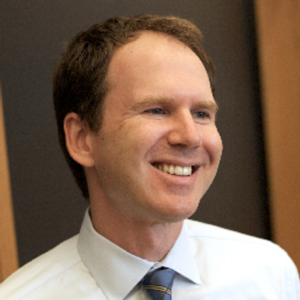
Benjamin Sachs is the Kestnbaum Professor of Labor and Industry at Harvard Law School and a leading expert in the field of labor law and labor relations. He is also faculty director of the Center for Labor and a Just Economy. Professor Sachs teaches courses in labor law, employment law, and law and social change, and his writing focuses on union organizing and unions in American politics. Prior to joining the Harvard faculty in 2008, Professor Sachs was the Joseph Goldstein Fellow at Yale Law School. From 2002-2006, he served as Assistant General Counsel of the Service Employees International Union (SEIU) in Washington, D.C. Professor Sachs graduated from Yale Law School in 1998, and served as a judicial law clerk to the Honorable Stephen Reinhardt of the United States Court of Appeals for the Ninth Circuit. His writing has appeared in the Harvard Law Review, the Yale Law Journal, the Columbia Law Review, the New York Times and elsewhere. Professor Sachs received the Yale Law School teaching award in 2007 and in 2013 received the Sacks-Freund Award for Teaching Excellence at Harvard Law School. He can be reached at [email protected].
Kate Andrias and I have a new law review article out today showing how legal systems can be designed to fuel political organizing by the poor and working class. The article, Constructing Countervailing Power: Law and Organizing in an Era of Political Inequality is available here. The abstract is below:
This Article proposes an innovative approach to remedying the crisis of political inequality: using law to facilitate organizing by the poor and working class, not only as workers, but also as tenants, debtors, welfare beneficiaries, and others. The piece draws on the social-movements literature, and the successes and failures of labor law, to show how law can supplement the deficient regimes of campaign finance and lobbying reform and enable lower-income groups to build organizations capable of countervailing the political power of the wealthy. As such, the Article offers a new direction forward for the public-law literature on political power and political inequality. It also offers critical lessons for government officials, organizers, and advocates seeking to respond to the inequalities made painfully evident by the COVID-19 pandemic.





Daily News & Commentary
Start your day with our roundup of the latest labor developments. See all
September 27
The Trump Administration reaches a settlement with federal unions on reduction in force actions; the United Auto Workers file an en banc petition seeking review of a Second Circuit decision regarding labor arbitrations.
September 25
Healthcare workers rally to restore legal status for TPS holders; nurses at a Maine hospital overwhelmingly vote to form their union despite alleged aggressive union busting tactics.
September 24
NLRB abandons rule for offensive conduct during protected activity; New York home care workers seek a union election; maritime deck officers endure long fight for first contracts.
September 23
DoorDash settles delivery-worker pay claims; Philadelphia school workers win new contract; stock gains spur retirements.
September 22
Judge blocks ICE raids in Alabama; Chicago hotel workers vote to strike; AutoZone workers look to create first union
September 21
In today’s News and Commentary, the Seventh Circuit raises the bar for the NLRB to obtain preliminary injunctions, the California Primary Care Association sues SEIU-UHW for racketeering, and the Seventh Circuit finds that an employer group and think tank do not have standing to challenge an Illinois law banning captive audience meetings. On Friday, the […]