
Holden Hopkins is a student at Harvard Law School.
In today’s News & Commentary, Chicago teachers to make climate demands as part of next CBA negotiations and environmental lawyers in the Justice Department begin a union campaign.
With contract negotiations beginning this Friday, the Chicago Teachers’ Union has pledged to bring its “green schools” initiative to the city. As a part of that initiative, the union is seeking to update school infrastructure to cut emissions, electrify the school district’s bus fleet, introduce training programs for students to pursue green energy jobs, and set a 2035 goal of net-zero emissions for the district. CTU played an important role in supporting the election of Mayor Brandon Johnson, a former teacher and union organizer, giving the union reason for optimism as they come to the bargaining table.
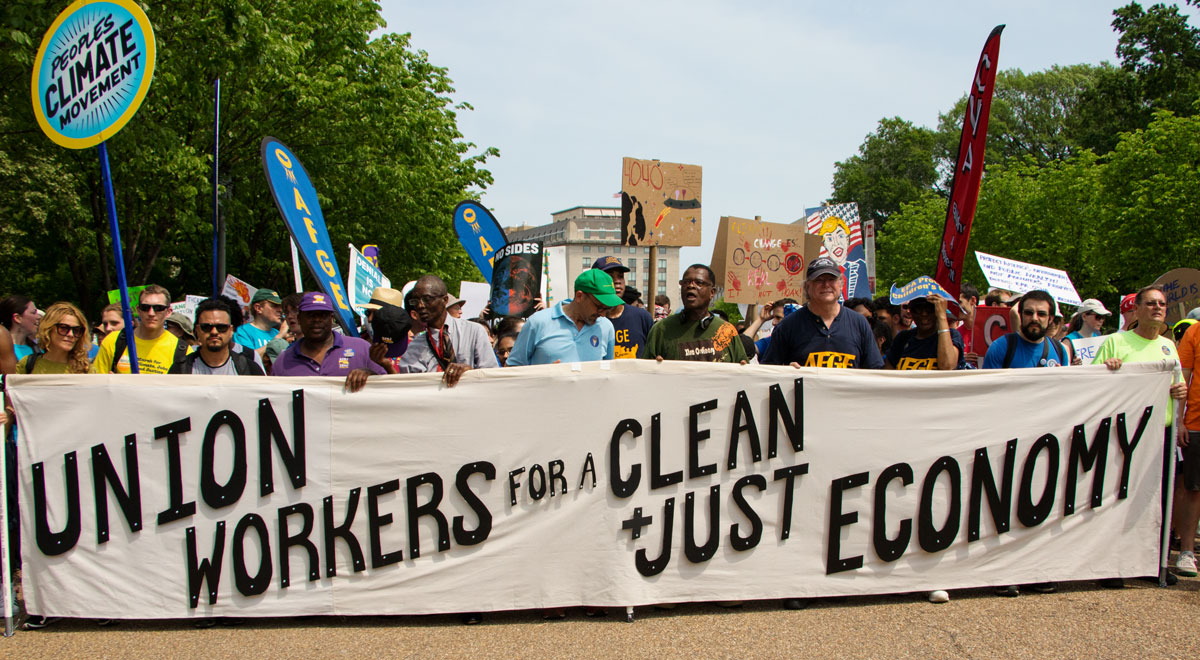
These climate-related demands from one of the nation’s most powerful teachers’ unions are not the first example of unions using their power to fight for a liveable planet. Los Angeles teachers went on strike last year around demands that included the incorporation of climate in more administrative decisions and curricula. Additionally, Ben shared this letter last year from environmental and climate advocates in support of the UAW’s strike against the “Big Three” automakers as consistent with goals of climate progress. And as I reported in February, a coalition of Service Employees International Union locals and unions representing teachers in the Twin Cities included climate demands in their “What Can We Win Together” campaign.
Staying at the intersection of labor and the environment, trial attorneys at the Justice Department’s Environment and Natural Resources Division have begun a campaign with the goal of collecting signatures from half of the 350 eligible lawyers in the division. As of now, organizers are optimistic about reaching their goal of a representation election through the Federal Labor Relations Authority by October of this year.
Chief among their concerns are return-to-office mandates, interventions against civil service protections from political officials, and the use of artificial intelligence in legal document writing. Should they succeed in their union campaign, they would be the first union of litigating attorneys in the history of the Justice Department.





Daily News & Commentary
Start your day with our roundup of the latest labor developments. See all
October 19
FDA reverses course on policy prohibiting off-duty union activity; FAA and NATCA reach deal to secure pay increase for air traffic controllers.
October 18
Federal judge again halts cancellation of the Bureau of Prisons’ CBA; tabletop gaming workers face roadblocks in union recognition.
October 16
Department of Labor reduces wage-and-hour enforcement at unionized workplaces; Fain's victory poses question of federal monitor's extension.
October 15
New reporting examines the rollback of child labor protections; California tries to block a strike; NLRB charges Wisconsin mental health provider with firing workers during union drive.
October 14
Eleventh Circuit overturns ERISA exhaustion rule; DHS finalizes removal of automatic renewal for work permits; AFGE challenges SSA over flexible scheduling policy.
October 13
Chicago hotel workers remain on strike; a coalition of Democratic states sues the Labor Department over canceled unemployment insurance grants; the Federal Labor Relations Authority establishes a new mediation framework for federal worker disputes.