
Ted Parker is a student at Harvard Law School and a member of the Labor and Employment Lab.
In today’s news and commentary, the FTC argues that some DEI hiring practices could constitute anticompetitive collusion, the Supreme Court may decide the scope of a promising exception to forced arbitration, and New Jersey pauses codification of its ABC test for independent contractor classification.
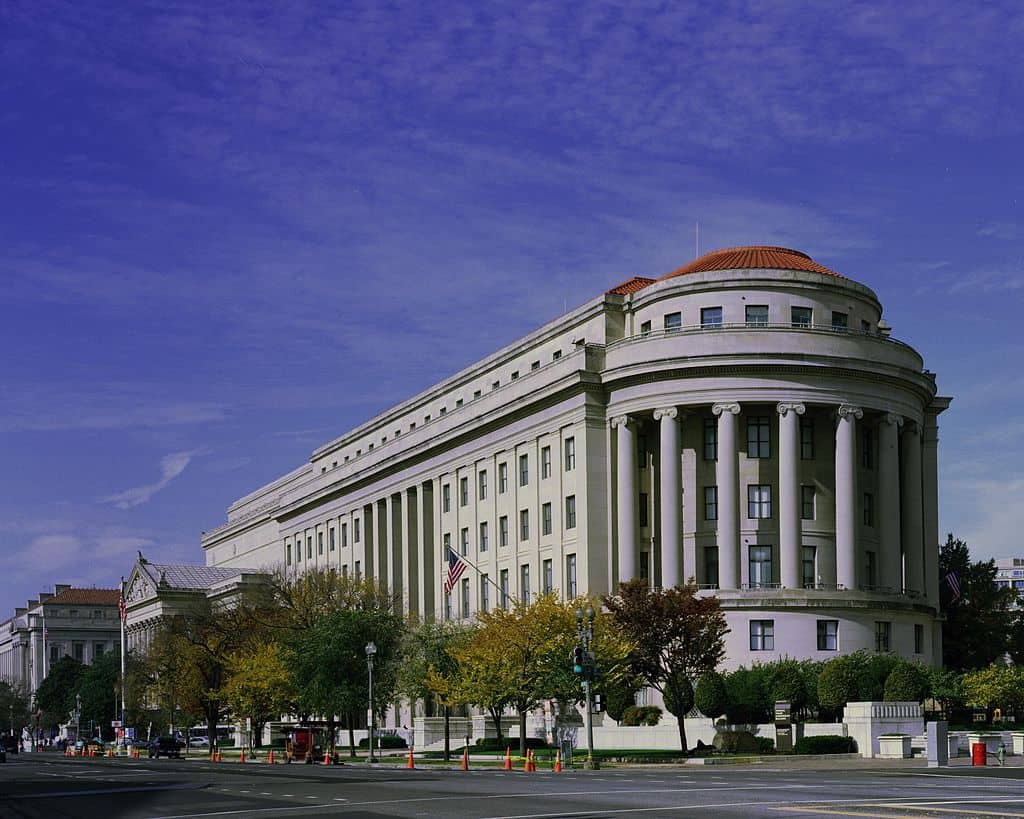
Bloomberg reports that the Federal Trade Commission (FTC) has joined the Trump administration’s anti-DEI campaign with a novel legal theory of DEI as anticompetitive collusion. On January 30, the FTC sent a warning letter to about 40 top law firms—reminiscent of letters the EEOC sent to law firms last March but with a very different legal theory. The FTC suggests that firms consulting with a company called Diversity Lab and holding monthly “knowledge-sharing calls” with each other may have committed anticompetitive collusion if such actions “ha[d] the effect of diminishing labor competition by excluding certain workers from markets.” While related to other labor-market antitrust theories like no-poach agreements and wage-fixing, this one is untested and probably an uphill battle. Still, some suggest that the theory is not meant to prevail in court at all but simply to scare firms into prophylactic surrender—also reminiscent of the EEOC’s letters last March.
Meanwhile, according to Law360, a petition for certiorari in a consequential arbitration clause case sits before the Supreme Court. In Flores v. New York Football Giants, Inc., the Second Circuit held that the NFL could not compel arbitration where the NFL commissioner, an adverse party, exercised complete control over the process. When fired Miami Dolphins coach Brian Flores sued the NFL for racial discrimination in a class action lawsuit, the NFL attempted to compel arbitration under his contract. That attempt was shut down under the effective-vindication exception. Because Flores could not effectively vindicate his federal statutory rights in a forum where the adverse party had complete control over the process, the contract provided for arbitration in name only and was not protected by the Federal Arbitration Act (FAA). This ruling was hailed as a win for workers. Now, the Supreme Court has the option to intervene to decide the scope of the effective-vindication exception.
Finally, New Jersey’s codification of its ABC test for independent contractor classification is put on pause for the moment. New Jersey case law has long established a three-pronged ABC test for determining if a worker is an independent contractor or an employee—roughly: (A) Is the worker free from the employer’s control? (B) Is the work outside the employer’s usual course of business? (C) Is the worker engaged in an independently established trade? The previous governor of New Jersey, Phil Murphy, sought to codify this test in a regulation that included additional factors under each prong to protect workers against misclassification. The new governor, Mikie Sherrill, has paused the proposed rulemaking for 90 days as she mulls over her predecessor’s work. Employers see this as a chance to kill the rule, but worker advocates say this move is pro forma and that Sherrill will likely approve the rule based on her own pro-worker positions.




Daily News & Commentary
Start your day with our roundup of the latest labor developments. See all
March 20
Appeal to 9th Cir. over law allowing suit for impersonating union reps; Mass. judge denies motion to arbitrate drivers' claims; furloughed workers return to factory building MBTA trains.
March 19
WNBA and WNBPA reach verbal tentative agreement, United Teachers Los Angeles announce April 14 strike date, and the California Gig Workers Union file complaint against Waymo.
March 18
Meatpacking workers go on strike; SCOTUS grants cert on TPS cases; updates on litigation over DOL in-house agency adjudication
March 17
West Virginia passes a bill for gig drivers, the Tenth Circuit rejects an engineer's claims of race and age bias, and a discussion on the spread of judicial curtailment of NLRB authority.
March 16
Starbucks' union negotiations are resurrected; jobs data is released.
March 15
A U.S. District Court issues a preliminary injunction against the Department of Veterans Affairs for terminating its collective bargaining agreement, and SEIU files a lawsuit against DHS for effectively terminating immigrant workers at Boston Logan International Airport.