
Jacqueline Rayfield is a student at Harvard Law School.
In today’s News and Commentary, a Kroger worker strike hints at broader dissatisfaction among retail workers, and the American Federation of Teachers filed the latest in a string of lawsuits against Elon Musk’s Department of Government Efficiency (DOGE).
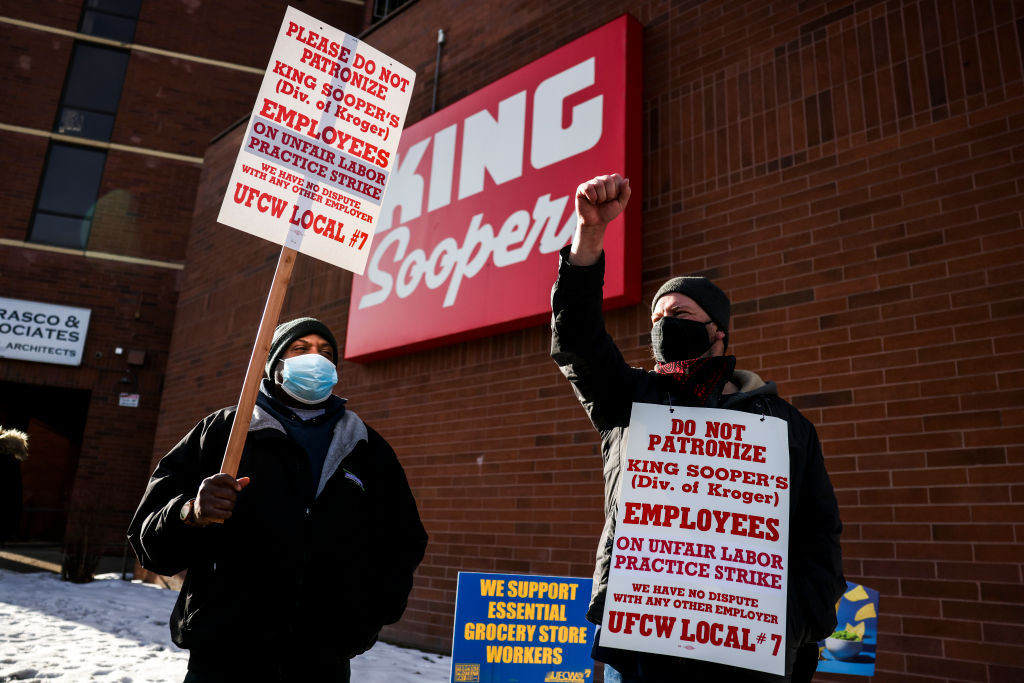
In Colorado, over 10,000 workers at the Kroger-owned supermarket, King Soopers, reached nearly a week on strike. The workers’ union, UFCW Local 7, began bargaining with Kroger and King Soopers in October, but the union reported that both retail chains refused to bargain in good faith. UFCW called an unfair labor practice (ULP) strike on February 6 in response to the retail chain’s refusal to bargain. Yesterday, King Soopers responded to the ongoing strike by seeking a temporary restraining order against thousands of their own striking employees, claiming that these workers have created unsafe conditions outside their stores. Commentators note that despite low overall union density, retail workers continue to express interest in joining unions, and their union membership rate has increased gradually in the past year. Workers at Starbucks, Amazon, and Whole Foods have made headlines over the past year for their unionization efforts against union-hostile employers.
The American Federation of Teachers (AFT) filed a lawsuit on Monday alleging that Elon Musk’s new government department, DOGE, violated federal law by disclosing U.S. citizens’ personal information. Musk’s Department of Government Efficiency, named after the Shiba Inu-themed meme and cryptocurrency, aims to reduce government spending and regulation. The AFT’s suit against DOGE is one of many filed by labor unions alleging that the Trump administration has breached the Privacy Act.


Daily News & Commentary
Start your day with our roundup of the latest labor developments. See all
September 17
Unions push to block Google from buying Spirit Airlines employment records; U.S. Department of Labor sues Oklahoma coffee chain over alleged wage violations.
September 16
Trump nominates Catherine Eschbach as EEOC general counsel; NLRB declines to resolve union work-assignment dispute; Allina Health physicians begin four-day strike.
September 15
Documents reveal the inner workings of Amazon's union avoidance program; Washington state public sector unions reach tentative deals amid a difficult bargaining cycle; hundreds of Nevada Culinary Union members protest their union's health care changes.
September 14
NCAA and Big Ten file motion to dismiss in former star player's NIL suit; Seventh Circuit rules against former postal worker in discrimination suit.
September 13
Documents released on the 25th anniversary of the 9/11 attacks show that city officials encouraged workers to return to Ground Zero despite knowing the risks of asbestos exposure, and new polls demonstrate continued widespread support for labor unions.
September 10
Amazon workers allege pregnancy discrimination; federal unions challenge USDA reorganization; NYC warns of silicosis risks.