
Mila Rostain is a student at Harvard Law School and the Digital Director of OnLabor.
In today’s News and Commentary, Judge Pechman denies the Trump Administration’s motion to dismiss APA, First, and Fifth Amendment claims brought by unions representing TSA employees, the Trump Administration continues its efforts to strip federal employees of collective bargaining rights, and the National Association of Agriculture Employees seeks legal relief after the USDA stopped recognizing the union.
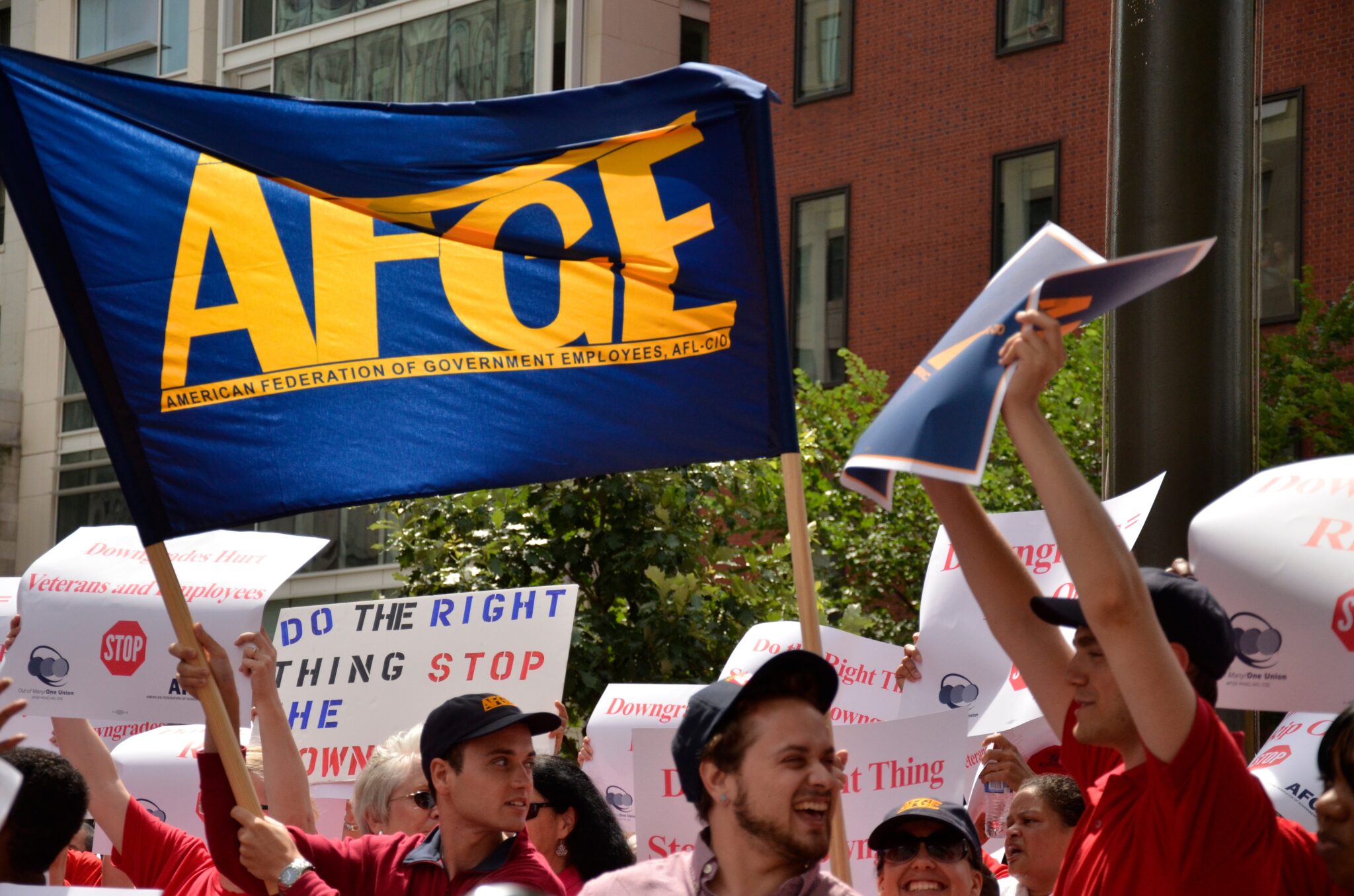
Yesterday, Judge Marsha Pechman of the US District Court for the Western District of Washington denied the Trump Administration’s motion to dismiss the lawsuit brought by AFGE and other unions representing TSA employees against Kristi Noem. The unions previously won a preliminary injunction prohibiting the termination of the collective bargaining agreements covering TSA employees in early June. In response to the unions’ APA, First, and Fifth Amendment claims, the Administration argued that the Court lacked jurisdiction to hear the case and that the unions failed to adequately plead their claims. On the question of jurisdiction, the Administration argued that the claims were Thunder Basin precluded because they were subject to the FSLMRS. Judge Pechman, however, agreed with the unions that the plaintiffs would not be able to pursue their claims through the FLRA. Judge Pechman distinguished the case from NTEU v. Trump, where the union challenged executive orders terminating probationary employees. According to Judge Pechman, the TSA unions’ challenge “does not implicate negotiability,” rather it “challenges the legality Noem’s decision to rescind” the contract and raises constitutional harms, making the claims “collateral to and far afield of the FLRA’s core agency review.”
This past week, according to Bloomberg Law, the Trump Administration continued its efforts to end collective bargaining for federal employees. Following the termination of collective bargaining agreements at the VA and EPA, the US Department of Agriculture, the Federal Emergency Management Agency, and US Citizenship and Immigration Services all terminated collective bargaining agreements with federal employee unions. The USDA terminated collective bargaining agreements with the National Joint Council of Food Inspection Locals on Tuesday, and FEMA and the USCIS terminated agreements late last week. According to AFGE Vice President and USCIS employee Ruark Hotopp, the USCIS had not followed the collective bargaining agreement for the last six months, including refusing to meet with the union or process grievances. Like at the VA, police officers and firefighters at FEMA are exempted.
Also yesterday, the National Association of Agriculture Employees filed a complaint seeking declaratory and injunctive relief in the US District Court for the District of Columbia against President Trump. NAAE represents employees at the Plant Protection and Quarantine unit of the USDA. Following Trump’s March executive order stripping collective bargaining rights of federal employees under the FSLMRS’s national security exception, the USDA stopped recognizing NAAE. In its complaint, NAAE noted that following 9/11, all duties “arguably within the realm of national security” were transferred from the Plant Protection Quarantine unit to US Customs and Border Control in the Department of Homeland Security.





Daily News & Commentary
Start your day with our roundup of the latest labor developments. See all
October 18
Federal judge again halts cancellation of the Bureau of Prisons’ CBA; tabletop gaming workers face roadblocks in union recognition.
October 16
Department of Labor reduces wage-and-hour enforcement at unionized workplaces; Fain's victory poses question of federal monitor's extension.
October 15
New reporting examines the rollback of child labor protections; California tries to block a strike; NLRB charges Wisconsin mental health provider with firing workers during union drive.
October 14
Eleventh Circuit overturns ERISA exhaustion rule; DHS finalizes removal of automatic renewal for work permits; AFGE challenges SSA over flexible scheduling policy.
October 13
Chicago hotel workers remain on strike; a coalition of Democratic states sues the Labor Department over canceled unemployment insurance grants; the Federal Labor Relations Authority establishes a new mediation framework for federal worker disputes.
October 12
Workers at the Obama Foundation begin organizing; MLB submits its latest collective bargaining agreement proposal; Brigham & Women's nurses postpone strike.