
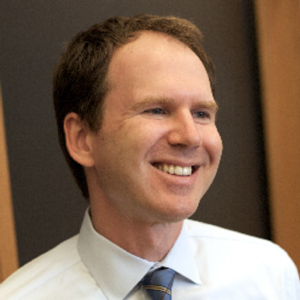
Benjamin Sachs is the Kestnbaum Professor of Labor and Industry at Harvard Law School and a leading expert in the field of labor law and labor relations. He is also faculty director of the Center for Labor and a Just Economy. Professor Sachs teaches courses in labor law, employment law, and law and social change, and his writing focuses on union organizing and unions in American politics. Prior to joining the Harvard faculty in 2008, Professor Sachs was the Joseph Goldstein Fellow at Yale Law School. From 2002-2006, he served as Assistant General Counsel of the Service Employees International Union (SEIU) in Washington, D.C. Professor Sachs graduated from Yale Law School in 1998, and served as a judicial law clerk to the Honorable Stephen Reinhardt of the United States Court of Appeals for the Ninth Circuit. His writing has appeared in the Harvard Law Review, the Yale Law Journal, the Columbia Law Review, the New York Times and elsewhere. Professor Sachs received the Yale Law School teaching award in 2007 and in 2013 received the Sacks-Freund Award for Teaching Excellence at Harvard Law School. He can be reached at [email protected].
As Brian Mahoney reports this morning, the Institute for Policy Studies has a new report out on economic inequality. Here’s one of the report’s staggering findings:
America’s 20 wealthiest people — a group that could fit comfortably in one single Gulfstream G650 luxury jet – now own more wealth than the bottom half of the American population combined, a total of 152 million people in 57 million households.
We have some thoughts on inequality here, here, here, and here.


Daily News & Commentary
Start your day with our roundup of the latest labor developments. See all
November 15
Unions oppose Chuck Schumer for Senate Majority Leader; Rockstar staff vote on unionization ahead of Grand Theft Auto VI’s release; New Jersey Education Association faces federal investigation.
November 12
Harvard graduate students go on strike; New York city mayor prepares to negotiate with the city's largest public union; the Trump administration proposes stringent rules for workers seeking benefits.
November 11
MIT grad union avoids strike, Colombian union clashes with Nestlé, and DOL proposes stricter UI requirements.
November 10
The White House nominates new EEOC and FTC commissioners; casino workers at Encore Boston Harbor ratify a new contract ending a two-month strike.
November 9
Democratic gains in Congress likely spell the end of the Protect College Sports Act; IBEW endorses the Bipartisan American Affordability and Jobs Act.
November 8
Democratic midterm victories at the federal and state level create legislative opportunities for workers and unions.