

Finlay Adamson is a student at Harvard Law School.
In today’s news and commentary, Philadelphia transit workers indicate that a strike is imminent; a federal judge temporarily blocks State Department layoffs; and Virginia lawmakers consider legislation to repeal the state’s “right to work” law.
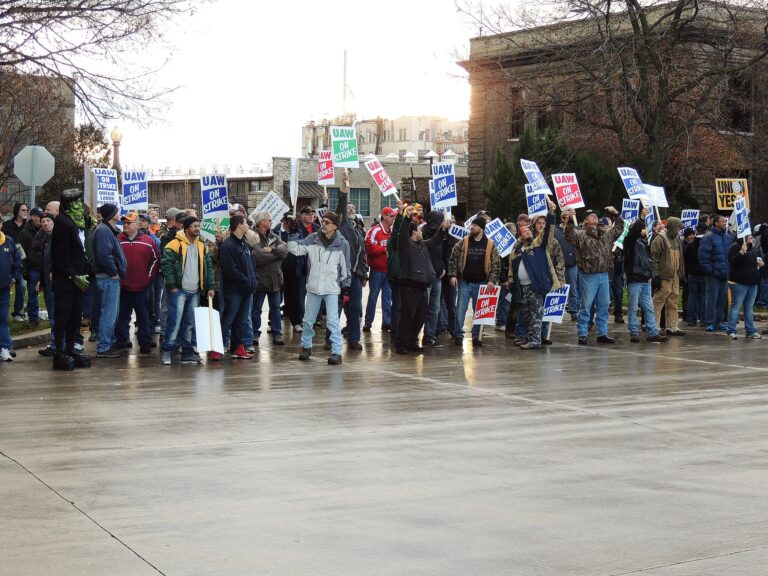
Transit workers at the Southeastern Pennsylvania Transit Authority (SEPTA) are preparing to engage in an “imminent strike” according to John Samuelson, international president of the Transport Workers Union (TWU). As Liana reported on Thursday, Philadelphia mass transit provider SEPTA is currently negotiating a contract with TWU Local 234 for over 5,000 subway, trolley, and bus operators and mechanics. The parties’ previous one-year contract expired a month ago, and workers voted to authorize a strike in late November; particular issues of dispute include wages, sick pay, and pension increases. While TWU has not currently set a date for the strike, Local 234 President Will Vera stated that “my patience has run out. I’m tired of talking and we’re about to start walking.” While SEPTA spokesperson Andrew Busch acknowledged that recent negotiations had been short and unproductive, he argued that a strike was unnecessary because “there are a number of areas that were agreed on… [and] we’ve laid a good foundation.”
Judge Susan Illston of the US District Court for the Northern District of California recently approved a temporary restraining order to block over 200 layoffs in the State Department. The emergency request to block the firings was filed against the State Department by the American Federation of Government Employees (AFGE) and the American Federation of State, County, and Municipal Employees (AFSCME). The legal dispute is centered around a provision in the spending bill passed to end the 43-day government shutdown earlier this year, which states that “any reduction in force (RIF)… taken by an executive agency between October 1, 2025, and the date of enactment, shall have no force or effect.” The bill also states that between November 12th and January 30th, 2026, “no federal funds may be used to initiate” any RIFs. AFGE and AFSCME argue that these provisions prevent the Trump Administration from issuing RIFs until January 30th. However, the State Department argues that the bill only provides for the reinstatement of employees who received RIFs between October 1st and November 12th; the State Department RIFs were issued in July.
Virginia state lawmakers are considering legislation that would repeal the state’s “right to work” law. State Senator Jennifer Carroll Foy filed Senate Bill 32 in late November, which would repeal the provision of Virginia law that prevents unions from collecting dues from non-union employees who benefit from a union contract. With Virginia Democrats recently securing a trifecta in the state government, pro-labor legislators see an opportunity to remove “right to work” provisions that have existed in Virginia since 1947. If their efforts succeed, Virginia will become the second state, after Michigan, to repeal the “right to work.” However, Governor-elect Abigail Spanberger has indicated that she opposes a full repeal of the provision and would have the veto power to reject the bill.



Daily News & Commentary
Start your day with our roundup of the latest labor developments. See all
March 27
“Cesar Chavez Day” renamed “Farmworkers Day” in California after investigation finds Chavez engaged in rampant sexual abuse.
March 26
Supreme Court hears oral argument in an FAA case; NLRB rules that Cemex does not impose an enforceable deadline for requesting an election; DOL proposes raising wage standards for H-1B workers.
March 25
UPS rescinded its driver buyout program; California court dismissed a whistleblower retaliation suit against Meta; EEOC announced $15 million settlement to resolve vaccine-related religious discrimination case.
March 24
The WNBPA unanimously votes to ratify the league’s new CBA; NYU professors begin striking; and a district court judge denies the government’s motion to dismiss a case challenging the Trump administration’s mass revocation of international student visas.
March 23
MSPB finds immigration judges removal protections unconstitutional, ICE deployed to airports.
March 22
Resurgence in salting among young activists; Michigan nurses strike; states experiment with policies supporting workers experiencing menopause.