Finlay Adamson is a student at Harvard Law School.
In today’s news and commentary, workers at the Southeastern Pennsylvania Transportation Authority vote to authorize a strike; Washington State legislators consider a bill empowering public employees to bargain over workplace AI implementation; and University of California workers engage in a two-day strike.
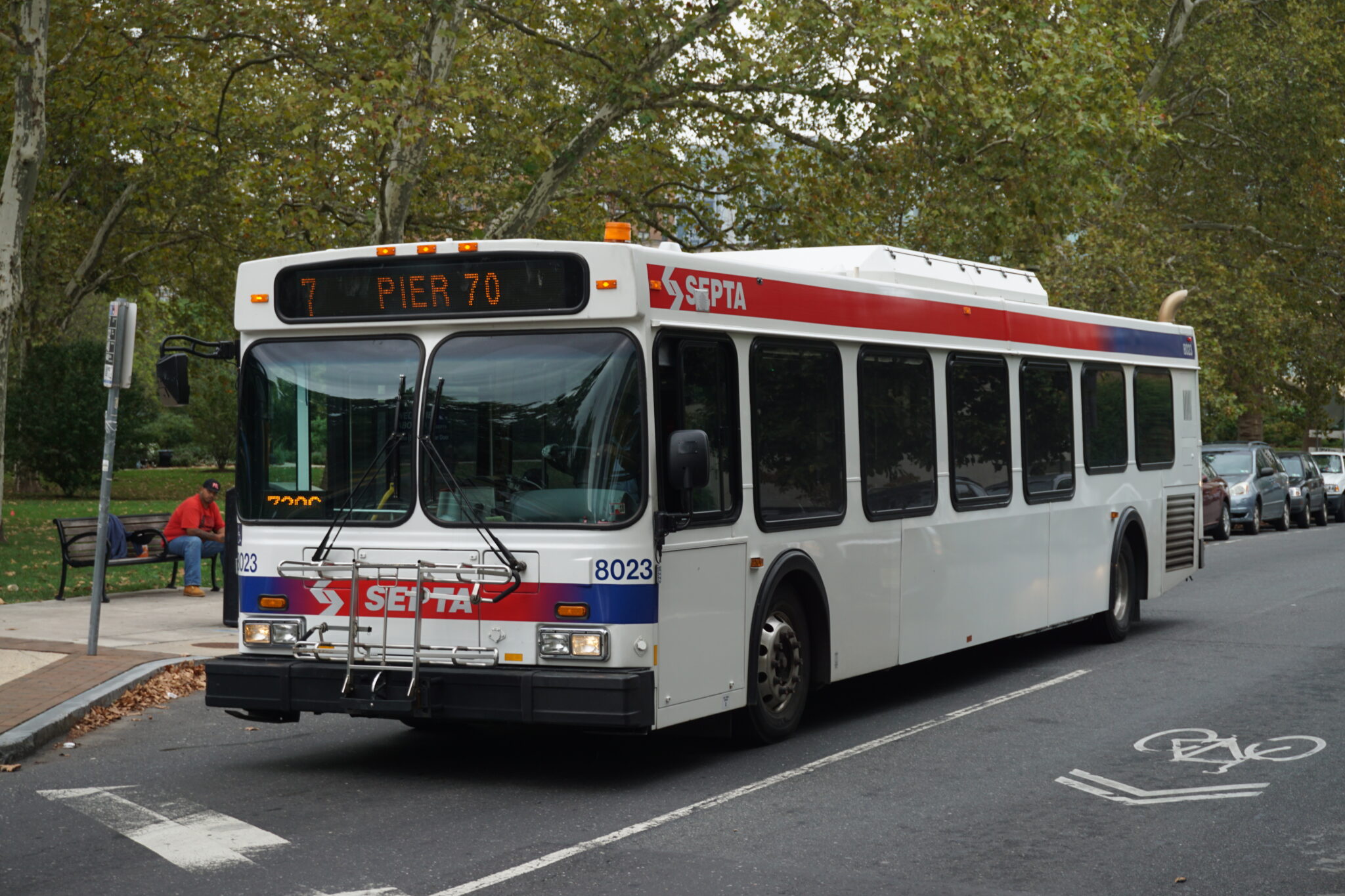
Philadelphia bus and train operators at the Southeastern Pennsylvania Transportation Authority (SEPTA) recently authorized a strike amidst ongoing negotiations with the public transportation authority this week. Over 5,000 SEPTA workers represented by the International Association of Sheet Metal, Air, Rail, and Transportation Workers (SMART) Local 1594 and Transport Workers Union (TWU) Local 245 voted to authorize the work stoppage. Both unions are currently in the process of negotiating a collective bargaining agreement, and cite higher wages and sick pay policies as issues of particular concern. While the vote allows union leadership to declare a strike should negotiations fail, TWU Local 245 President Will Vera stated that ”I don’t even want to think of a strike right now. I want to just negotiate fairly and we will go from there.” SEPTA General Manager Scott Sauer indicated that “talks have been productive and ongoing, and there’s been no discussions yet of breakdowns to the point where we’re talking about a work stoppage.” If it occurs, the strike would shut down many bus and metro routes in a public transportation system that transports over 700,000 people daily.
The Washington State Legislature is considering a bill that would require public employers to bargain with unions over the use of artificial intelligence in the workplace. House Bill 1622, introduced by State Representative Lisa Parshley, builds on a similar bill that passed in the House earlier this year but stalled in the Senate. The legislation would require public employers to bargain over the decision to adopt or modify uses of AI technology “if the adoption or modification affects employees’ wages or performance evaluations.” Public employee unions in Washington state are generally prohibited from bargaining over technology, but HB 1622 would create an exception for artificial intelligence. Advocates for the bill argue that it would empower workers to control the implementation of potentially disruptive technology; in a news release earlier this year, State Senator Jessica Bateman stated that “AI is like fire—it can be good or bad, help us or hurt us,” and that collective bargaining would ensure that AI “both benefits our state employees and all residents.”
Earlier this week, nearly 40,000 workers at University of California (UC) campuses and medical centers engaged in a two-day strike. The workers, represented by the American Federation of State, City, and Municipal Employees (AFSCME) Local 3299, engaged in the action following two years of bargaining with UC over a new collective bargaining agreement. Working in custodial, healthcare, and technician roles, the employees cite low wage increases as motivating the strike; as UC transportation worker Carmen Lee told KQED, “With the low wage that they’ve imposed on us so far, I’m not going to be able to afford health care. I should be able to live and thrive in the city that I grew up in and raised my two sons in.” The California Nurses Association and University Professional and Technical Employees CWA Local 9119 (UPTE) originally also planned to engage in the strike, but both unions reached agreements with the University of California earlier this month.





Daily News & Commentary
Start your day with our roundup of the latest labor developments. See all
October 16
Department of Labor reduces wage-and-hour enforcement at unionized workplaces; Fain's victory poses question of federal monitor's extension.
October 15
New reporting examines the rollback of child labor protections; California tries to block a strike; NLRB charges Wisconsin mental health provider with firing workers during union drive.
October 14
Eleventh Circuit overturns ERISA exhaustion rule; DHS finalizes removal of automatic renewal for work permits; AFGE challenges SSA over flexible scheduling policy.
October 13
Chicago hotel workers remain on strike; a coalition of Democratic states sues the Labor Department over canceled unemployment insurance grants; the Federal Labor Relations Authority establishes a new mediation framework for federal worker disputes.
October 12
Workers at the Obama Foundation begin organizing; MLB submits its latest collective bargaining agreement proposal; Brigham & Women's nurses postpone strike.
October 11
UAW President Shawn Fain succeeds in his reelection bid, and Spanish unions call for a general strike.