
John Fry is a student at Harvard Law School.
In today’s news and commentary, public employees regain union rights in Wisconsin; Volkswagen workers strike in Germany; and the USPS calls the NLRB unconstitutional.
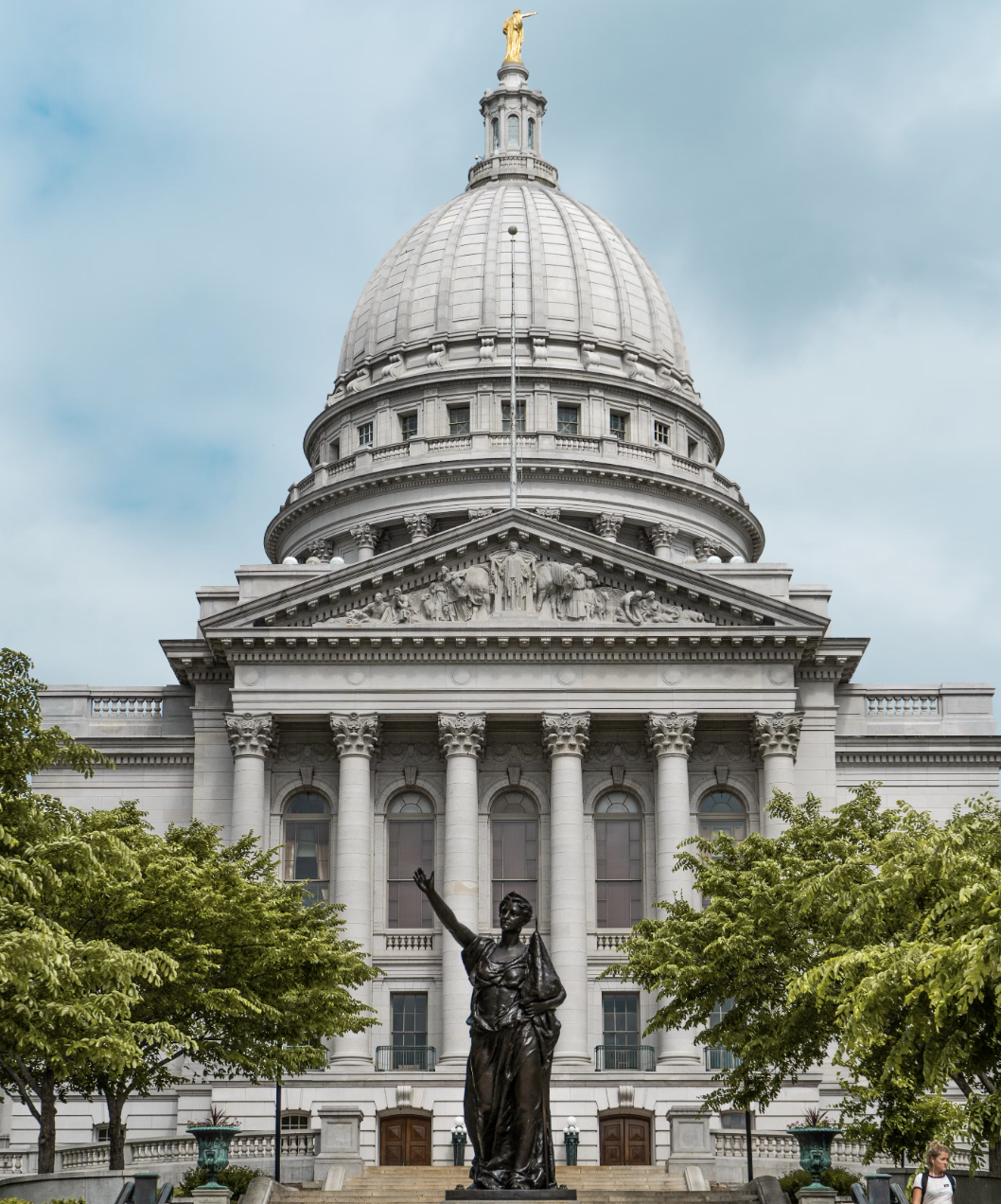
A state judge has struck down key portions of Act 10, a 2011 Wisconsin law that stripped most public-sector unions of collective bargaining rights and imposed other restrictions on dues collection and benefits. The law sparked a political firestorm at the time (including a union-member occupation of the Wisconsin capitol) and has loomed large in state politics ever since. The defect identified by the court on Monday was that Act 10 exempted “public safety” unions representing police officers and firefighters from its harshest provisions. The court ruled that this distinction, which disadvantaged all other unions, violated the equal protection clause of the Wisconsin constitution. Accordingly, Monday’s ruling vacated several sections of Act 10, restoring full collective bargaining rights to the state’s public employees. The decision will almost certainly be appealed to the Wisconsin Supreme Court, where liberals hold a narrow majority. Earlier this year, a federal judge rejected a similar equal protection challenge to a Florida law which burdened most of the state’s public-sector unions.
Volkswagen workers in Germany conducted brief strikes on Monday, protesting the company’s plans to shutter factories in its home country due to decreasing sales and increased competition from Chinese automakers. As Otto has covered, IG Metall, Germany’s largest union, is threatening to strike repeatedly if its demands are not met, a tactic which is forbidden under U.S. labor law. The unrest comes amid significant political turmoil in Germany, with the country’s governing coalition in tatters and elections likely in the coming months.
The United States Postal Service is arguing that the NLRB’s 2022 Thryv decision, in which the Board expanded its traditional remedies to make affected employees whole for all “direct or foreseeable pecuniary harm” caused by employers’ unfair labor practices, is unconstitutional. In addition to arguing that Thryv remedies implicate the Seventh Amendment—an argument now popular among employers seeking to abolish the agency—the USPS also contends that Thryv may subject the entire NLRA to a nondelegation challenge. The USPS, as a federal agency, is perhaps an unlikely candidate to be raising such arguments, but it now joins ranks with the ACLU and the Audubon Society, groups which have also sought to kneecap the NLRB in their attempts to defend against unfair labor practice charges.




Daily News & Commentary
Start your day with our roundup of the latest labor developments. See all
October 25
Dallas Cowboys Cheerleaders unionize; Bureau of Prisons again pushes for union contract cancellation; CSU faculty votes on strike authorization.
October 23
Employers increasingly shift health care costs onto workers and NYC proposes placing restrictions on fully automated customer service.
October 22
SCOTUS declines Wilcox appeal; Penn State research assistants win bargaining rights; SEIU sued over military leave firing.
October 21
DOL withdraws tipped-worker rule; Instacart settles hiring-bias claims; Phillips 66 locks out New Jersey refinery workers.
October 20
Korean unions oppose labor exemption bill; Portland city workers prepare for strike; UPenn grad student union looks to dismiss university filing
October 19
FDA reverses course on policy prohibiting off-duty union activity; FAA and NATCA reach deal to secure pay increase for air traffic controllers.