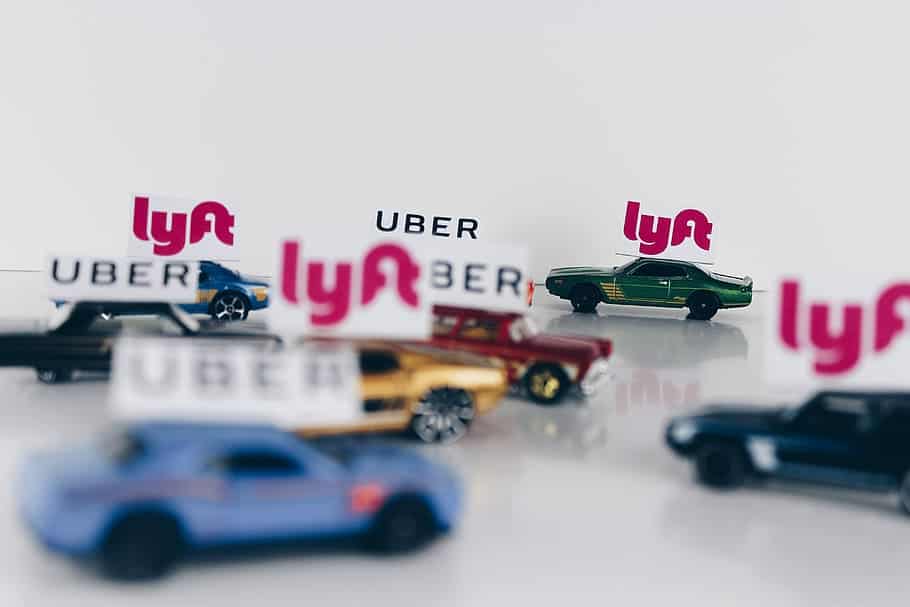

In today’s News and Commentary, Lyft and Uber will stop operating in Minneapolis after the city council approved a mandatory minimum wage for rideshare drivers, President Biden looks to earn further support from organized labor through his State of the Union remarks and meetings with union leadership, and the ACLU is behind surprising opposition to workers’ rights.
Last Thursday, the Minneapolis city council voted 10-3 to override the mayor’s veto of a minimum wage for rideshare drivers. The bill guarantees rideshare drivers the local minimum wage, $15.57 an hour by mandating pay of $1.40 per mile and $0.51 per minute. Lyft responded to this bill saying that while it supports minimum earning standards for drivers, the standards should keep service affordable for riders. Uber expressed disappointment in the decision, saying that the council has kicked Uber out of Minneapolis and put 10,000 people out of work. Both rideshare companies have warned that rider rates would double if they had to pay drivers this wage. Uber and Lyft have threatened to stop operating in the Twin Cities on May 1, when the ordinance goes into effect. Minneapolis’s mayor and Minnesota’s governor, both Democrats, have vetoed rideshare minimum wage bills saying that they make rideshare services too expensive for users. This is just one of many efforts nationwide to ensure wages and benefits for gig workers.
In his State of the Union address, President Biden made several mentions of his support for working people and the labor movement. His comment that “the middle class build the country, and unions built the middle class!” received a standing ovation. UAW President Shawn Fain, along with several union members were among the invited guests. Biden has already won the endorsement of several of the nation’s biggest unions including the UAW, AFL-CIO, AFSCME, NEA, and the SEIU. Last week, the SEIU announced a $200 million spend to mobilize working- class voters to support Biden and other down-ticket Democrats. SEIU hopes to reach six million voters of color, particularly in swing states. This is the largest investment in SEIU history. Despite calling himself “the most pro-labor President in U.S. history,” union support for Biden is far from a sure thing. Last week, Biden met with the Teamsters, who have yet to endorse a Presidential candidate. The Teamsters sat down with former President Trump earlier this year to discuss an endorsement. And Washington state’s largest union, the state’s chapter of the United Food and Commercial Workers, endorsed voting “uncommitted” in the Democratic presidential primary to express disappointment with Biden’s handling of the war in Gaza. Union workers and their families historically vote for Democrats, but the margins have dwindled in recent years.
Last week, the NLRB denied the ACLU’s request to appeal an administrative law judge’s decision to not defer a dispute with a former employee to arbitration. The organization may be joining a growing list of seemingly progressive employers, including Trader Joe’s and REI, actively working to prevent their employees from exercising their rights. Under current law and practice, employers and unions can negotiate arbitration clauses into their collectively bargained agreement. If the CBA contains an arbitration process, the NLRB will direct the parties to resolve the dispute via that process and reserve the right to pursue the case if its deemed necessary. However, employer’s arbitration agreements with individual employees are not a stand-in for an arbitration clause in a CBA. That is to say, individual agreements with employees will not prevent workers from bringing ULPs to the Board. But the ACLU is arguing that the Board should uphold forced arbitration agreements for individual employees even when such an agreement has not been collectively bargained by an employee’s union. The former employee’s ULP charge appears to be a classic wrongful discharge, easily settled with reinstatement and backpay. The ACLU is instead fighting to establish that the NLRB has no authority to enforce the employee’s rights. If the organization’s arguments are accepted, they will have a profound effect on workers’ rights and labor organizing.



Daily News & Commentary
Start your day with our roundup of the latest labor developments. See all
October 27
Some California union locals defy their statewide leadership to back the state’s billionaire tax proposal; a Brown University technology center releases a map of the hidden global workforce behind AI; the National Women's Soccer League and its players union settle six grievances.
October 26
Harvard dining workers authorize strike; New York City bans horse carriages; Brooklyn nurses rally in support of colleague.
October 25
Dallas Cowboys Cheerleaders unionize; Bureau of Prisons again pushes for union contract cancellation; CSU faculty votes on strike authorization.
October 23
Employers increasingly shift health care costs onto workers and NYC proposes placing restrictions on fully automated customer service.
October 22
SCOTUS declines Wilcox appeal; Penn State research assistants win bargaining rights; SEIU sued over military leave firing.
October 21
DOL withdraws tipped-worker rule; Instacart settles hiring-bias claims; Phillips 66 locks out New Jersey refinery workers.