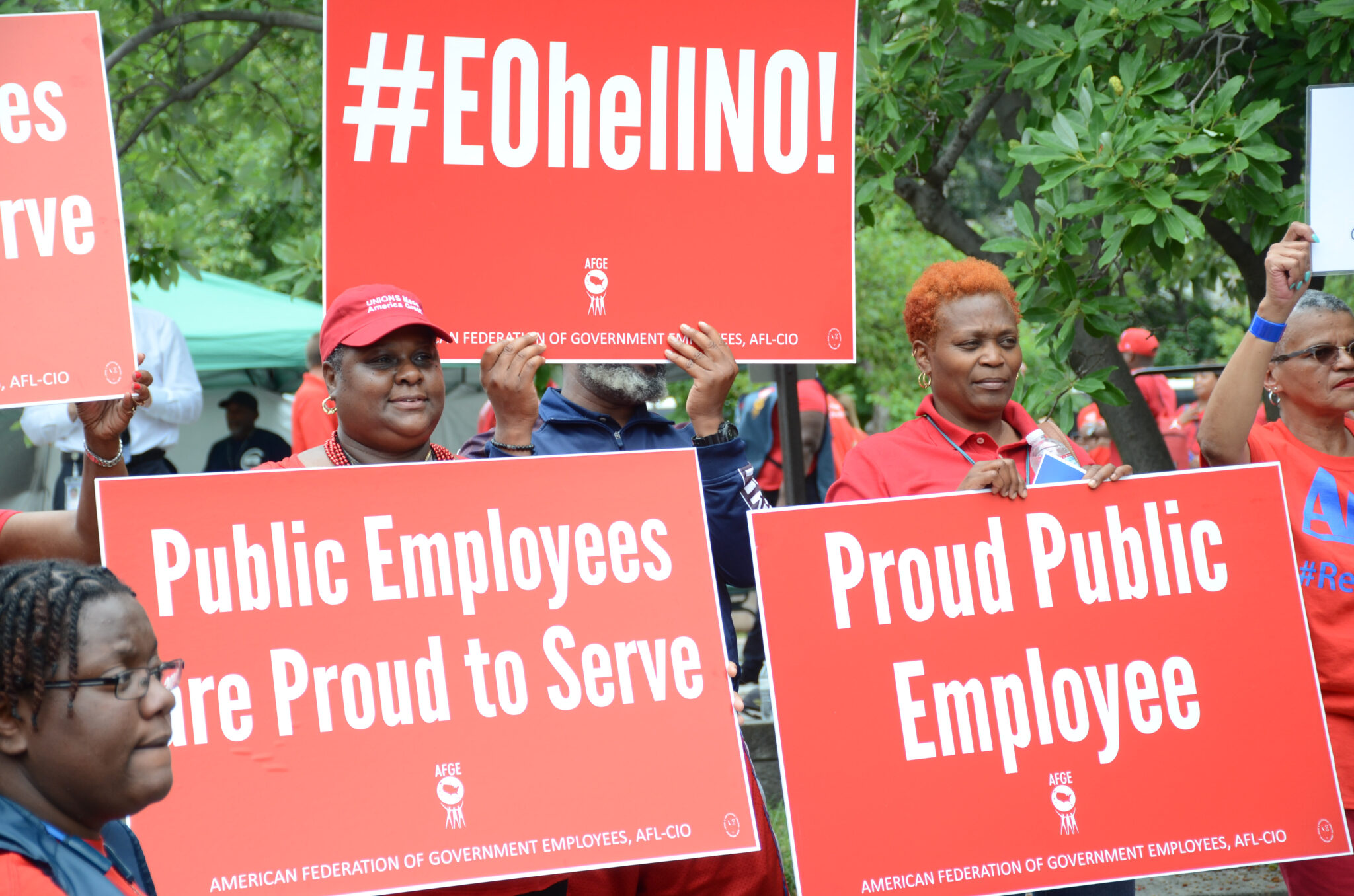

In today’s news and commentary, President Trump breaks campaign promise to support workers and Utah’s governor signs a law banning public sector collective bargaining.
Despite campaign promises to stand with workers, the first month of this Trump administration has been a continuous onslaught of anti-worker actions. In just four weeks, President Trump has all but neutralized the National Labor Relations Board and the Equal Employment Opportunity Commission, by unlawfully firing board members thereby leaving the agencies without a quorum to carry out their work. Anti-worker billionaires have near constant access to the ear of the President and several just happen to have brought suits seeking declarations that the NLRB is unconstitutional. As OnLabor’s Ben Sachs rightly notes, dismantling the board that ensures workers’ rights to organize and collectively bargain is quite an odd way to support for workers.
The administration’s attack on the agencies that can provide remedy for violations of workers’ rights is only one tactic in its war on America’s workers. Trump has blamed DEI policies for what he claims is worker incompetence. He has refused to honor contracts reached with federal employee unions and the Biden administration. Two million federal employees were offered buyouts to leave their jobs and encouraged to report on colleagues engaged in DEI initiatives. Just last week, Trump directed agency heads to prepare for large-scale reductions in force focused on “discharging workers who perform functions not mandated by statute including diversity, equity and inclusion programs.” Federal regulations require agencies to make detailed lists of the jobs they want to cut and provide 60-days’ notice before starting a lay-off. Federal employees covered by a CBA may be able to take this issue to arbitration – other workers will have to take claims before an independent panel that mediates worker disputes.
Last Friday, Utah Governor Spencer Cox signed a new law prohibiting public sector collective bargaining. As John covered last week, Utah’s Senate gave final approval to HB267 with a narrow vote of 16-13. Governor Cox signed the bill amid continued protests outside his office. With the bill’s passing, Utah joins the ranks of North and South Carolina as the most restrictive states for public sector unions. The bill bans collective bargaining for teachers, police officers, fire fighters and other public employees. National trends including anti-labor actions, an apparent appetite to reduce public spending on education, and a desire to overhaul the public education curriculum compound concern for the labor movement and teachers unions in particular.





Daily News & Commentary
Start your day with our roundup of the latest labor developments. See all
October 14
Eleventh Circuit overturns ERISA exhaustion rule; DHS finalizes removal of automatic renewal for work permits; AFGE challenges SSA over flexible scheduling policy.
October 13
Chicago hotel workers remain on strike; a coalition of Democratic states sues the Labor Department over canceled unemployment insurance grants; the Federal Labor Relations Authority establishes a new mediation framework for federal worker disputes.
October 12
Workers at the Obama Foundation begin organizing; MLB submits its latest collective bargaining agreement proposal; Brigham & Women's nurses postpone strike.
October 11
UAW President Shawn Fain succeeds in his reelection bid, and Spanish unions call for a general strike.
October 9
DHS proposes a $100k fee for the foreign grad employment program; Trump suspends tech company access to green card program; and private equity perpetuates poor working conditions for home care workers.
October 8
NLRB judge finds UPS unlawfully restricted union insignia; Harvard graduate workers authorize second strike; OSHA orders Union Pacific to pay $300,000 in damages in whistleblower case.