
Jacqueline Rayfield is a student at Harvard Law School.
In today’s News and Commentary, the United Auto Workers Union filed unfair labor practice charges against former President Donald Trump and Elon Musk, leader of Tesla and SpaceX, Starbucks appointed an anti-labor CEO, and Vice-Presidential Candidate, Governor Tim Walz made his first solo campaign speech to a union audience.
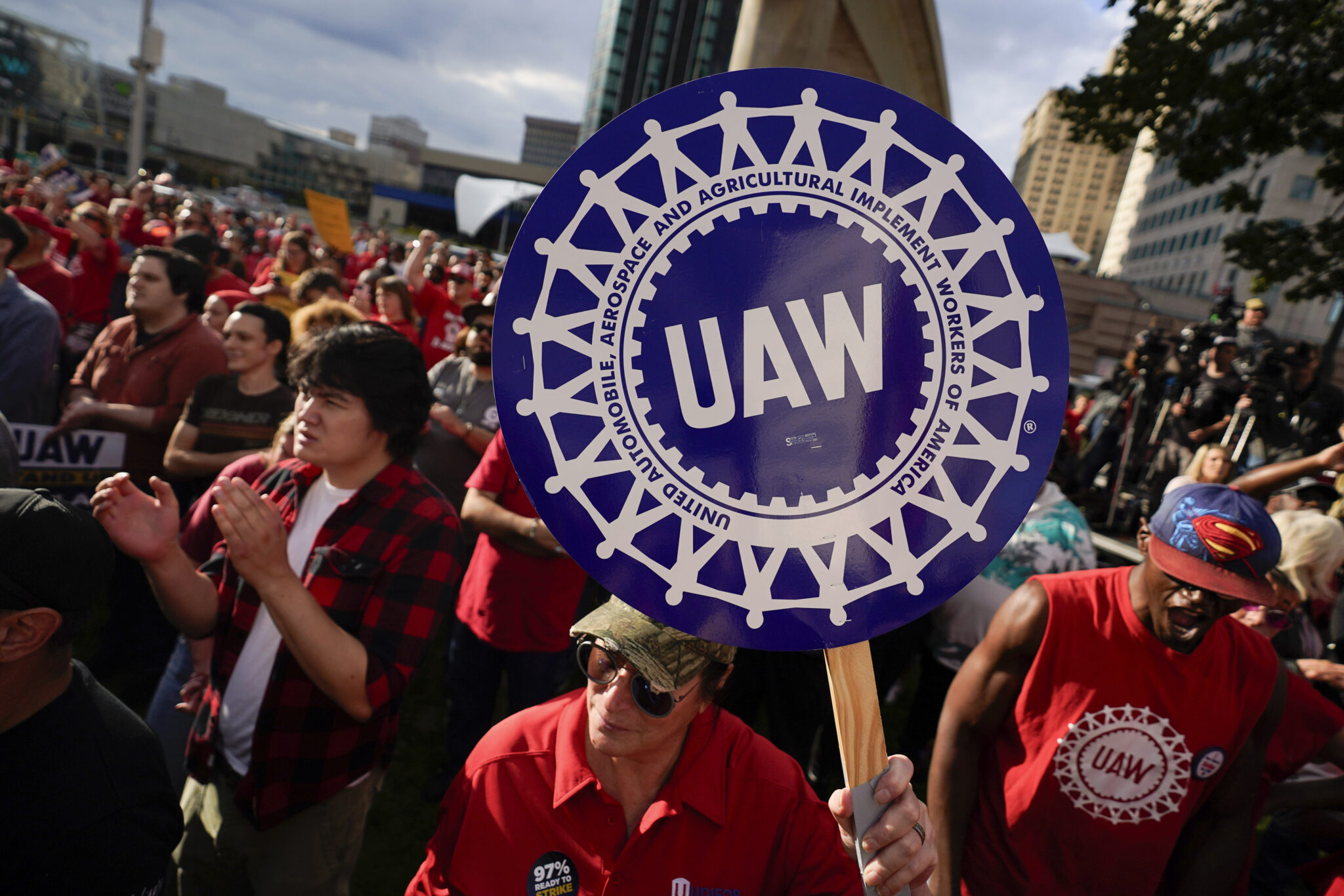
The United Auto Workers Union (UAW) announced in a thread on X that Trump and Musk violated federal labor law by attempting to threaten and intimidate workers. Musk hosted an interview with Trump on X Monday night. Trump praised Musk in the interview for conducting mass layoffs. “I won’t mention the name of the company, but they go on strike, and you go, ‘You’re all gone,’” Trump said. UAW claims that this statement violates federal labor law since a strike is considered a protected activity for which workers cannot be legally fired. UAW President Shawn Fain commented: “When we say Donald Trump is a scab, this is what we mean.”
Starbucks named Brian Niccol, former CEO of Chipotle Mexican Grill as its new CEO on Tuesday. Niccol faced criticism for his negotiations with Teamsters while at Chipotle. Teamsters considered Chipotle’s wage offer in a store in Lansing, Michigan insultingly low. The same year, Chipotle violated federal labor law by closing a store and firing workers who tried to form a union. After the NLRB sided with the union, Chipotle paid $240,000 to aggrieved workers.
Governor Tim Walz gave his first solo speech as vice-presidential nominee on Tuesday night to a union audience in Los Angeles. Walz spoke to members of the American Federation of State, County, and Municipal Employees about his and Vice President Kamala Harris’ working-class roots. Walz was a union member as a public-school teacher before he was elected to the U.S. House of Representatives in 2006.


Daily News & Commentary
Start your day with our roundup of the latest labor developments. See all
September 21
In today’s News and Commentary, the Seventh Circuit raises the bar for the NLRB to obtain preliminary injunctions, the California Primary Care Association sues SEIU-UHW for racketeering, and the Seventh Circuit finds that an employer group and think tank do not have standing to challenge an Illinois law banning captive audience meetings. On Friday, the […]
September 20
Culinary Workers Union members protests union leadership; lawsuit against OpenAI and Microsoft reveal internal concerns about the threat of AI training to human labor.
September 17
Unions push to block Google from buying Spirit Airlines employment records; U.S. Department of Labor sues Oklahoma coffee chain over alleged wage violations.
September 16
Trump nominates Catherine Eschbach as EEOC general counsel; NLRB declines to resolve union work-assignment dispute; Allina Health physicians begin four-day strike.
September 15
Documents reveal the inner workings of Amazon's union avoidance program; Washington state public sector unions reach tentative deals amid a difficult bargaining cycle; hundreds of Nevada Culinary Union members protest their union's health care changes.
September 14
NCAA and Big Ten file motion to dismiss in former star player's NIL suit; Seventh Circuit rules against former postal worker in discrimination suit.