
Swap Agrawal is a student at Harvard Law School.
In this weekend’s news and commentary, the Supreme Court agrees to hear a workplace religious accommodation case and the GOP attempts to eliminate House staffer unions.
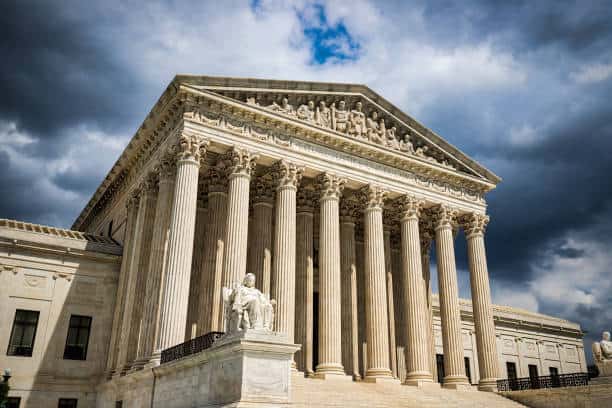
On January 13, the U.S. Supreme Court granted cert to an appeal from Gerald Groff, a former mail carrier who is accusing the U.S. Postal Service of religious bias for refusing to exempt him from working on Sundays. Groff is an evangelical Christian who observes the Sabbath, and he repeatedly did not show up for Sunday shifts assigned as part of the Postal Service’s contract to deliver packages for Amazon.com. Groff received several disciplinary letters and resigned in 2019. He is arguing that the Postal Service’s actions constitute employment discrimination on the basis of religion in violation of Title VII of the Civil Rights Act of 1964.
In a 1977 case called Trans World Airlines v. Hardison, the Court interpreted Title VII to require employers to reasonably accommodate a worker’s religious practices unless that would cause the business “undue hardship,” defined as anything that requires the employer to bear more than a de minimis cost. Following Trans World Airlines, the Third Circuit found that exempting Groff from working on Sundays would cause undue hardship and dismissed the claim. Groff is now asking the Supreme Court to revisit the 1977 case under which courts “virtually always side with employers whenever an accommodation would impose any burden.” When the Court declined to hear similar cases in 2021, Justices Thomas, Gorsuch, and Alito indicated in dissents that Trans World Airlines should be overruled.
On January 9, Republicans in the U.S. House of Representatives adopted a rules package following the long fight over who would be Speaker. This package includes a rule aimed at kneecapping House staff unions. In July 2022, Travis reported that staffers began filing to unionize with the Congressional Workers Union (CWU) after House Democrats adopted regulations promulgated by the Office of Congressional Workplace Rights (OCWR) allowing offices to unionize. The GOP rules package calls on OCWR to stop implementing the regulations adopted by Democrats last year. Although the impact of the rule change is still unclear, it is unlikely that the language would decertify the bargaining units that have already been recognized in the House. However, the rules could potentially allow OCWR to ignore any new unionization efforts. The CWU has stated that they plan to continue unionization efforts regardless. “It’s our understanding that this doesn’t have any effect on our current organizing or future organizing activities,” said Taylor Doggett, a spokesperson for CWU.



Daily News & Commentary
Start your day with our roundup of the latest labor developments. See all
September 17
Unions push to block Google from buying Spirit Airlines employment records; U.S. Department of Labor sues Oklahoma coffee chain over alleged wage violations.
September 16
Trump nominates Catherine Eschbach as EEOC general counsel; NLRB declines to resolve union work-assignment dispute; Allina Health physicians begin four-day strike.
September 15
Documents reveal the inner workings of Amazon's union avoidance program; Washington state public sector unions reach tentative deals amid a difficult bargaining cycle; hundreds of Nevada Culinary Union members protest their union's health care changes.
September 14
NCAA and Big Ten file motion to dismiss in former star player's NIL suit; Seventh Circuit rules against former postal worker in discrimination suit.
September 13
Documents released on the 25th anniversary of the 9/11 attacks show that city officials encouraged workers to return to Ground Zero despite knowing the risks of asbestos exposure, and new polls demonstrate continued widespread support for labor unions.
September 10
Amazon workers allege pregnancy discrimination; federal unions challenge USDA reorganization; NYC warns of silicosis risks.