
Tascha Shahriari-Parsa is a government lawyer enforcing workers’ rights laws. He clerked on the Supreme Court of California after graduating from Harvard Law School in 2024. His writing on this blog reflects his personal views only.
In today’s news and commentary: the NLRB orders Amazon to recognize and bargain with ALU; the California Supreme Court is ruling on the compensation of inmates awaiting trial; the EEOC signals focus on discrimination by AI in hiring decisions; striking nurses at Mount Sinai reach agreement.
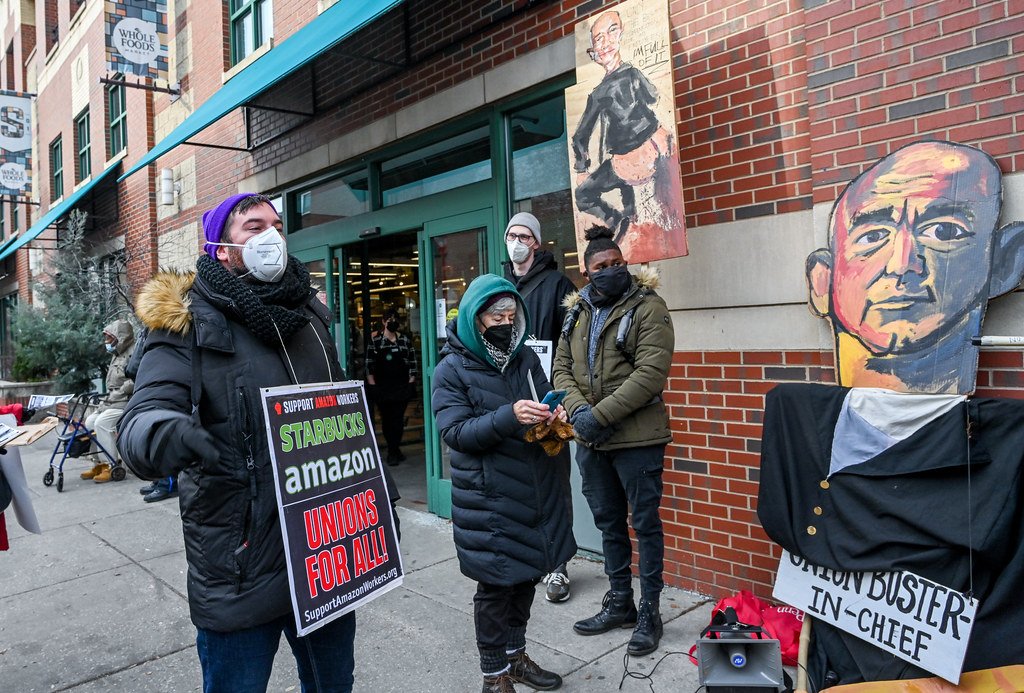
Amazon has been ordered by the NLRB to recognize and bargain with the Amazon Labor Union (ALU) at the company’s “JFK8” warehouse in Staten Island, New York. The ALU won an April 2021 election in the warehouse to form the first U.S. bargaining unit at the company. Amazon filed several challenges to the election, but a hearing officer recommended rejecting all of them in a September ruling, which the NLRB regional office has now adopted. The NLRB ruling imposes a legal duty on Amazon to recognize the ALU as the workers’ representative at the warehouse and negotiate a contract. If Amazon refuses to bargain, the union may file a charge with the NLRB to force the company to the table.
The California Supreme Court is being asked to rule on the compensation of inmates awaiting trial. The inmates, who have been working in Alameda County jails for a subsidiary of Aramark Corp, have not been convicted and are currently awaiting trial. The case arises from a challenge to a federal district judge ruling in 2021 that refused to dismiss a class action lawsuit brought by the inmates under California state wage laws, concluding that the detainees could bring claims for unpaid wages under the California Labor code. The decision in this case could impact the unpaid or underpaid labor that is commonplace in the U.S. correctional system.
The US Equal Employment Opportunity Commission (EEOC) has stated that it will focus on the risk of discriminatory decision-making being introduced by artificial intelligence (AI) tools used in hiring. The EEOC’s draft Strategic Enforcement Plan, which was published in the Federal Register, includes updates that, for the first time, take into account “employers’ increasing use of automated systems, including artificial intelligence or machine learning,” to make hiring and recruiting decisions. The Plan indicates that the EEOC will apply federal non-discrimination laws in the same way, whether the discrimination occurs through traditional recruitment methods or through the use of automated tools. The EEOC will host a public hearing on the use of AI tools in employment decisions. The Plan also seeks to expand the agency’s focus on vulnerable workers, including workers with intellectual or developmental disabilities and those with limited English proficiency.
Nurses at Mount Sinai Medical Center and Montefiore Medical Center in New York City have returned to work after ending a three-day strike and reaching a new contract that guarantees higher staffing levels and wages. Over 7,000 nurses went on strike after their contracts expired at the end of December. “We’re treated like step-kids,” said Linda Sobers, a nurse whoh has worked at Mount Sinai for the last 23 years. “We’ve been swept in the corner, and no one’s listening to us.” In response, the hospitals took measures including the reduction of care and cancellation of some elective procedures. After mounting public pressure, the nurses union and the hospitals reached a tentative agreement on the third day of the strike. As part of the new labor agreement, new staffing ratios will go into effect with financial penalties for hospitals that fail to comply.


Daily News & Commentary
Start your day with our roundup of the latest labor developments. See all
September 10
Amazon workers allege pregnancy discrimination; federal unions challenge USDA reorganization; NYC warns of silicosis risks.
September 9
Wynn Las Vegas employees allege anti-union retaliation; Amazon faces a class action over pregnancy accommodations; H-1B demand plunges following a six-figure visa fee.
September 8
In today’s News and Commentary, workers and unions across America celebrate Labor Day, California’s SEIU Local 1000 prepares for a strike authorization vote, and New York City creates the Office of Worker Power. On Monday, labor unions and workers gathered in cities across the United States in celebration of Labor Day. Parades and rallies took […]
September 7
Eighth Circuit finds DOL order violates Seventh Amendment; 1,300 workers at Encore Boston Harbor go on strike.
September 6
Encore casino workers strike; President Trump commutes sentence of former Philadelphia IBEW leader; Durham labor activist ends his hunger strike against Amazon.
September 4
NLRB advice memo narrows political protest protections; NLRB asks federal appeals court for deference.