
Anita Alem is a student at Harvard Law School.
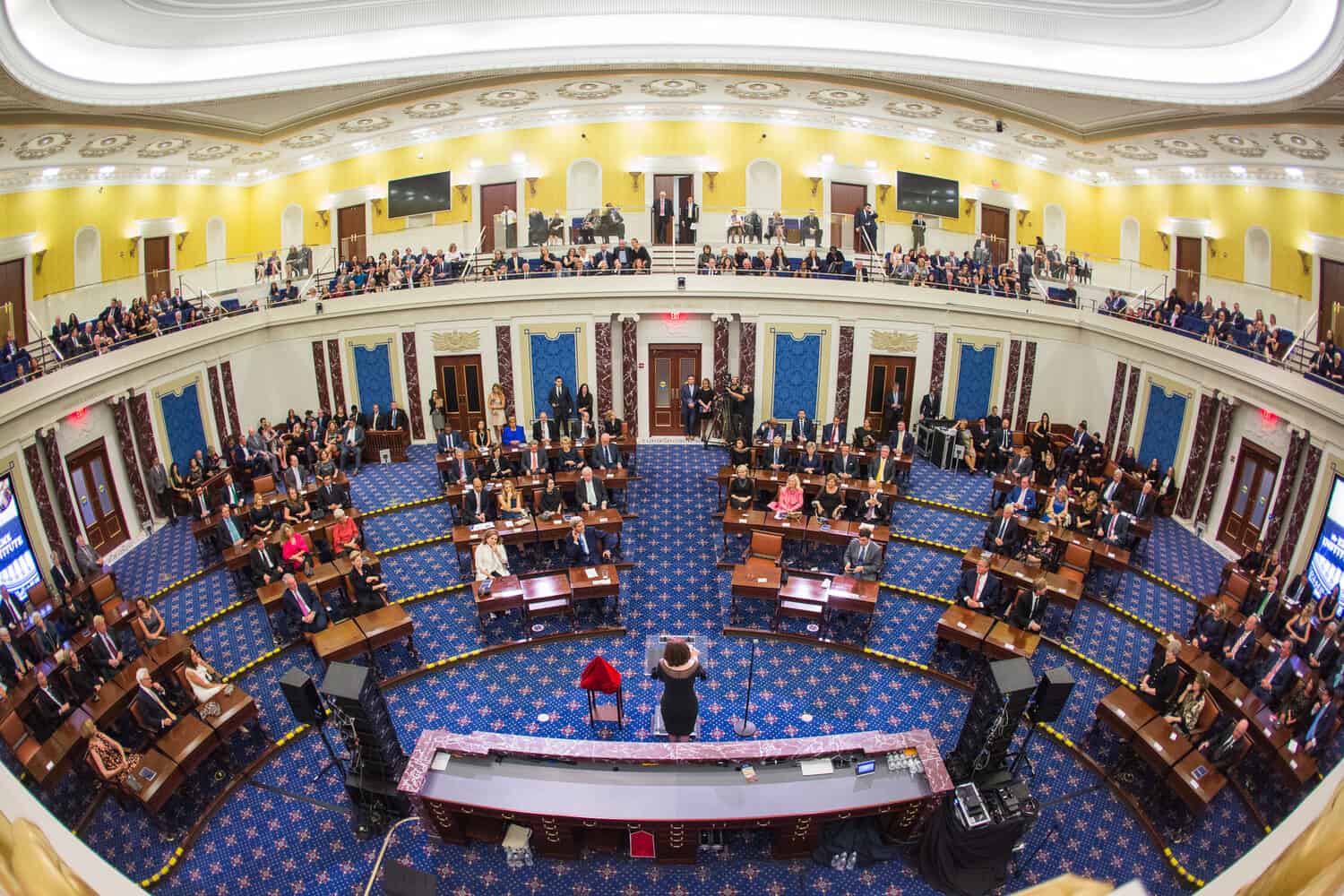
The Federal Trade Commission has cemented a Democratic majority among the commissioners, as the Senate confirmed Professor Alvaro Bedoya on Wednesday. The 51-50 vote, with a tiebreaker from Vice President Kamala Harris, signals a shift that will empower Chair Lina Khan to advance her policy agenda after months of 2-2 deadlock between commissioners. Although Bedoya was first nominated in September 2021, his confirmation process was repeatedly stalled. Republicans criticized Bedoya as unfit for a bipartisan position given his previous social media posts criticizing the Trump administration. The U.S. Chamber of Commerce, which in April repeatedly urged Congress to continue delaying Bedoya’s confirmation, has already released a statement warning that Bedoya’s confirmation will hamper economic growth.
Hearings continued regarding President Biden’s nominee to the Equal Employment Opportunity Commission, Kalpana Kotagal. Kotagal, who is an attorney at Cohen Milstein Sellers & Toll PLLC, responded to questions on Monday regarding her track record as a litigator and priorities for the EEOC. She expressed interest in addressing the gender pay gap and pregnancy discrimination if she were to receive the nomination. Kotagal is best known for designing the Hollywood “inclusion rider,” a contractual provision which mandates that film casts and crews must have a certain proportion of LGBT, women, and minorities.
Bloomberg Law reported that the number of investigators at the Department of Labor Wage and Hour Division has hit a 50-year low. Due in part to low morale, burnout, and frequent understaffing, 32 investigators have left over the past several months, despite the Division’s plan released in early 2022 to hire on 100 investigators. The total count of 725 investigators is down significantly from the approximately 1,000 investigators staffing the Division from 2010-2013. The attrition raises concerns regarding the agency’s ability to enforce critical employment laws, including the Fair Labor Standards Act (FLSA).
This week, several senators on the Committee on Health, Education, Labor & Pensions introduced the Wage Theft Prevention and Wage Recovery Act. The bill aims to deter wage theft and improve recovery under the FLSA, including by increasing damages for substantive violations and retaliation claims and enhancing transparency and recordkeeping requirements. The committee’s press release stated that employers are estimated to steal around $50 billion each year through wage theft, disproportionately affecting low-wage and tipped workers.
In other labor news, President Biden delivered remarks at the International Brotherhood of Electrical Workers’ 40th Annual Conference, where he shared the administration’s advances in infrastructure improvements and reaffirmed his commitment to being the most pro-union president in U.S. history. Biden also touched on healthcare policy and increasing taxes on billionaires.





Daily News & Commentary
Start your day with our roundup of the latest labor developments. See all
October 13
Chicago hotel workers remain on strike; a coalition of Democratic states sues the Labor Department over canceled unemployment insurance grants; the Federal Labor Relations Authority establishes a new mediation framework for federal worker disputes.
October 12
Workers at the Obama Foundation begin organizing; MLB submits its latest collective bargaining agreement proposal; Brigham & Women's nurses postpone strike.
October 11
UAW President Shawn Fain succeeds in his reelection bid, and Spanish unions call for a general strike.
October 9
DHS proposes a $100k fee for the foreign grad employment program; Trump suspends tech company access to green card program; and private equity perpetuates poor working conditions for home care workers.
October 8
NLRB judge finds UPS unlawfully restricted union insignia; Harvard graduate workers authorize second strike; OSHA orders Union Pacific to pay $300,000 in damages in whistleblower case.
October 7
DOL scraps plan to remove decades-old wage-and-hour guidance from federal regulations; New York enacts personnel records access law; Starbucks loses bid to dismiss Workers United trademark suit.