
Rund Khayyat is a student at Harvard Law School.
The American Civil Liberties Union (ACLU) has challenged South Carolina’s return-to-office order for state employees, a lawsuit that implicates broader legal questions for businesses around the nation as they return to normalcy. Gov. Henry McMaster, a Republican, cited the March decline in Covid-19 cases, and ordered state agencies to “immediately” expedite the return of non-essential state employees by the beginning of April. The ACLU responded by filing a lawsuit on April 5, claiming that the governor exceeded his authority and discriminated against workers. The suit argued that the order would disproportionately harm women, caregivers, people of color, and workers with disabilities, in violation of federal and state anti-discrimination laws including Title VII of the 1964 Civil Rights Act and the Americans with Disabilities Act (ADA).
The litigation comes as other localities, including New York City, are beginning to issue their own return-to-office orders for municipal employees. The lawsuit is unlikely to succeed –- as we know, employment law is based on the principle that employees are not “entitled” to maintain their employment. Here, for instance, the ACLU would have to prove that women are disproportionately caregivers, in order to support its sex discrimination claim. Moreover, the law does not entitle caregivers to workplace accommodations. Regardless of the difficulties, Bloomberg reported that the lawsuit will send a message to private businesses that are pushing for a return to work for their own employees.
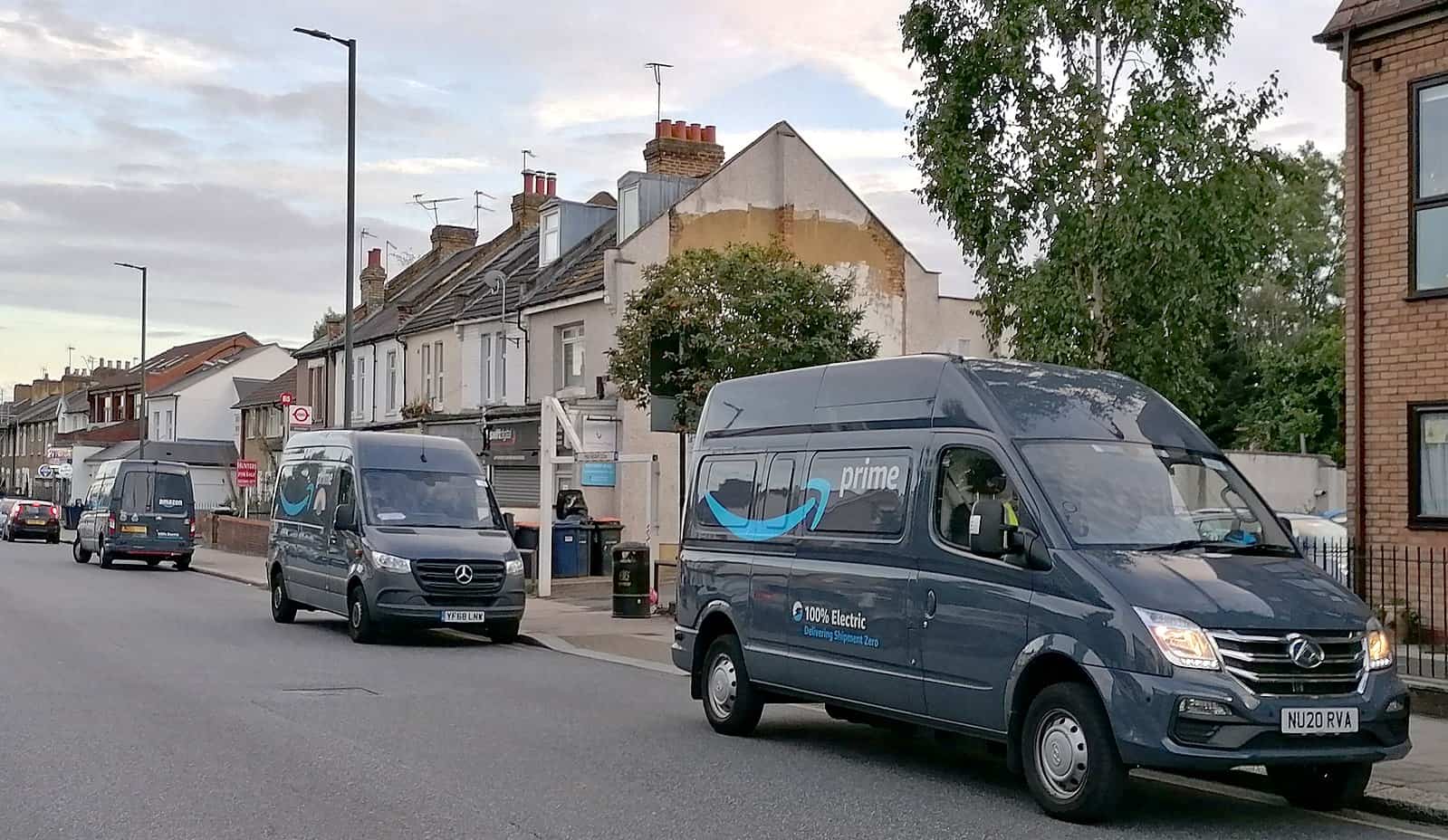
As an update on the historic Amazon union election in Bessemer, Alabama: Amazon appears to hold a commanding lead in the vote on whether the employees will become the first in the nation to join a retail union. Tally counting resumes today, with about half of the 3,215 ballots still uncounted. The totals are daunting for the ‘Retail, Wholesale and Department Store’ Union (RWDSU): 1,100 workers voted no to unionizing, while 463 voted yes, as of Thursday evening’s count.
The ferociously fought election lasted seven weeks and attracted national attention. The last unionization vote among Amazon employees failed in 2014, when a group of 30 employees in Delaware declined to join the International Association of Machinists and Aerospace Workers.
The RWDSU has said it would challenge the result. The union emphasized that labor law is “broken,” partly because it allows employers to pressure and coerce employees during union drives, and Amazon took full advantage of that system. For example, news reports stated the company went so far as to change the timing on the red lights at the intersection outside of the warehouse, in order to limit the time that union members could campaign during the stoplight. Employees have also said that Amazon used mandatory group meetings and one-on-one discussions to predict harmful consequences if they unionized.
Citing documents obtained via a Freedom of Information Act request, the RWDSU accused the company of “corrupting the election” by pressuring the U.S. Postal Service to install a mailbox on Amazon property in an effort to have employees cast their ballots there rather than someplace more free of company surveillance.
“Our system is broken, Amazon took full advantage of that, and we will be calling on the labor board to hold Amazon accountable for its illegal and egregious behavior during the campaign,” said Stuart Appelbaum, RWDSU president. “But make no mistake about it; this still represents an important moment for working people and their voices will be heard.”
Finally, recent reports show the U.S. economy is on the path to a solid recovery, and Bloomberg has reported that real-time indicators “suggest the magnitude of the consumer-led rebound could be even more dramatic.” Sectors that have lagged in the pandemic shutdowns –- including airlines, hotels and movie theaters –- are showing strong improvement as vaccinations get underway.
The March employment report showed an additional 916,000 jobs, the most in seven months, and factory activity expanded at its fastest pace since 1983. Bloomberg stated that five different indicators show the rebound will be better than economists initially predicted: airline travel has hit a pandemic high, topping 1.58 million on April 2; restaurant reservations are still down around 20% from 2019 levels, but they are much better than the 40% levels from earlier this year; hotel occupancy in mid-March jumped to the highest level in a year and has remained steady into early April; entertainment venues, which have been among the slowest to return, are now seeing improvements – more than half of North American theaters were open in March, climbing to nearly 58 per cent in early April; and job openings rose to a two-year high in February.


Daily News & Commentary
Start your day with our roundup of the latest labor developments. See all
September 4
NLRB advice memo narrows political protest protections; NLRB asks federal appeals court for deference.
September 3
Seond Circuit rejects a NLRB standard for union insignia in employer dress codes; House Republicans ramp up labor union investigations.
September 2
Trump’s US Steel agreement impacts labor talks; Mamdani clashes with teachers’ union; Boeing plans to resume bargaining talks.
September 1
California legislature passes a bill banning AI workplace surveillance of workers' emotional states; Labor Department repeals decades-old farmworker protection rules; Sixth Circuit upholds a $1.4 million verdict for farmworkers.
August 31
Boston Symphony Orchestra musicians stave off first-ever strike; Cleveland Public Library workers ratify new contracts; New York State AFL-CIO makes endorsements
August 30
Seattle teachers vote to authorize a strike days before the school year begins; BNSF Railway’s AI dispatching system puts workers in danger; and a California court finds that the DOL’s pay cuts for non-citizen farmworkers are unlawful.