
Deanna Krokos is a student at Harvard Law School
On Wednesday, the House of Representatives voted to pass the Protecting Older Workers Against Discrimination Act (POWADA). The act would make it easier for older workers suing under the Age Discrimination in Employment Act of 1967 to prove their case in court, instructing courts to find a violation where the age was a motivating factor in the employer’s adverse action, thereby allowing plaintiffs relief in “mixed-motive” cases. The bill passed 261-155, on a bipartisan basis garnering the support of 34 Republican legislators.
If passed by the Senate, the bill will effectively overrule 2009’s Gross v. FBL Financial Services, a Supreme Court Case that requires age discrimination plaintiffs to show the discrimination was the sole purpose of the adverse employment action, and allowing employers to evade liability if they can show that any “reasonable factor other than age” impacted their decision. Gross placed the entire burden of proof on the plaintiff and created a near impossible “but-for” causation standard. POWADA would allow a plaintiff to show that age was a motivating factor in the decision, and then shift the burden of production and persuasion to employer to prove that in a hypothetical scenario, they would have taken the action regardless of any discrimination.
Jack Gross, the plaintiff who brought the initial litigation after being demoted, spent years advocating for a change in the burdensome standard, including testifying before the Senate in 2010. In 2017, the AARP conducted a study, finding that “nearly 2 out of 3 workers ages 45 and older have seen or experienced age discrimination on the job.”
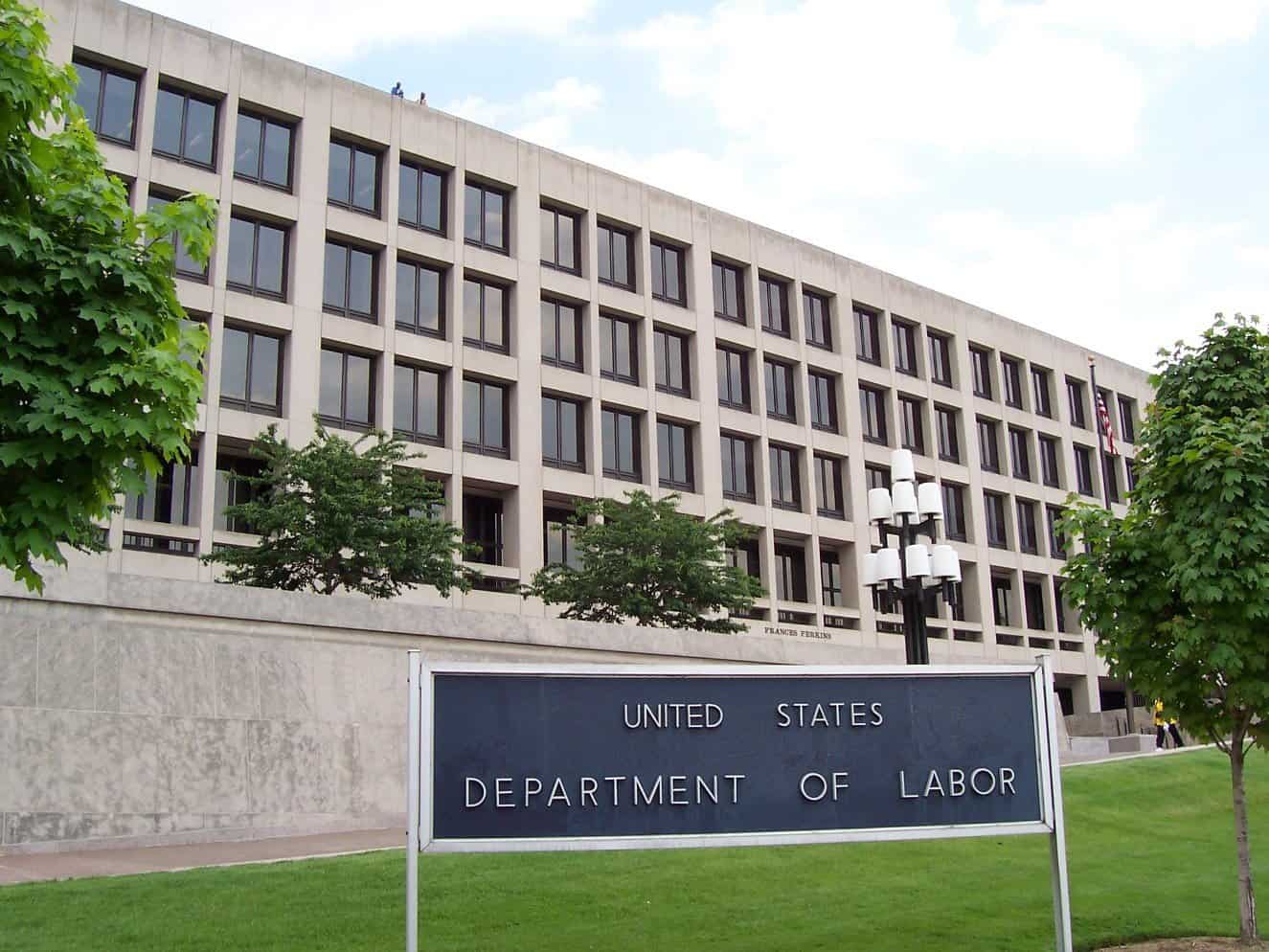
Bloomberg Law reports that worker centers across the country are preparing to defend their legal status in court. For two-years, the Department of Labor has been investigating Centro de Trabajadores Unidos en Lucha (CTUL), a worker center in Minneapolis, to determine whether or not they are operating as a “labor organization” are should be more strictly regulated. Bloomberg Law writes that worker centers are not unions, but rather “an alternative… providing low-income, vulnerable workers with training and other tools to improve workplace conditions.” Though they may lead campaigns to pressure certain employers to make systemic changes, as CTUL did against Target, worker centers primarily educate and train workers and do not serve the traditional “union” roles like collective bargaining. Bloomberg Law notes that if the DOL classifies CTUL as a union, subjecting them to onerous federal regulation, other workers centers across the country are likely to bring a challenge to protect their status.





Daily News & Commentary
Start your day with our roundup of the latest labor developments. See all
October 19
FDA reverses course on policy prohibiting off-duty union activity; FAA and NATCA reach deal to secure pay increase for air traffic controllers.
October 18
Federal judge again halts cancellation of the Bureau of Prisons’ CBA; tabletop gaming workers face roadblocks in union recognition.
October 16
Department of Labor reduces wage-and-hour enforcement at unionized workplaces; Fain's victory poses question of federal monitor's extension.
October 15
New reporting examines the rollback of child labor protections; California tries to block a strike; NLRB charges Wisconsin mental health provider with firing workers during union drive.
October 14
Eleventh Circuit overturns ERISA exhaustion rule; DHS finalizes removal of automatic renewal for work permits; AFGE challenges SSA over flexible scheduling policy.
October 13
Chicago hotel workers remain on strike; a coalition of Democratic states sues the Labor Department over canceled unemployment insurance grants; the Federal Labor Relations Authority establishes a new mediation framework for federal worker disputes.