
Yesterday the Supreme Court heard oral argument in Babb v. Wilkie. The question before the Court was whether federal workers alleging age discrimination under the Age Discrimination in Employment Act (ADEA) must show that the adverse action would not have happened “but for” their age, or whether the government can be held liable if age was simply a “motivating factor.” Observers said that questions from the Court’s four liberals and Justice Alito appeared to suggest that they favored the more lenient “motivating factor” approach. In one notable exchange from the argument, Chief Justice Roberts asked whether a federal employer saying “OK, Boomer” to a job applicant would be actionable under the ADEA.
The Supreme Court of Appeals of West Virginia, the state’s highest court, heard oral argument yesterday in a challenge to the state’s private sector right-to-work law. The state AFL-CIO sued to block the law after its enactment in 2016. The labor federation alleged that the law allowing employees to benefit from union representation while not paying agency fees was an unlawful taking. A circuit judge granted a preliminary injunction, but the Supreme Court of Appeals later reversed it and allowed the law to take effect. At oral argument, the justices discussed the relevance of Janus v. AFSCME. One justice claimed that Janus was immaterial to the case at hand because of its limitation to the public sector, while another justice asserted that the logic of Janus was even more applicable to the private sector than the public sector.
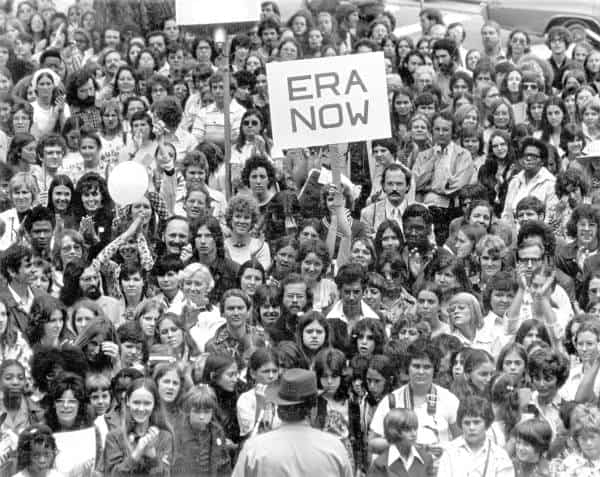
Virginia’s legislature voted to ratify the Equal Rights Amendment (ERA) yesterday, becoming the thirty-eighth state to endorse the constitutional amendment. While the requisite three quarters of states have now approved the amendment, the deadline for ratification technically expired in 1982. For the moment, the future of the amendment is uncertain.
Earlier this week, the Supreme Court denied certiorari in Branch v. Massachusetts Department of Labor Relations, avoiding (at least for now) a post-Janus showdown over unions’ ability to serve as the exclusive bargaining representatives of public sector employees. In filing a cert petition, the National Right to Work Legal Defense Foundation had urged the Court to overturn the decision of the Massachusetts Supreme Judicial Court, which had found that exclusive representation did not violate dissenting employees’ First Amendment rights.
The National Labor Relations Board (NLRB) received over 12,000 comments in response to a proposed rule that would deny student employees the protections of the National Labor Relations Act. The NLRB resorted to rulemaking in its effort to overturn the 2016 Columbia University decision (which declared most student teaching and research assistants to be “employees” under Section 2(3) of the Act) after unions jointly agreed to not bring cases that could risk a reversal before the Board.



Daily News & Commentary
Start your day with our roundup of the latest labor developments. See all
October 4
Boston nurses announce open-ended strike; federal judge restores federal prison workers' union protections; St. Louis workers form the first movie theater union in Missouri.
October 2
Gov. Newsom signs bill regulating AI in workplace; federal judge blocks Trump's $100,000 H-1B visa fee.
October 1
Senate confirms Keith Sonderling as Labor Secretary; Amazon warehouse workers launch an unfair labor practice strike.
September 30
Harvard grad union wins in First Circuit; AI data trainers initiate misclassification suits; Trader Joe’s found liable under ERISA.
September 29
Unions, AI companies, and private equity firms form a new coalition to shape data center policies; unions express support for the Paramount-Warner Bros. merger.
September 28
The Protect College Sports Act nears passage in the Senate; San Francisco municipal workers agree to contract extensions.