
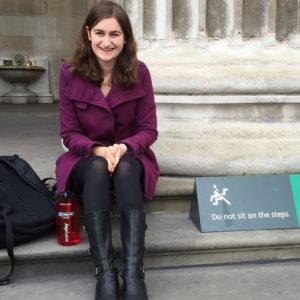
Rachel Sandalow-Ash is a student at Harvard Law School and a member of the Labor and Employment Lab.
Workers at Marriott hotels across the country are voting to go on strike. Under the banner of “one job should be enough,” these workers — members of UNITE HERE — are calling for living wages that will enable them to support themselves and their families. Workers at the Marriott and other hotels in Chicago have been on strike for over a week, protesting seasonal layoffs and calling for year-round pay and benefits. Marriott workers in Hawaii, San Francisco, Boston, Seattle, and San Jose have also voted to strike, and Marriott workers in additional cities will soon hold strike votes as well. UNITE HERE International President D. Taylor said, “There are too many of our folks who are working full time . . . who frankly can’t survive without doing two or three jobs. We think the largest, most powerful hotel company could set a standard for the entire hospitality industry. And that’s not where we’re at now.” Marriott workers also hope to win improved workload protections and more regular schedules. Yeqing Wei, a guest room attendant at a Marriott hotel in Boston, reports that she often is required to be ‘on call’ even on days when she is not scheduled to be working; this erratic schedule makes it hard for her to care for her children and her aging parents.
Alexia Fernández Campbell writes in Vox that the Fair Labor Standards Act leaves low-wage workers especially economically vulnerable when hurricanes or other natural disasters occur. Hourly workers do not have to get paid when businesses close due to a natural disaster; and employers can force salaried workers to use their paid vacation days or sick days during periods of disaster-induced business closure. Due to these anti-worker laws, low-income families in New Jersey suffered $832 million in lost wages as a result of Hurricane Sandy, according to a 2013 Rutgers study.
72% of workers across eight countries favor a shorter workweek as long as their pay remains the same, according to a study conducted by the Workforce Institute at Kronos Incorporated. A similar percentage of those surveyed — 71% — reported that their work interferes with their personal life. The researchers surveyed workers from Australia, Canada, France, Germany, India, Mexico, the United Kingdom, and the United States.
Two leaders of the Nonprofit Professional Employees Union (NPEU) write in The Hill about the importance of unions in nonprofit workplaces. The authors explain that nonprofit workers generally earn lower wages than do their counterparts who work for government agencies or for-profit companies, and that nonprofit workers frequently experience burnout. The authors then explain that at their workplace (the Economic Policy Institute), their union has secured better wages and benefits; reduced staff turnover; and improved communication between workers and management.





Daily News & Commentary
Start your day with our roundup of the latest labor developments. See all
October 19
FDA reverses course on policy prohibiting off-duty union activity; FAA and NATCA reach deal to secure pay increase for air traffic controllers.
October 18
Federal judge again halts cancellation of the Bureau of Prisons’ CBA; tabletop gaming workers face roadblocks in union recognition.
October 16
Department of Labor reduces wage-and-hour enforcement at unionized workplaces; Fain's victory poses question of federal monitor's extension.
October 15
New reporting examines the rollback of child labor protections; California tries to block a strike; NLRB charges Wisconsin mental health provider with firing workers during union drive.
October 14
Eleventh Circuit overturns ERISA exhaustion rule; DHS finalizes removal of automatic renewal for work permits; AFGE challenges SSA over flexible scheduling policy.
October 13
Chicago hotel workers remain on strike; a coalition of Democratic states sues the Labor Department over canceled unemployment insurance grants; the Federal Labor Relations Authority establishes a new mediation framework for federal worker disputes.