
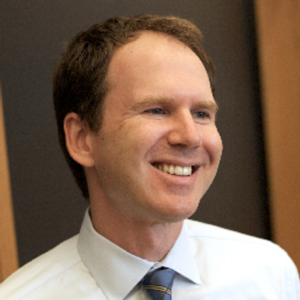
Benjamin Sachs is the Kestnbaum Professor of Labor and Industry at Harvard Law School and a leading expert in the field of labor law and labor relations. He is also faculty director of the Center for Labor and a Just Economy. Professor Sachs teaches courses in labor law, employment law, and law and social change, and his writing focuses on union organizing and unions in American politics. Prior to joining the Harvard faculty in 2008, Professor Sachs was the Joseph Goldstein Fellow at Yale Law School. From 2002-2006, he served as Assistant General Counsel of the Service Employees International Union (SEIU) in Washington, D.C. Professor Sachs graduated from Yale Law School in 1998, and served as a judicial law clerk to the Honorable Stephen Reinhardt of the United States Court of Appeals for the Ninth Circuit. His writing has appeared in the Harvard Law Review, the Yale Law Journal, the Columbia Law Review, the New York Times and elsewhere. Professor Sachs received the Yale Law School teaching award in 2007 and in 2013 received the Sacks-Freund Award for Teaching Excellence at Harvard Law School. He can be reached at [email protected].
As the date for the union election at Volkswagen’s Tennessee plant approaches, state lawmakers are threatening to withhold tax incentives from the automaker if the union wins the election. But conditioning the availability of tax incentives on VW’s union status would in all likelihood be preempted by federal labor law, and therefore illegal.
Here’s the most recent report from the state:
If the workers opt for UAW representation, VW would have a “very tough time” securing more incentives from the state legislature, Bo Watson, a state senator from suburban Chattanooga, said during a press conference this morning. He was flanked by House Majority Leader Gerald McCormick, a powerful figure in Tennessee politics, who said the “heavy hand” of the UAW is unwelcome in the state.
“The taxpayers of Tennessee reached out to Volkswagen and welcomed them to our state and our community,” McCormick, a Republican from Chattanooga, said in an e-mail to Automotive News. “We are glad they are here. But that is not a green light to help force a union into the workplace. That was not part of the deal.
A spokesman for Tennessee Gov. Bill Haslam said in an e-mail to Automotive News that state lawmakers would play a big role in approving incentives for the VW plant because the project would be too large to approve with existing funding for the state’s “FastTrack” incentive program.
“The governor has been clear about the impact of the UAW on the state’s ability to recruit other companies to Tennessee,” the Haslam spokesman said. “Any discussions of incentives are part of additional and continued talks with VW, which we look forward to.”
If Tennessee state lawmakers follow through and withhold future tax incentives based simply on VW’s union status, their action would run afoul of National Labor Relations Act preemption principles. A state may not, that is, condition tax incentives on the bare fact that a firm is union or nonunion. Absent some clear, genuine, and specific proprietary interest in discriminating against union employers, such selective use of state tax incentives would be impermissible under federal law.





Daily News & Commentary
Start your day with our roundup of the latest labor developments. See all
October 15
New reporting examines the rollback of child labor protections; California tries to block a strike; NLRB charges Wisconsin mental health provider with firing workers during union drive.
October 14
Eleventh Circuit overturns ERISA exhaustion rule; DHS finalizes removal of automatic renewal for work permits; AFGE challenges SSA over flexible scheduling policy.
October 13
Chicago hotel workers remain on strike; a coalition of Democratic states sues the Labor Department over canceled unemployment insurance grants; the Federal Labor Relations Authority establishes a new mediation framework for federal worker disputes.
October 12
Workers at the Obama Foundation begin organizing; MLB submits its latest collective bargaining agreement proposal; Brigham & Women's nurses postpone strike.
October 11
UAW President Shawn Fain succeeds in his reelection bid, and Spanish unions call for a general strike.
October 9
DHS proposes a $100k fee for the foreign grad employment program; Trump suspends tech company access to green card program; and private equity perpetuates poor working conditions for home care workers.