
Nikita Rumsey is a student at Harvard Law School.
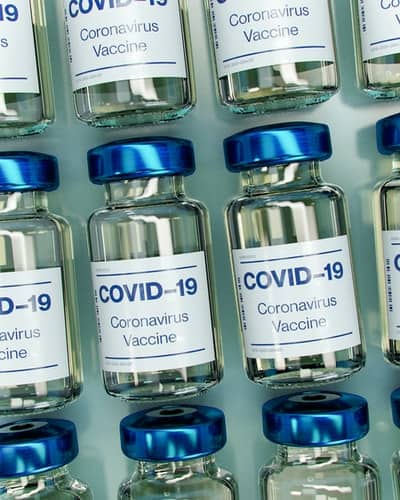
In light of the U.S. Supreme Court’s ruling last week allowing the Biden Administration’s health worker vaccine-or-test mandate to move forward, the Department of Health and Human Services is appealing a federal court’s ruling that had enjoined the health worker vaccine rule in Texas, the only state that as yet does not have to comply with the mandate. As Bloomberg reported, on Friday HHS filed a notice to appeal a preliminary injunction granted by the U.S. District Court for the Northern District of Texas, as well as requested a stay of the injunction pending its appeal to the Fifth Circuit, arguing that the Supreme Court granted the federal government’s applications to stay preliminary injunctions materially identical to the one at issue in Texas.
Indeed, the agency’s requests follow a Supreme Court decision to lift injunctions in two separate cases that had blocked the Centers for Medicare & Medicaid Services’ health worker vaccine mandate in 24 states. Unlike the fate of the Biden Administration’s broader vaccine-or-test mandate for large employers, the Supreme Court found that “a vaccine mandate [for health workers] is necessary to promote and protect patient health and safety in the face of the ongoing pandemic,” and that such a rule is “a straightforward and predictable example of the ‘health and safety’ regulations that Congress has authorized the Secretary [of Health and Human Services] to impose.” As to the 24 states subject to the Supreme Court’s recent ruling, the CMS issued guidance on Friday that medical facilities in such states now have until March 15 to get their employees vaccinated.
In other vaccine-related news, Bloomberg also reported that the U.S. Court of Appeals for the Eighth Circuit will be the fourth federal appeals court to entertain a challenge to President Biden’s executive order requiring Covid-19 vaccination for employees of government contractors. A collection of states—Arkansas, Alaska, Iowa, Missouri, Montana, Nebraska, New Hampshire, North Dakota, South Dakota, and Wyoming—had filed one of several lawsuits seeking to block the mandate, and a magistrate judge sitting in the Eastern District of Missouri sustained their request for a preliminary injunction against the executive order last month. In its appeal, the Justice Department also asked the Eighth Circuit to stay the injunction of the order as the appeal moves forward. In addition to the Eighth Circuit litigation, appeals also are ongoing in the Eleventh, Fifth, and Sixth circuits, respectively, over a nationwide injunction against the measure from a Georgia federal district court, and narrower ones from federal judges sitting in Kentucky and Louisiana. The federal contractor mandate would apply to roughly a quarter of the U.S. workforce.
Meanwhile, the Wall Street Journal reported that Elon Musk demanded that a law firm fire one of its attorneys or risk losing Tesla Inc as a client. Indeed, late last year a partner at corporate law firm Cooley LLP, which was representing Tesla in various lawsuits, received a call from Elon Musk who demanded that the firm fire one of its associates or else Musk would take his company’s business elsewhere. As the Wall Street Journal noted, the target of Musk’s ultimatum was “a former U.S. Securities and Exchange Commission lawyer whom Cooley had hired for its securities litigation and enforcement practice and who had no involvement in the firm’s work for Tesla.” Apparently, while at the SEC, the attorney in question had interviewed Musk during the SEC’s ongoing investigation into the Tesla CEO’s allegedly misleading 2018 tweet claiming to have secured funding to take the electric vehicle company private. The SEC’s investigation ended in a settlement according to which Mush agreed to resign as chairman of the Tesla board of directors and to pay a $20 million fine. In addition, Musk agreed to secure advance review by Tesla legal counsel of any tweets about certain business-related topics, including Tesla’s financial results, sales numbers and proposed business combinations. As to the fallout of Musk’s purported retaliatory ultimatum, according to the Wall Street Journal Cooley refused to fire the attorney, who remains an associate at the firm, and Tesla has begun taking steps in several cases to replace Cooley or add additional counsel. Additionally, Musk’s rocket company, SpaceX, has likewise stopped using Cooley as outside counsel for regulatory work.


Daily News & Commentary
Start your day with our roundup of the latest labor developments. See all
March 30
Trump orders payment to TSA agents; NYC doormen look to authorize a strike; and KPMG positions for mass layoffs.
March 29
The Department of Veterans Affairs re-terminates its collective bargaining agreement despite a preliminary injunction, and the Federal Labor Relations Authority announces new rules increasing the influence of political appointees over federal labor relations.
March 27
“Cesar Chavez Day” renamed “Farmworkers Day” in California after investigation finds Chavez engaged in rampant sexual abuse.
March 26
Supreme Court hears oral argument in an FAA case; NLRB rules that Cemex does not impose an enforceable deadline for requesting an election; DOL proposes raising wage standards for H-1B workers.
March 25
UPS rescinded its driver buyout program; California court dismissed a whistleblower retaliation suit against Meta; EEOC announced $15 million settlement to resolve vaccine-related religious discrimination case.
March 24
The WNBPA unanimously votes to ratify the league’s new CBA; NYU professors begin striking; and a district court judge denies the government’s motion to dismiss a case challenging the Trump administration’s mass revocation of international student visas.