
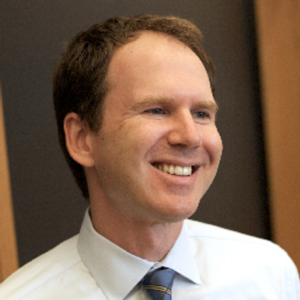
Benjamin Sachs is the Kestnbaum Professor of Labor and Industry at Harvard Law School and a leading expert in the field of labor law and labor relations. He is also faculty director of the Center for Labor and a Just Economy. Professor Sachs teaches courses in labor law, employment law, and law and social change, and his writing focuses on union organizing and unions in American politics. Prior to joining the Harvard faculty in 2008, Professor Sachs was the Joseph Goldstein Fellow at Yale Law School. From 2002-2006, he served as Assistant General Counsel of the Service Employees International Union (SEIU) in Washington, D.C. Professor Sachs graduated from Yale Law School in 1998, and served as a judicial law clerk to the Honorable Stephen Reinhardt of the United States Court of Appeals for the Ninth Circuit. His writing has appeared in the Harvard Law Review, the Yale Law Journal, the Columbia Law Review, the New York Times and elsewhere. Professor Sachs received the Yale Law School teaching award in 2007 and in 2013 received the Sacks-Freund Award for Teaching Excellence at Harvard Law School. He can be reached at [email protected].
Michael Grabell’s New Yorker piece on Case Farms’ poultry plants is a must-read. Much of it will be depressingly familiar: horrid safety and health conditions (“since 2010, more than seven hundred and fifty processing workers have suffered amputations”); repeated use of immigration sanctions to deter organizing activity (“the union received a letter saying that it had come to the company’s attention that nine of its employees might not be legally authorized to work in the United States…[s]even were on the union organizing committee…[a]ll were fired”; food workers wearing diapers because they aren’t granted bathroom breaks. But in this 2017 version of The Jungle, one wonders how – if at all – the relevant federal agencies will respond. Hopefully not, as Grabell rightly worries, by increasing immigration enforcement during labor disputes.


Daily News & Commentary
Start your day with our roundup of the latest labor developments. See all
June 12
Third Republican NLRB member sails through appointment hearings; UAW secures symbolic deal with General Motors supplier.
June 11
DC Circuit enforces an NLRB bargaining order; House passes a bill to speed up negotiating between employers and unions.
June 10
SoFi Stadium workers narrowly avoid World Cup strike; Amazon's NLRB challenge to remain in Fifth Circuit; House passes strict timeline bill for first union contracts.
June 9
SoFi Stadium workers authorize a strike ahead of the World Cup; the NLRB finds Starbucks violated labor law; Trump’s $100,000 H-1B visa fee is struck down.
June 8
BLS releases May jobs reports; US Trade Representative proposes new tariffs.
June 7
SAG-AFTRA members ratify a four-year CBA and the International Trade Union Confederation releases its 2026 Global Rights Index.