
Leigh Thomas is a student at Harvard Law School.
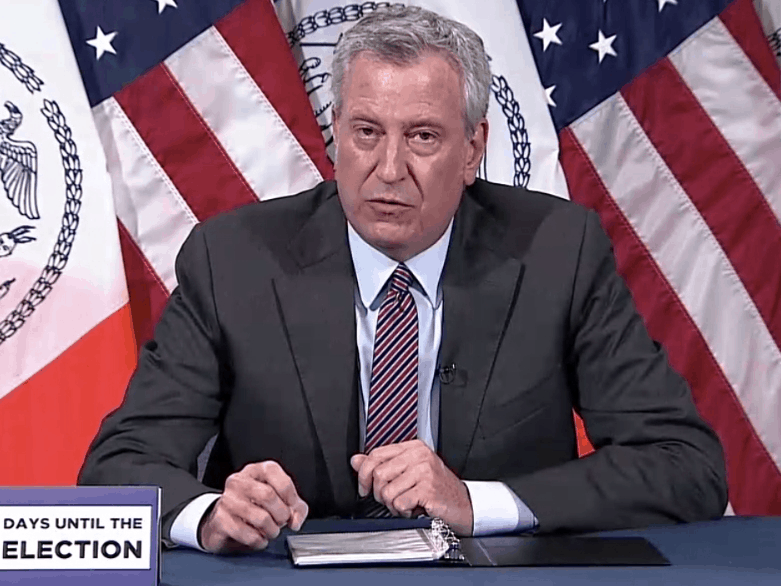
After reaching a deal with union leaders yesterday, Mayor Bill de Blasio announced that New York Public Schools will delay reopening in person until September 21. The concession came after unions representing both teachers and administrators pressed that schools would not be safe to reopen on the planned September 10 start date. The teacher’s union had threatened to strike if the start date was not delayed. The agreement reached yesterday between the city and labor leaders allows for more time to plan the massive overhaul to education that the coming year will require. The agreement also includes random, monthly testing of staff and students for COVID-19, but does not go so far as to require mandatory testing before school buildings reopen, as unions had been demanding. The mayor had publicly opposed mandated testing up until the morning before the new agreement was reached. Whether or not the delayed reopening allows enough time for teachers and administrators to prepare for the challenges ahead remains to be seen.
Labor unions and other groups held demonstrations across the country yesterday for the Unemployed Workers National Day of Action. In Colorado, demonstrators stood outside the Colorado Department of Labor and Employment office before marching to Senator Cory Gardner’s office. The protestors demanded the Senate pass the HEROES Act to increase weekly unemployment benefits by $600 and implement hazard pay for essential workers. In Dallas, protestors scattered furniture on the sidewalk outside Senator John Corbyn’s office building and held signs reading “Stop All Evictions” and “Let us Live.” In Las Vegas, unemployed immigrant workers and their families led a car caravan down the Las Vegas strip demanding the $600 per week unemployment benefits be extended. In total, sixteen demonstrations took place across the country.
According to a new report by the Economic Policy Institute, union membership increases the chances that workers have access to medical coverage and paid sick time—two benefits that are essential during a public health crisis. EPI’s research finds that 94% of workers covered by a union contract have access to employee-sponsored health benefits, while only 68% of nonunion workers do. Further, 90% of union workers are able to take paid sick leave, compared with 73% of nonunion workers. The report also finds that Black and Hispanic workers get a larger boost from unionization: Black workers represented by a union are paid 13.7% more than their nonunionized peers, and Hispanic workers represented by a union are paid 20.1% more than their nonunionized peers. The report calls on policymakers to enact reforms to promote workers’ collective power.
Oregon’s labor movement is continuing its push for action by the legislature to guarantee that essential workers who lose work due to COVID-19 exposure will automatically be covered by workers’ compensation insurance and would not have to prove the exposure took place at work. After pressure from a coalition of unions, the state’s Workers’ Compensation Management-Labor Advisory Committee, the group that advises the legislature on workers comp reforms, held a series of meetings to hear testimony from workers. The Committee is now deadlocked, and unions are preparing to put pressure directly on lawmakers.





Daily News & Commentary
Start your day with our roundup of the latest labor developments. See all
October 21
DOL withdraws tipped-worker rule; Instacart settles hiring-bias claims; Phillips 66 locks out New Jersey refinery workers.
October 20
Korean unions oppose labor exemption bill; Portland city workers prepare for strike; UPenn grad student union looks to dismiss university filing
October 19
FDA reverses course on policy prohibiting off-duty union activity; FAA and NATCA reach deal to secure pay increase for air traffic controllers.
October 18
Federal judge again halts cancellation of the Bureau of Prisons’ CBA; tabletop gaming workers face roadblocks in union recognition.
October 16
Department of Labor reduces wage-and-hour enforcement at unionized workplaces; Fain's victory poses question of federal monitor's extension.
October 15
New reporting examines the rollback of child labor protections; California tries to block a strike; NLRB charges Wisconsin mental health provider with firing workers during union drive.