
Maxwell Ulin is a student at Harvard Law School.
Another 860,000 Americans filed for unemployment this week. The total number of filings now stands at 12.628 million, slightly down from last week’s 13.385 active claims. As the Center for American Progress reports, about 12 million of the roughly 50 million workers who have filed for unemployment since March of this year have yet to receive any benefits. These delays are particularly pronounced in poor communities and among workers of color.
The Ninth Circuit ruled yesterday that ex-union Washington State employees could still be forced to pay union dues under membership agreements that required payment for up to a year after workers leave the union. The three-judge panel based its decision on the optional nature of the agreements, which workers could choose to sign or reject. The ruling reflects a broader unwillingness across federal appellate courts to extend the reach of recent Supreme Court precedent set in Janus v. AFSCME, which banned state and local contracts with public employee unions that include mandatory agency fees. Circuit courts have so far unanimously rejected a related set of cases where public employees have requested the return of formerly compulsory union dues.
Yesterday, the National Labor Relations Board (NLRB) rejected a bid by Service Employees’ International Union (SEIU) to reopen a case involving several labor violations by McDonald’s. The Board last December approved a $170,000 settlement exonerating McDonald’s from all alleged labor violations in connection to SEIU’s Fight for $15 campaign, much to the chagrin of union advocates. SEIU based its request for reconsideration on a recently uncovered 2018 recusal list drafted by the agency, which recommended that Board member William Emanuel recuse himself from the case because of his previous work for McDonald’s against the Fight for $15 campaign. As Leigh reported yesterday, the order comes just one day after members of the House Committee on Education and Labor subpoenaed documents from the Board to investigate whether Emanuel ought also to have recused himself from deliberations on the NLRB’s new joint employer rule due to his work for Mickie D’s—a key stakeholder in the rulemaking.
Also yesterday, the NLRB announced that it would extend the current comment period on its new rule addressing union decertification procedures until October 7 of this year. The so-called “contract bar” rule at issue, first established in a landmark 1939 Board decision, prohibits union decertification elections for up to three years of a collective bargaining agreement—with only limited exceptions near the end of a contract. In keeping with the Trump Board’s respect for precedent, members are considering shrinking or even eliminating the contract bar rule entirely in the Board’s upcoming Mountaire Farms decision.
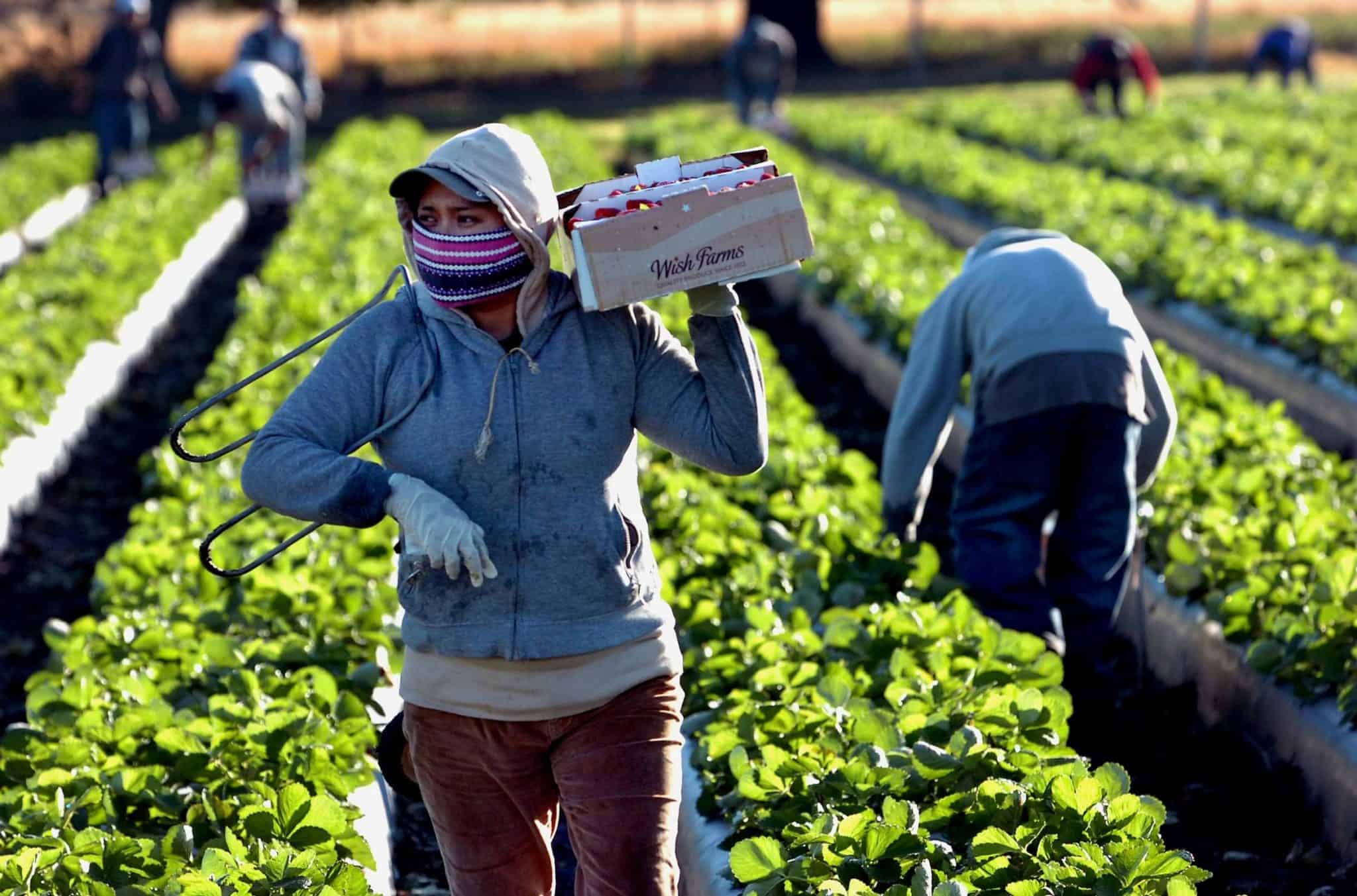
State lawmakers in California passed legislation this week requiring employers to notify workers and county health officials of known COVID-19 cases in the workplace. The so-called “Right to Know” bill, AB 685, is sponsored by Assemblywoman Eloise Gómez Reyes and comes after a CalMatters investigation uncovered hundreds of unreported coronavirus infections among Salinas county farmworkers earlier this year. The bill now heads to Governor Gavin Newsom’s desk for approval.
On Monday, ProPublica revealed that meatpacking company lobbyists had drafted an executive order to keep meatpacking plants open during the pandemic that bore a striking resemblance to the order issued by President Trump a short time later. Julie Anna Potts, President of the North American Meat Institute, sent the draft order to officials at the Department of Agriculture a mere week before the president ordered meat production to be “critical infrastructure.” The timing and textual similarities suggest that the final order grew out of industry lobbyists’ draft submission. Meanwhile, enforcement failures at meatpacking plants this year by the Occupational Safety & Health Administration (OSHA) led the New York Times Editorial Board to call out the agency for its egregious inaction this week.
On a final, more positive note for workers’ rights advocates, a recent study published this week in Health Affairs found that unionized nursing home workers experience a 30% lower mortality rate from COVID-19 than did non-union workers, reflecting the critical role unions play in ensuring workplace health and safety protections.





Daily News & Commentary
Start your day with our roundup of the latest labor developments. See all
October 9
DHS proposes a $100k fee for the foreign grad employment program; Trump suspends tech company access to green card program; and private equity perpetuates poor working conditions for home care workers.
October 8
NLRB judge finds UPS unlawfully restricted union insignia; Harvard graduate workers authorize second strike; OSHA orders Union Pacific to pay $300,000 in damages in whistleblower case.
October 7
DOL scraps plan to remove decades-old wage-and-hour guidance from federal regulations; New York enacts personnel records access law; Starbucks loses bid to dismiss Workers United trademark suit.
October 6
Protect College Sports Act dampens athlete unionization outlook; Stanford RA union decides to withdraw petition
October 5
Delaware bans captive audience meetings; EEOC settles remote work national origin discrimination claim; First Circuit stays enforcement order in VA's dispute with AFGE.
October 4
Boston nurses announce open-ended strike; federal judge restores federal prison workers' union protections; St. Louis workers form the first movie theater union in Missouri.